










2026 Program

PROGRAM UPDATE IN PROGRESS
Friday 21 August
Meetings
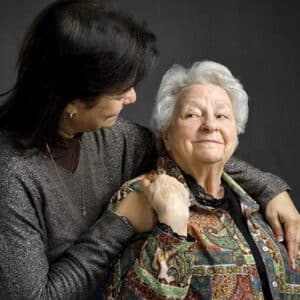
PAIN, FRIENDSHIP, HOPE
Roseline Hamel, sister of Father Jacques Hamel; Nassera Kermiche, mother of one of the attackers. Introduced by Bernhard Scholz, President of the Meeting for Friendship Amongst Peoples ETS Foundation
Roseline Hamel lost her brother, Father Jacques, killed on the altar in 2016. Nassera Kermiche lost her son; he was one of the attackers. Two women, two sufferings impossible to bear alone. They met and became friends, more than that, now they are "sisters in sorrow", as recounted in the book of the same title (Edizioni Ares-Lev), co-authored with the journalist who recorded their accounts. This is their story: a hope for everyone.
Roseline Hamel lost her brother, Father Jacques, killed on the altar in 2016. Nassera Kermiche lost her son; he was one of the attackers. Two women, two sufferings impossible to bear alone. They met and became friends, more than that, now they are "sisters in sorrow", as recounted in the book of the same title (Edizioni Ares-Lev), co-authored with the journalist who recorded their accounts. This is their story: a hope for everyone.
LIFE BEYOND THE WALL, HOW TO MAKE HOPE FLOURISH IN PRISON
In collaboration with Cdo Opere Sociali
Antonio Baldissarri, President of the Cidiesse social cooperative; Fabio Romano, President of Incontro e Presenza; Francesco Paolo Sisto, Deputy Minister of Justice; Iolanda Tortù, Chief Commissioner of the Prison Service, Commander of the IPM Beccaria. Moderated by Adrian Moraglio, President of La goccia di Lube
Can prison, ignored by most as a non-place to be expelled from everyday life, and often experienced by those who inhabit it - whether detained persons or staff - as a place of suffering and hardship, also be a place capable of making hope bloom again? We will discuss this question with the help of your experience, and that of other witnesses to a way of living differently with a positive mindset even in this circumstance.
Antonio Baldissarri, President of the Cidiesse social cooperative; Fabio Romano, President of Incontro e Presenza; Francesco Paolo Sisto, Deputy Minister of Justice; Iolanda Tortù, Chief Commissioner of the Prison Service, Commander of the IPM Beccaria. Moderated by Adrian Moraglio, President of La goccia di Lube
Can prison, ignored by most as a non-place to be expelled from everyday life, and often experienced by those who inhabit it - whether detained persons or staff - as a place of suffering and hardship, also be a place capable of making hope bloom again? We will discuss this question with the help of your experience, and that of other witnesses to a way of living differently with a positive mindset even in this circumstance.
THE HUMAN AT THE CENTER. SCHOOL IN MOTION
Organised by Associazione Culturale Il Rischio Educativo, Cdo Opere Educative, Diesse, Di.S.A.L., ASLAM
Teresa Gargiulo, school principal of IC Volta in Taranto; Chiara Griffini, President of the National Service for the protection of minors of the CEI; Pierpaolo Triani, professor of General Pedagogy at the Università Cattolica del Sacro Cuore. Moderated by Nora Terzoli, school principal and vice president of Di.S.A.L.
The transitions that society is facing on a global scale call for new responses for new times from the actors in the world of school and university. The demographic shift, with the consequent and progressive decline in the number of students attending schools in Italy (and in Western Europe), is not just a technical datum to be managed with balances and economic criteria, but an opportunity to look at the anthropological foundations of a more personalized and welcoming school system, in which students can find a safe and fertile environment for their integral human development.
Teresa Gargiulo, school principal of IC Volta in Taranto; Chiara Griffini, President of the National Service for the protection of minors of the CEI; Pierpaolo Triani, professor of General Pedagogy at the Università Cattolica del Sacro Cuore. Moderated by Nora Terzoli, school principal and vice president of Di.S.A.L.
The transitions that society is facing on a global scale call for new responses for new times from the actors in the world of school and university. The demographic shift, with the consequent and progressive decline in the number of students attending schools in Italy (and in Western Europe), is not just a technical datum to be managed with balances and economic criteria, but an opportunity to look at the anthropological foundations of a more personalized and welcoming school system, in which students can find a safe and fertile environment for their integral human development.
CHILDREN WHO TEACH HOW TO LIVE
Innocente and Marina Figini, foster family, Cometa Association; Maria Luisa Galli, Director of the health residence for disabled minors “Casa Amoris Laetitia”. Moderated by Paola Bergamini, journalist of Traces
From the extreme fragility of children with severe disabilities, places of personalized care attentive to every aspect of the person are born. The experience of welcoming becomes companionship that helps carry burdens that would otherwise be unbearable, introducing a theory of meaning.
From the extreme fragility of children with severe disabilities, places of personalized care attentive to every aspect of the person are born. The experience of welcoming becomes companionship that helps carry burdens that would otherwise be unbearable, introducing a theory of meaning.
IN THE FOOTSTEPS OF AUGUSTINE
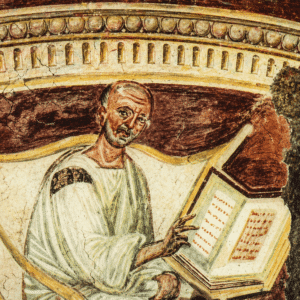
Catherine Conybeare, Leslie Clark Professor in the Humanities and Professor of Greek, Latin, and Classical Studies at Bryn Mawr College and author of Augustine the African; Joseph L. Farrell, Prior general of the Augustinians; H.E. Cardinal Jean-Paul Vesco, Metropolitan Archbishop of Algiers. Moderated by Alessandro Banfi, journalist, communications director of Oasis Foundation
The aim is to tell the story of the Saint of Hippo, after the first visit of a Pope “son of Augustine” to Algeria, his land. His activity as Bishop in Roman Africa, where he fought against heresies, and his invitation to Christians to share the journey with other men. “Here,” said Leo XIV on Algerian soil, “Saint Augustine loved his flock, seeking truth with passion and serving Christ with ardent faith”.
The aim is to tell the story of the Saint of Hippo, after the first visit of a Pope “son of Augustine” to Algeria, his land. His activity as Bishop in Roman Africa, where he fought against heresies, and his invitation to Christians to share the journey with other men. “Here,” said Leo XIV on Algerian soil, “Saint Augustine loved his flock, seeking truth with passion and serving Christ with ardent faith”.
INTERNATIONAL INSTITUTIONS AND THE COMMON GOOD: THE CHALLENGE OF GLOBALIZATION
In collaboration with Fondazione per la Sussidiarietà
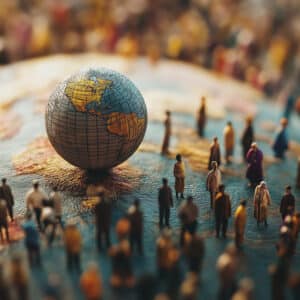
Matteo Bugamelli, Executive Director for Italy, Albania, Greece, Malta, Portugal, San Marino and Timor-Leste at World Bank; Riccardo Ercoli, Executive Director for Italy, Portugal, Greece, Malta, Albania and San Marino at the International Monetary Fund; Federico Galizia, Vice President of the International Finance Corporation World Bank Group. Introduced by Giorgio Vittadini, President of the Fondazione per la Sussidiarietà. Moderated by Samuele Rosa, Senior Strategist International Monetary Fund
The meeting opens a discussion on some of the decisive questions of our time: how can fair development be pursued in a world in turmoil? What role can international institutions play within this context, in their relationship with the economic, financial, and civil society sectors? How can changes in the world of work be addressed in the age of artificial intelligence?
Matteo Bugamelli, Executive Director for Italy, Albania, Greece, Malta, Portugal, San Marino and Timor-Leste at World Bank; Riccardo Ercoli, Executive Director for Italy, Portugal, Greece, Malta, Albania and San Marino at the International Monetary Fund; Federico Galizia, Vice President of the International Finance Corporation World Bank Group. Introduced by Giorgio Vittadini, President of the Fondazione per la Sussidiarietà. Moderated by Samuele Rosa, Senior Strategist International Monetary Fund
The meeting opens a discussion on some of the decisive questions of our time: how can fair development be pursued in a world in turmoil? What role can international institutions play within this context, in their relationship with the economic, financial, and civil society sectors? How can changes in the world of work be addressed in the age of artificial intelligence?
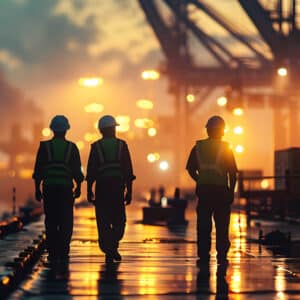
INSIDE THE COMPANY, AS PROTAGONISTS
In collaboration with Compagnia delle Opere
Daniela Fumarola, General Secretary of CISL; Giuseppe Guerini, President of Cooperatives Europe; Lorenzo Malagola, member of the Italian Parliament; Andrea Pontremoli, CEO of Dallara. Moderated by Francesco Cassese, Miror Consulting
In 1883 Leon Harmel imagined that workers could be co-responsible for their own company. It was not utopia. It was an insight that history later confirmed. With the Italian law of 2025, that principle becomes a norm. But the norm alone is not enough. True participation is born when a company believes that each person contributes something that cannot be bought or replaced.
Daniela Fumarola, General Secretary of CISL; Giuseppe Guerini, President of Cooperatives Europe; Lorenzo Malagola, member of the Italian Parliament; Andrea Pontremoli, CEO of Dallara. Moderated by Francesco Cassese, Miror Consulting
In 1883 Leon Harmel imagined that workers could be co-responsible for their own company. It was not utopia. It was an insight that history later confirmed. With the Italian law of 2025, that principle becomes a norm. But the norm alone is not enough. True participation is born when a company believes that each person contributes something that cannot be bought or replaced.
BEYOND ADDICTION. THE POWER OF RELATIONSHIPS
Organised by Cdo Opere sociali
Simone Feder, educator and psychologist, coordinator of the Youth and Addiction Area of the “Casa del Giovane” community in Pavia and one of the founders of Team Rogoredo; Norma Heredia, Sister of Charity of Our Lady of Good and Perpetual Help; Eva Pagano, therapeutic director of the Fondazione San Gaetano. Moderated by Matteo Ferracin, Vice President of Cdo Opere Sociali
Addictions are not only a health emergency. They engage the deepest need of the person: to belong, to have meaning, to be loved. Prevention and care call for places, adults and communities capable of staying close. Some of these places and communities will be at the Meeting and will tell us how relationship is not an addition to therapy, but therapy itself. Recovery is born here.
Simone Feder, educator and psychologist, coordinator of the Youth and Addiction Area of the “Casa del Giovane” community in Pavia and one of the founders of Team Rogoredo; Norma Heredia, Sister of Charity of Our Lady of Good and Perpetual Help; Eva Pagano, therapeutic director of the Fondazione San Gaetano. Moderated by Matteo Ferracin, Vice President of Cdo Opere Sociali
Addictions are not only a health emergency. They engage the deepest need of the person: to belong, to have meaning, to be loved. Prevention and care call for places, adults and communities capable of staying close. Some of these places and communities will be at the Meeting and will tell us how relationship is not an addition to therapy, but therapy itself. Recovery is born here.
BLUE AGRICULTURE. INNOVATION AND SUSTAINABILITY TOWARDS WATER EFFICIENCY
In collaboration with AICS
Marco Arcieri, President of the International Commission on Irrigation and Drainage (ICID); Massimo Battaglia, coffee supply chain expert and ACT programme specialist, UNIDO; Elena Bresci, lecturer and coordinator of the Water Harvesting Lab, Università di Firenze; Francesco Cintelli, CEO of Sismoelettrica; Sandro De Luca, Vice-President of CISP; Biagio Di Terlizzi, Director, CIHEAM Bari; Rosaida Dolce, Technical Officer at WASAG, Land and Water Division, FAO; Salvatore Gentile, Project Manager at AquaCampus, Canale Emiliano Romagnolo; Gianpiero Menza, Senior Manager for Business Development & Diversification, Strategic Partnerships, Engagement and Communication Department, Alliance Bioversity; Marco Riccardo Rusconi, Director of the Italian Agency for Development Cooperation; Emanuele Tavelli, CEO of Winet Srl. Moderated by Paolo Sertoli, AICS water focal point
The agricultural sector uses around 70 per cent of global water resources, with water losses reaching as high as 40–60 per cent in traditional (surface) irrigation systems. In this context, the approach of Italian Development Cooperation is guided by the principles of Integrated Water Resources Management (IWRM), through the promotion of efficient water use to maximise crop yields and minimise water wastage, as well as through the protection of ecosystems and climate resilience. Through the presentation of best practices, techniques and innovative technologies, the event’s main objective is to promote agriculture that can make more efficient use of water resources.
Marco Arcieri, President of the International Commission on Irrigation and Drainage (ICID); Massimo Battaglia, coffee supply chain expert and ACT programme specialist, UNIDO; Elena Bresci, lecturer and coordinator of the Water Harvesting Lab, Università di Firenze; Francesco Cintelli, CEO of Sismoelettrica; Sandro De Luca, Vice-President of CISP; Biagio Di Terlizzi, Director, CIHEAM Bari; Rosaida Dolce, Technical Officer at WASAG, Land and Water Division, FAO; Salvatore Gentile, Project Manager at AquaCampus, Canale Emiliano Romagnolo; Gianpiero Menza, Senior Manager for Business Development & Diversification, Strategic Partnerships, Engagement and Communication Department, Alliance Bioversity; Marco Riccardo Rusconi, Director of the Italian Agency for Development Cooperation; Emanuele Tavelli, CEO of Winet Srl. Moderated by Paolo Sertoli, AICS water focal point
The agricultural sector uses around 70 per cent of global water resources, with water losses reaching as high as 40–60 per cent in traditional (surface) irrigation systems. In this context, the approach of Italian Development Cooperation is guided by the principles of Integrated Water Resources Management (IWRM), through the promotion of efficient water use to maximise crop yields and minimise water wastage, as well as through the protection of ecosystems and climate resilience. Through the presentation of best practices, techniques and innovative technologies, the event’s main objective is to promote agriculture that can make more efficient use of water resources.
DISCUSSING WITHOUT DESTROYING
Bruno Mastroianni, philosopher and journalist, professor of Theory and Practice of Digital Argumentation, Università di Padova in dialogue with Valentina Frigerio, Head of Digital Communication for Communion and Liberation
Quarreling is the main feature of discourse on social media, driven by algorithms calibrated to reward aggressiveness and verbal overpowering. But is it still possible to have a discussion without demolishing the other person? There is a need for an education that forms constructive dissent in relationships, in the family, at school, online.
Quarreling is the main feature of discourse on social media, driven by algorithms calibrated to reward aggressiveness and verbal overpowering. But is it still possible to have a discussion without demolishing the other person? There is a need for an education that forms constructive dissent in relationships, in the family, at school, online.
JUPITER’S ASTONISHING MAGNETOSPHERE AND ITS POLAR AURORAS
Sara Gasparini, researcher, University of Bergen, NASA Goddard Space Flight Center; Antonino Francesco Lanza, research Director, Istituto Nazionale di Astrofisica, Osservatorio Astrofisico di Catania. Moderated by Mariachiara Rossetti, senior researcher, Istituto Nazionale di Astrofisica, IASF-Milano
Polar aurorae are among the most beautiful shows that nature offers. What are the physical processes that produce them on our planet and on Jupiter? We shall briefly introduce Earth’s polar aurorae and compare them with those of Jupiter as they appear in the image taken by the James Webb Space Telescope.
Polar aurorae are among the most beautiful shows that nature offers. What are the physical processes that produce them on our planet and on Jupiter? We shall briefly introduce Earth’s polar aurorae and compare them with those of Jupiter as they appear in the image taken by the James Webb Space Telescope.

TALENT IN SEARCH OF A FUTURE. EMPLOYMENT, YOUNG PEOPLE AND DEMOGRAPHY
In collaboration with Compagnia delle Opere
Maria Anghileri, President of Young Entrepreneurs of Confindustria; Stefano Barrese, Head of the Territorial Bank Division of Intesa Sanpaolo; Anna Maria Bernini, Minister of University and Research; Ettore Prandini, President of Coldiretti. Moderated by Andrea Dellabianca, President of Compagnia delle Opere
Businesses are looking for workers and cannot find them: this is the paradox at the heart of the Italian demographic crisis. Without stable work there is no rooting, and without rooting there is no counting on the future, nor family. Entrepreneurs, banks and institutions discuss how to bridge the gap between supply and demand, between education and the market, between territories that are emptying out and supply chains that cannot find labor
Maria Anghileri, President of Young Entrepreneurs of Confindustria; Stefano Barrese, Head of the Territorial Bank Division of Intesa Sanpaolo; Anna Maria Bernini, Minister of University and Research; Ettore Prandini, President of Coldiretti. Moderated by Andrea Dellabianca, President of Compagnia delle Opere
Businesses are looking for workers and cannot find them: this is the paradox at the heart of the Italian demographic crisis. Without stable work there is no rooting, and without rooting there is no counting on the future, nor family. Entrepreneurs, banks and institutions discuss how to bridge the gap between supply and demand, between education and the market, between territories that are emptying out and supply chains that cannot find labor
KIERKEGAARD TODAY. REDISCOVERING EXISTENCE
Ingrid Basso, Department of Philosophy, Università Cattolica del Sacro Cuore; Joakim Garff, theologian and Head of the Søren Kierkegaard Research Centre, University of Copenhagen; Ettore Rocca, Professor of Aesthetics, Università Digitale Pegaso, professor at the Søren Kierkegaard Research Centre, University of Copenhagen. Moderated by Carmine Di Martino, Professor of Moral Philosophy, Università degli Studi di Milano
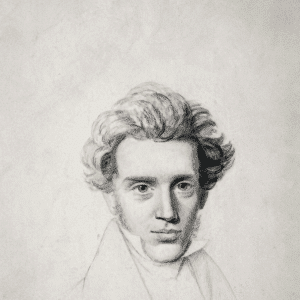
The Danish philosopher Søren Kierkegaard (1813-1855) significantly influenced the culture of the entire twentieth century and has never stopped making his voice heard. As a thinker and as a person, he devoted himself to exploring the constitutive factors of existence, giving them full philosophical dignity: singularity, the self, inwardness, in a path that moves from despair toward the recognition of the possibility of faith, a faith that means love, silence — in contrast to the clamor of the world — and finally joy. The dialogue with the foremost experts on his work aims to show, in the age of the digital revolution, the great relevance of Kierkegaardian thought and its profound usefulness in answering the question: what does it mean to safeguard the human, and what can we not lose?
The Danish philosopher Søren Kierkegaard (1813-1855) significantly influenced the culture of the entire twentieth century and has never stopped making his voice heard. As a thinker and as a person, he devoted himself to exploring the constitutive factors of existence, giving them full philosophical dignity: singularity, the self, inwardness, in a path that moves from despair toward the recognition of the possibility of faith, a faith that means love, silence — in contrast to the clamor of the world — and finally joy. The dialogue with the foremost experts on his work aims to show, in the age of the digital revolution, the great relevance of Kierkegaardian thought and its profound usefulness in answering the question: what does it mean to safeguard the human, and what can we not lose?
GOVERNANCE IN COMPLEX HEALTHCARE SYSTEMS
Organised by Medicina e Persona
Elio Borgonovi, Professor of Economics and Management of Public Administrations, Università Bocconi; Nicola D’Erario, Director of Labour and Skills at Farmindustria; Alberto Felice De Toni, Professor of Industrial Engineering and Management, Università di Udine and mayor of Udine; Marco Trivelli, General Director of ASST Lecco. Moderated by Giorgio Bordin, President of Medicina e Persona
Health systems are complex and not simply complicated. The practical consequences involve all the actors in the system: those who govern, those who provide care, and those who are cared for. A dominant rationalistic mindset considers complexity as an obstacle to be eliminated with organizational tightening that produces inefficiency, disengagement, and dissatisfaction. Complexity, on the contrary, is the expression of the irreducible freedom of Being that «moves the sun and the other stars». Only a reason open to betting on it can reverse the course of a process that seems unstoppable. But who will bear responsibility for this change?
Elio Borgonovi, Professor of Economics and Management of Public Administrations, Università Bocconi; Nicola D’Erario, Director of Labour and Skills at Farmindustria; Alberto Felice De Toni, Professor of Industrial Engineering and Management, Università di Udine and mayor of Udine; Marco Trivelli, General Director of ASST Lecco. Moderated by Giorgio Bordin, President of Medicina e Persona
Health systems are complex and not simply complicated. The practical consequences involve all the actors in the system: those who govern, those who provide care, and those who are cared for. A dominant rationalistic mindset considers complexity as an obstacle to be eliminated with organizational tightening that produces inefficiency, disengagement, and dissatisfaction. Complexity, on the contrary, is the expression of the irreducible freedom of Being that «moves the sun and the other stars». Only a reason open to betting on it can reverse the course of a process that seems unstoppable. But who will bear responsibility for this change?
DONE WELL, EVERY DAY
In collaboration with Compagnia delle Opere
Denis Amadori, CEO of Amadori Group; Stefano Berni, General Manager of the Grana Padano Consortium; Maurizio Fugatti, President of the autonomous Province of Trento; Maurizio Gardini, President of Confcooperative and President of Conserve Italia; Francesco Lollobrigida, Minister of Agriculture; Cristina Scocchia, CEO of Illycaffè. Moderated by Alessandro Bracci, Vice President of Compagnia delle Opere and President and CEO of Teddy S.p.A.
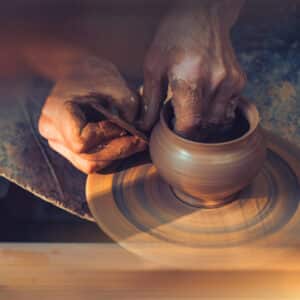
There is a daily love in work done well. A wheel of Grana Padano PDO cheese matures slowly, following a process and methods that bring out its best qualities. The result is a truly Italian delight. A bean that has arrived from afar is among the most beloved coffees in the world. An Alpine province brings together tradition and innovation. Cooperatives develop new models of welfare and community, defending the real economy. Italian cuisine is a heritage of humanity. These are the excellences of our country, and they meet at the Meeting.
Denis Amadori, CEO of Amadori Group; Stefano Berni, General Manager of the Grana Padano Consortium; Maurizio Fugatti, President of the autonomous Province of Trento; Maurizio Gardini, President of Confcooperative and President of Conserve Italia; Francesco Lollobrigida, Minister of Agriculture; Cristina Scocchia, CEO of Illycaffè. Moderated by Alessandro Bracci, Vice President of Compagnia delle Opere and President and CEO of Teddy S.p.A.
There is a daily love in work done well. A wheel of Grana Padano PDO cheese matures slowly, following a process and methods that bring out its best qualities. The result is a truly Italian delight. A bean that has arrived from afar is among the most beloved coffees in the world. An Alpine province brings together tradition and innovation. Cooperatives develop new models of welfare and community, defending the real economy. Italian cuisine is a heritage of humanity. These are the excellences of our country, and they meet at the Meeting.
WILL YOU TELL ME WHEN YOU WERE REBORN?
Enea Simonato, adoptive father in dialogue with Maria Acqua Simi, journalist at Traces
If a child's greatest fear is to know they are an orphan, their greatest joy is to know they are a child. A family from Families for Welcome’s experience of welcoming and adopting.
If a child's greatest fear is to know they are an orphan, their greatest joy is to know they are a child. A family from Families for Welcome’s experience of welcoming and adopting.
DOES LOVE ENDURE? THE PROVOCATION OF THE OTHER IN THE DIGITAL AGE
Sergio Belardinelli, former Professor of the Sociology of Cultural Processes, Università di Bologna; Eva Illouz, sociologist and Director of the École des hautes études en sciences sociales, Paris. Introduced by Marco Aluigi, Deputy Director of the Meeting for Friendship Amongst Peoples ETS Foundation
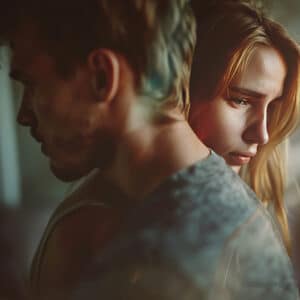
Love is not an idea: it is a gaze, a gesture, a presence that changes the way the world appears. In an age in which artificial intelligence simulates emotions and digital platforms tell us whom to desire, the question becomes urgent: is there something in the experience of love that no algorithm can reach? Authentic love has always been the provocation of the other: not what confirms our expectations, but what cracks them open. It is precisely this irreducibility of the other, their freedom, their otherness, that makes love something radically different from a programmable experience.
Love is not an idea: it is a gaze, a gesture, a presence that changes the way the world appears. In an age in which artificial intelligence simulates emotions and digital platforms tell us whom to desire, the question becomes urgent: is there something in the experience of love that no algorithm can reach? Authentic love has always been the provocation of the other: not what confirms our expectations, but what cracks them open. It is precisely this irreducibility of the other, their freedom, their otherness, that makes love something radically different from a programmable experience.

WONDER BOUND. DESTINED TO BE AMAZED
In collaboration with John Hopkins University
Christopher S. Celenza, James B. Knapp Dean of the School of Arts and Sciences at Johns Hopkins University; Richard Anthony D'Souza, S.J., director of the Vatican Observatory; Massimo Stiavelli, Space Telescope Science Institute and Johns Hopkins University. Moderated by Massimo Robberto, astrophysicist, Space Telescope Science Institute
The images from the James Webb telescope have given humanity something unexpected back to humanity: wonder at the universe. Starting from the images that have struck them most or that are at the center of their research, scientists and humanists ask themselves how the beauty of the cosmos continues to surprise them, in their studies and in daily life, and how this enchantment, rather than fading with knowledge, deepens until it touches the most radical questions of existence.
Christopher S. Celenza, James B. Knapp Dean of the School of Arts and Sciences at Johns Hopkins University; Richard Anthony D'Souza, S.J., director of the Vatican Observatory; Massimo Stiavelli, Space Telescope Science Institute and Johns Hopkins University. Moderated by Massimo Robberto, astrophysicist, Space Telescope Science Institute
The images from the James Webb telescope have given humanity something unexpected back to humanity: wonder at the universe. Starting from the images that have struck them most or that are at the center of their research, scientists and humanists ask themselves how the beauty of the cosmos continues to surprise them, in their studies and in daily life, and how this enchantment, rather than fading with knowledge, deepens until it touches the most radical questions of existence.
BUILDING THE CITY AGAIN
In collaboration with Compagnia delle Opere
Fabrizio Dell'Orefice, Head of External Relations at Open Fiber; Roberto Gualtieri, mayor of Rome Gaetano Manfredi, President of ANCI and mayor of Naples; Alberto Stefani, President of the Regione del Veneto; Sergio Urbani, General manager and CEO of Fondazione Cariplo; Mario Valducci, President of INVIMIT. Moderated by Emmanuele Forlani, General manager of Compagnia delle Opere
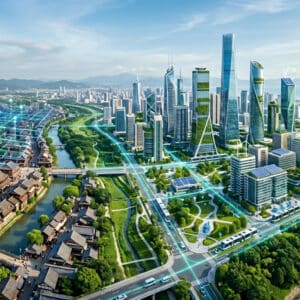
The first event in a series of meetings on urban regeneration, housing, and good city governance in collaboration with Association of Works. Cities are where life takes shape every day. Living, working, growing up, and aging depend on governance choices made far away. Yet the city is also the place where the energies of society emerge, from below, from care, from encounter. Governing well means knowing how to meet them. Those who do it every day recount their experience and what it means to keep building the city.
Fabrizio Dell'Orefice, Head of External Relations at Open Fiber; Roberto Gualtieri, mayor of Rome Gaetano Manfredi, President of ANCI and mayor of Naples; Alberto Stefani, President of the Regione del Veneto; Sergio Urbani, General manager and CEO of Fondazione Cariplo; Mario Valducci, President of INVIMIT. Moderated by Emmanuele Forlani, General manager of Compagnia delle Opere
The first event in a series of meetings on urban regeneration, housing, and good city governance in collaboration with Association of Works. Cities are where life takes shape every day. Living, working, growing up, and aging depend on governance choices made far away. Yet the city is also the place where the energies of society emerge, from below, from care, from encounter. Governing well means knowing how to meet them. Those who do it every day recount their experience and what it means to keep building the city.

AI AND HUMAN WORK. WHAT KIND OF BUSINESS DO WE WANT TO BECOME
In collaboration with Compagnia delle Opere
Dave Board, principal technology strategist Yokogawa; Natale Brescianini, monk and corporate trainer, ACC ICF coach; Rinaldo Pietro Platti, CEO Prolink Group; Cristiana Scelza, President of Valore D; Francesco Seghezzi, President of Adapt. Moderated by Paolo Casadei, founder and CEO ZAL Telecomunicazioni
No sector remains untouched by the transformation that artificial intelligence brings into our work lives. Skills shift, some tasks disappear, others are born. The real issue is not the machine but the business we want: the way it places those who work at the center. Industry, research, and institutions are searching together for a path of progress that does not lose sight of the person.
Dave Board, principal technology strategist Yokogawa; Natale Brescianini, monk and corporate trainer, ACC ICF coach; Rinaldo Pietro Platti, CEO Prolink Group; Cristiana Scelza, President of Valore D; Francesco Seghezzi, President of Adapt. Moderated by Paolo Casadei, founder and CEO ZAL Telecomunicazioni
No sector remains untouched by the transformation that artificial intelligence brings into our work lives. Skills shift, some tasks disappear, others are born. The real issue is not the machine but the business we want: the way it places those who work at the center. Industry, research, and institutions are searching together for a path of progress that does not lose sight of the person.
CHRISTIAN PROTAGONISM IN THE WORLD IN THE FACE OF THE TWILIGHT OF DEMOCRACY IN LATIN AMERICA
Organised by Cdo International
Omar Contreras, argentine entrepreneur; Fabiano Molina, brazilian consultant and manager; Gianni Zandonai, chilean entrepreneur. Moderated by Patrizia Savi, President of the Fondazione AVSI ETS
What can free people from the influence of power, trends, narco-culture, undeclared work and illegal economies, violence and the ideologies that trap millions of people across the Latin American continent? What can free us from what Pasolini called a ‘standardising education’? Luigi Giussani points to an answer that is as simple as it is radical: ‘Encountering someone who is truly present’. A presence capable of showing that reality is not the enemy of young people, businesses or civil society, but can become the setting for a new sense of responsibility and genuine agency.
Omar Contreras, argentine entrepreneur; Fabiano Molina, brazilian consultant and manager; Gianni Zandonai, chilean entrepreneur. Moderated by Patrizia Savi, President of the Fondazione AVSI ETS
What can free people from the influence of power, trends, narco-culture, undeclared work and illegal economies, violence and the ideologies that trap millions of people across the Latin American continent? What can free us from what Pasolini called a ‘standardising education’? Luigi Giussani points to an answer that is as simple as it is radical: ‘Encountering someone who is truly present’. A presence capable of showing that reality is not the enemy of young people, businesses or civil society, but can become the setting for a new sense of responsibility and genuine agency.

THE FREEDOM TO BELIEVE. A HUMAN RIGHT AT THE CENTER OF GEOPOLITICAL CHALLENGES
Promoted by the Italian Council for Freedom of Religion or Belief, Fondazione Internazionale Oasis, Pro Terra Sancta and Fondazione AVSI
Opening greeting by Maria Cristiana Mele, Special Envoy for the Promotion of Religious Freedom and the Protection of Religious Minorities Worldwide; Cristina Duranti, Director of Good Shepherd International Foundation; H.E. Matthew Hassan Kukah, Bishop of the Diocese of Sokoto (Nigeria); Mairead McGuinness, Special Envoy of the European Union for the promotion of Freedom of Religion or Belief. Moderated by Andrea Avveduto, journalist and spokesperson for the Italian Council for Freedom of Religion or Belief. Concluding remarks by Daniela Canclini, President of the Italian Council for Freedom of Religion or Belief
Freedom of religion or belief, a pillar of human dignity and democratic societies, is today threatened in many regions of the world by persecution, discrimination, and violence linked to faith. In an international context marked by conflicts and radicalization, its protection proves crucial for peace and social cohesion. The meeting explores the role of religious freedom in contemporary geopolitical dynamics, with particular attention to minorities in crisis areas and to the contribution of faith communities to processes of reconciliation. It also examines the responsibilities of the European Union, Italy, and international cooperation in strengthening diplomatic and political tools in defense of this fundamental right.
Opening greeting by Maria Cristiana Mele, Special Envoy for the Promotion of Religious Freedom and the Protection of Religious Minorities Worldwide; Cristina Duranti, Director of Good Shepherd International Foundation; H.E. Matthew Hassan Kukah, Bishop of the Diocese of Sokoto (Nigeria); Mairead McGuinness, Special Envoy of the European Union for the promotion of Freedom of Religion or Belief. Moderated by Andrea Avveduto, journalist and spokesperson for the Italian Council for Freedom of Religion or Belief. Concluding remarks by Daniela Canclini, President of the Italian Council for Freedom of Religion or Belief
Freedom of religion or belief, a pillar of human dignity and democratic societies, is today threatened in many regions of the world by persecution, discrimination, and violence linked to faith. In an international context marked by conflicts and radicalization, its protection proves crucial for peace and social cohesion. The meeting explores the role of religious freedom in contemporary geopolitical dynamics, with particular attention to minorities in crisis areas and to the contribution of faith communities to processes of reconciliation. It also examines the responsibilities of the European Union, Italy, and international cooperation in strengthening diplomatic and political tools in defense of this fundamental right.
MARCO GALLO: MORE LIFE TO LIFE
Curated by Tracce
Antonio Gallo and Paola Cevasco, Marco’s parents; Mauro-Giuseppe Lepori, abbot general of the Cistercian Order. Moderated by Stefano Filippi, Director of Traces
“Why do you seek among the dead the one who is alive?”, the student wrote shortly before dying in a road accident in 2011. Today the servant of God Marco Gallo is a luminous example of Christian life for the many young people coming from different ecclesial experiences. The story of his parents and of those who met him.
Antonio Gallo and Paola Cevasco, Marco’s parents; Mauro-Giuseppe Lepori, abbot general of the Cistercian Order. Moderated by Stefano Filippi, Director of Traces
“Why do you seek among the dead the one who is alive?”, the student wrote shortly before dying in a road accident in 2011. Today the servant of God Marco Gallo is a luminous example of Christian life for the many young people coming from different ecclesial experiences. The story of his parents and of those who met him.
Shows
YASMEEN CHOIR IN CONCERT
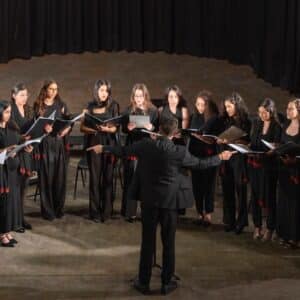
The inaugural concert is entrusted to the Yasmeen Choir, a renowned youth choir from Jerusalem, part of the Magnificat Institute, the music school of the Custody of the Holy Land located in the Christian Quarter of the Old City. Founded with the aim of promoting coexistence through music, the choir — directed by Jamil Freij — brings together young singers from different cultural and religious backgrounds. Its repertoire ranges from European sacred music to traditional Arabic and international songs, reflecting the richness and plurality of the school of which it is part. Regularly invited to international festivals and cultural events, the Yasmeen Choir undertook a tour of the United States in 2018 and performed in Rome in December 2025, collaborating over the years with artists of international standing. For the inaugural concert, an ensemble of seventeen voices accompanied on piano offers a selection of pieces representative of different musical traditions, providing an experience that affirms music as a space of encounter, dialogue, and shared beauty.
In collaboration with the Sagra Musicale Malatestiana.
Supported by Regione Emilia-Romagna, Intesa Sanpaolo, Gruppo Maggioli, Società Italiana Gas Liquidi - Vulcan
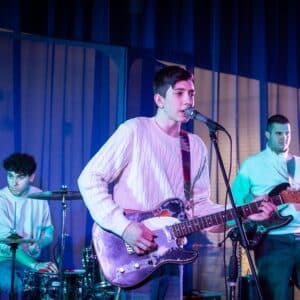
BLUES BOYS IN CONCERT
The Blues Boys are a blues-rock trio consisting of Joe Di Palma (guitar and vocals), Lorenzo Silighini (drums) and Luca Gridelli (bass). Despite their young age, they have already distinguished themselves in numerous contests and music festivals, standing out for the quality of their performances and a surprising artistic maturity. Their repertoire alternates great classics of blues and rock with original compositions, in a musical journey rooted in tradition and reinterpreted with personality and energy. Among their main references are artists such as Jimi Hendrix, Eric Clapton, B.B. King and Joe Bonamassa, whose musical legacy is reinterpreted with an authentic and contemporary style. Along the way they have won the Rose & Crown Trophy of Rimini, Next Music Generation 2024 and the Special Prize as Best Band at the Giovani in Crescendo 2026 competition. The Blues Boys represent a new generation of musicians capable of engaging with the great blues tradition and transforming it into a living and relevant language, bringing to the stage passion, talent and the authentic pleasure of making music together.
Saturday 22 August
Meetings

LOVE AND CARE. THE IMPRINT OF THE HUMAN
Luigina Mortari, professor of the Philosophy of Care, Università di Verona and author of Etica della cura (Ed. Vita e Pensiero); Giovanni Stanghellini, psychiatrist and psychotherapist, author of L'amore che cura (Ed. Feltrinelli). Moderated by Mario Ballantini, psychiatrist, former director of the Department of Mental Health and Addictions of Sondrio
A hand tucking in a blanket, a voice that stays close when it could leave. That is where everything begins, before methods and protocols. Giovanni Stanghellini calls this way of being with those who suffer “love”. Recognized individually, never reduced to a clinical case. Luigina Mortari pushes further: care is the very matter we are made of. We become what we devote time, attention, and presence to.
A hand tucking in a blanket, a voice that stays close when it could leave. That is where everything begins, before methods and protocols. Giovanni Stanghellini calls this way of being with those who suffer “love”. Recognized individually, never reduced to a clinical case. Luigina Mortari pushes further: care is the very matter we are made of. We become what we devote time, attention, and presence to.
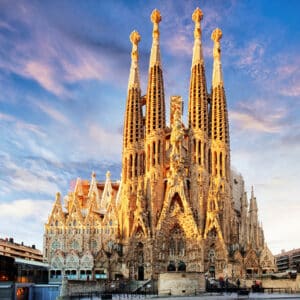
THE SAGRADA FAMILIA: LIVING STONE THROUGH TIME
Marco Bersanelli, Professor of Physics and Astrophysics, Università di Milano; Chiara Curti, architect expert on the Sagrada Familia, lecturer and researcher at the Antoni Gaudí Faculty in Barcelona; Jordi Faulí, chief architect of the Sagrada Familia; Andrea Mastrovito, sculptor, author of the Agnus Dei for the Tower of Jesus Christ of the Sagrada Familia. Moderated by Martina Saltamacchia, Professor of Medieval History, University of Nebraska, Omaha
The central tower of the Sagrada Família, dedicated to Jesus Christ, was completed in 2026, the centenary of the death of Antoni Gaudí. From the beginning, the great Catalan architect involved in the construction of the basilica a network of human relationships capable of weaving together faith, art, observation of nature, and technical innovation. A story that still continues today and that has touched, in different and sometimes unpredictable ways, the speakers of this meeting as well. Their accounts will accompany us in discovering a unique building in the world, where beauty becomes illuminated matter, and where tradition and modernity meet in the sculpture, the light, and the representation of the universe evoked inside the central tower.
The central tower of the Sagrada Família, dedicated to Jesus Christ, was completed in 2026, the centenary of the death of Antoni Gaudí. From the beginning, the great Catalan architect involved in the construction of the basilica a network of human relationships capable of weaving together faith, art, observation of nature, and technical innovation. A story that still continues today and that has touched, in different and sometimes unpredictable ways, the speakers of this meeting as well. Their accounts will accompany us in discovering a unique building in the world, where beauty becomes illuminated matter, and where tradition and modernity meet in the sculpture, the light, and the representation of the universe evoked inside the central tower.
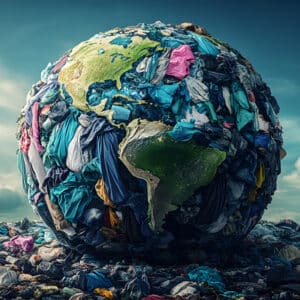
CIRCULAR ECONOMY AND SOCIAL VALUE: COMBATING WASTE TO RESPOND TO POVERTY IN ITALY AND EUROPE
In collaboration with Sistema Banchi
Maria Chiara Gadda, member of the Italian Republic Parliament; Paola Garrone, professor of Business and industrial economics at the Politecnico di Milano and Fondazione per la sussidiarietà; Jens Pii Olesen, general manager of Novo Nordisk Italia; Antonella Sberna, Vice President of the European Parliament; Franco Spicciariello, Director of Public Policy EU MED Amazon Web Services; Paolo Venturi, director of the Aiccon Research Center. Moderated by Marco Piuri, president of Fondazione Banco Alimentare ETS
Ten years after the Gadda Law, the panel reflects on the value of recovering surpluses, reducing waste, and initiatives aimed at the most vulnerable as a lever for combating poverty and a foundation of the social economy. The Italian experience is compared with Europe in order to read into the new fragilities and build unifying integrated responses.
Maria Chiara Gadda, member of the Italian Republic Parliament; Paola Garrone, professor of Business and industrial economics at the Politecnico di Milano and Fondazione per la sussidiarietà; Jens Pii Olesen, general manager of Novo Nordisk Italia; Antonella Sberna, Vice President of the European Parliament; Franco Spicciariello, Director of Public Policy EU MED Amazon Web Services; Paolo Venturi, director of the Aiccon Research Center. Moderated by Marco Piuri, president of Fondazione Banco Alimentare ETS
Ten years after the Gadda Law, the panel reflects on the value of recovering surpluses, reducing waste, and initiatives aimed at the most vulnerable as a lever for combating poverty and a foundation of the social economy. The Italian experience is compared with Europe in order to read into the new fragilities and build unifying integrated responses.
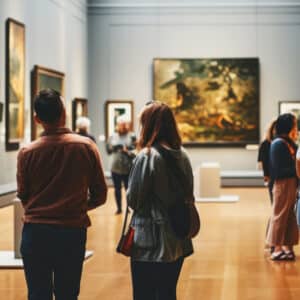
WHEN ART CREATES DEVELOPMENT
Antonello Aurigemma, President of the Regional Council of the Regione Lazio; Angelo Crespi, General director of the Pinacoteca di Brera, Biblioteca Nazionale Braidense, Palazzo Citterio and Cenacolo Vinciano; Giuseppe Frangi, journalist and art critic; Alessandro Giuli, Minister of Culture; Fabio Tagliaferri, Chairman and CEO of Ales S.p.A.. Moderated by Emanuele Boffi, Editor in chief of Tempi
Italy does not need to invent anything. It already has everything. The challenge of recent years has been learning to make it work, transforming the extraordinary heritage of art, history, and beauty into a system capable of generating real development, employment, and local identity. It is an ongoing transition, in continuous motion, of which we must become aware.
Italy does not need to invent anything. It already has everything. The challenge of recent years has been learning to make it work, transforming the extraordinary heritage of art, history, and beauty into a system capable of generating real development, employment, and local identity. It is an ongoing transition, in continuous motion, of which we must become aware.
WELFARE IS NOT A BENEFIT. BUSINESS, PERSON, WORK
Alessandro Angelini, Director Visa Government Solutions; Francesco Bardelli, Chief Health&Welfare Officer at Generali Italia and CEO of Generali Welion; Gabriele Fava, President INPS; Marco Osnato, President of the 6th Finance Commission of the Chamber of Deputies; Anna Zattoni, Co-CEO Marsh Jointly. Moderated by Francesco Seghezzi, President of Adapt
Corporate welfare is not just a set of benefits. It is the way the company recognizes that work concerns the whole person: health, family, social security, care, education, belonging. Léon Harmel’s experience shows an integrated welfare within a precise idea of business and productive community. Today, amid demographic changes, new social needs, and the limits of public welfare, that question is once again relevant: can corporate welfare generate shared value, or does it risk being reduced to a marginal incentive.
Corporate welfare is not just a set of benefits. It is the way the company recognizes that work concerns the whole person: health, family, social security, care, education, belonging. Léon Harmel’s experience shows an integrated welfare within a precise idea of business and productive community. Today, amid demographic changes, new social needs, and the limits of public welfare, that question is once again relevant: can corporate welfare generate shared value, or does it risk being reduced to a marginal incentive.
CULTIVATING THE FUTURE. INNOVATIVE AGRICULTURE FOR DEVELOPMENT
In collaboration with AVSI
Biagio Di Terlizzi, Director, CIHEAM Bari; Stefano Gatti, Director-General for Development Cooperation, Ministry of Foreign Affairs and International Cooperation; Giampaolo Silvestri, Secretary-General of the Fondazione AVSI ETS; Federico Vecchioni, Executive Chairman of Bonifiche Ferraresi. Moderated by Maria Laura Conte, Director of Communications and Advocacy at AVSI
Caring for the land is a fundamental responsibility that links human development and environmental sustainability. In the face of the climate crisis and rising food insecurity, it is essential to promote agricultural models capable of combining productivity, environmental protection and attention to the needs of communities. In this context, international cooperation can foster innovation, training and technology transfer. One example is the AREA Africa Programme, which aims to strengthen agri-food systems in Ghana, the Republic of the Congo and Senegal through a public-private partnership and a focus on local development.
Biagio Di Terlizzi, Director, CIHEAM Bari; Stefano Gatti, Director-General for Development Cooperation, Ministry of Foreign Affairs and International Cooperation; Giampaolo Silvestri, Secretary-General of the Fondazione AVSI ETS; Federico Vecchioni, Executive Chairman of Bonifiche Ferraresi. Moderated by Maria Laura Conte, Director of Communications and Advocacy at AVSI
Caring for the land is a fundamental responsibility that links human development and environmental sustainability. In the face of the climate crisis and rising food insecurity, it is essential to promote agricultural models capable of combining productivity, environmental protection and attention to the needs of communities. In this context, international cooperation can foster innovation, training and technology transfer. One example is the AREA Africa Programme, which aims to strengthen agri-food systems in Ghana, the Republic of the Congo and Senegal through a public-private partnership and a focus on local development.
REGENERATE “TRACES”
Giacomo Cesana, creative director; Stefano Filippi, director of Traces; Angelo Rinaldi, deputy director of Repubblica
The magazine Tracce is over fifty years old and wears them very well. So it has made itself a new graphic outfit and a new digital project, to tell even more stories of people who live. Every day, on every platform.
The magazine Tracce is over fifty years old and wears them very well. So it has made itself a new graphic outfit and a new digital project, to tell even more stories of people who live. Every day, on every platform.
TO CONTINUE AN ENCOUNTER. WONDER BOUND. DESTINED TO BE AMAZED
Christopher S. Celenza, James B. Knapp Dean of the School of Arts and Sciences at Johns Hopkins University; Richard Anthony D'Souza, S.J., director of the Vatican Observatory; Massimo Stiavelli, Space Telescope Science Institute and Johns Hopkins University. Moderated by Massimo Robberto, astrophysicist, Space Telescope Science Institute
A Q&A with the participants of the "Wonder Bound: Destined to Be Amazed" panel.
A Q&A with the participants of the "Wonder Bound: Destined to Be Amazed" panel.
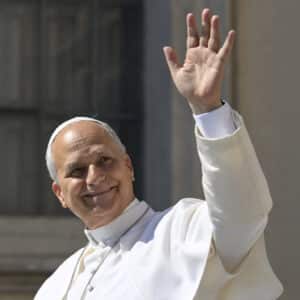
VISIT OF HIS HOLINESS POPE LEO XIV TO THE MEETING
3:00 PM - Holy Father Leo XIV visits the Meeting
The Pope will be welcomed by the Meeting participants along a dedicated route inside the Fair.
4:00 PM - Meeting with Pope Leo XIV in the Grand Auditorium B7-D7
The Holy Father's address will be projected live in all the rooms and in all the spaces of the Meeting set up for the occasion.
Following that, screening of the Holy Mass presided over by the Holy Father, live from the Diocese of Rimini, in the Grand Auditorium.
The Pope will be welcomed by the Meeting participants along a dedicated route inside the Fair.
4:00 PM - Meeting with Pope Leo XIV in the Grand Auditorium B7-D7
The Holy Father's address will be projected live in all the rooms and in all the spaces of the Meeting set up for the occasion.
Following that, screening of the Holy Mass presided over by the Holy Father, live from the Diocese of Rimini, in the Grand Auditorium.

AMERICA ON THE TEST
Christopher Caldwell, contributing writer for The New York Times and contributing editor for the Claremont Review of Books; Michael Driessen, professor of Political Science and International Affairs, John Cabot University Moderated by Marco Bardazzi, journalist, co-founder and Editor in Chief of Bea Media Company
250 years after the declaration of independence, the United States finds itself at the center of global instability, engaged in wars whose end is nowhere in sight and grappling with wearisome internal conflicts. The vitality of the American experiment subjected to yet another reality stress test.
250 years after the declaration of independence, the United States finds itself at the center of global instability, engaged in wars whose end is nowhere in sight and grappling with wearisome internal conflicts. The vitality of the American experiment subjected to yet another reality stress test.
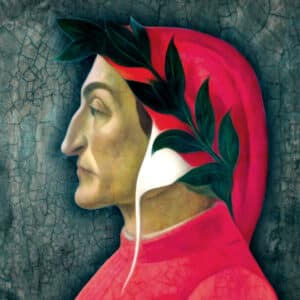
THE SHAPE OF LOVE. HOW DANTE WROTE THE DIVINE COMEDY
Ambrogio Camozzi, Roy G. Clouse Associate Professor of Romance Languages and Literatures, Harvard University. Introduced by Paul Valentini, school director of Karis schools, Rimini
At a time when writers are again being asked for imagination and freedom, the lecture enters the workshop of one of the most creative and innovative minds ever. Starting from a discovery developed over years of university research, the talk reconstructs how Dante composed the greatest poetic work of the West. From the hidden architecture, rediscovered only 700 years later, to the story of the cantos found again in Florence while Dante was in exile and had already abandoned the project, to those found in 1322 one morning in a room in Ravenna by his son Jacopo: the lecture follows the stubborn, technical, and faith-filled gesture by which Dante gave shape and body to the Love of a lifetime.
At a time when writers are again being asked for imagination and freedom, the lecture enters the workshop of one of the most creative and innovative minds ever. Starting from a discovery developed over years of university research, the talk reconstructs how Dante composed the greatest poetic work of the West. From the hidden architecture, rediscovered only 700 years later, to the story of the cantos found again in Florence while Dante was in exile and had already abandoned the project, to those found in 1322 one morning in a room in Ravenna by his son Jacopo: the lecture follows the stubborn, technical, and faith-filled gesture by which Dante gave shape and body to the Love of a lifetime.

SMARTPHONE: LIMITING IN ORDER TO FREE?
Antonio Affinita, General director of MOIGE; Stefania Garassini, lecturer in Content Management and Digital Journalism, Università Cattolica del Sacro Cuore, board member of Fondazione Patti Digitali, author of Smartphone (Ed. Ares); Giada Ragone, professor of Constitutional and Public Law, Università di Milano. Introduced by Lorenza Violini, professor of Constitutional Law, Università di Milano
The damage caused by digital technology to younger generations is at the center of a debate on several levels. Regulators are discussing bans and limits on smartphones and social media, while educators assess the psychological and relational implications. In the middle are parents, often confused and frightened by threats they cannot grasp and control. In conversation to understand.
The damage caused by digital technology to younger generations is at the center of a debate on several levels. Regulators are discussing bans and limits on smartphones and social media, while educators assess the psychological and relational implications. In the middle are parents, often confused and frightened by threats they cannot grasp and control. In conversation to understand.
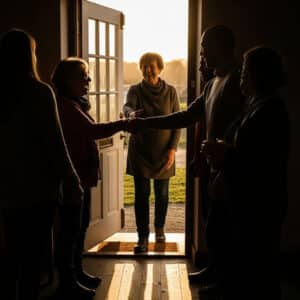
THE ART OF STAYING. PRESENCE IS A MOVEMENT
In collaboration with Cdo Opere Sociali
Patricia Almeida Dos Santos, General director of Associação Nossa Senhora Mãe dos Homens, Brasilia; Maria Teresa Bellucci, Deputy Minister of Labor and Social Policies; Giovanni Bucchi and Veronica Guadagni, adoptive family, Famiglie per Accoglienza; Simona Carobene, General director of Cooperativa sociale Nuovo Cortile; Fiorenza Speranza, projects area of Associazione Cilla ODV; Adele Tellarini, Head of Casa Novella; Enrico Tiozzo Bon, President of Federazione Centri di Solidarietà. Moderated by Stefano Gheno, President of Cdo Opere Sociali
Staying does not mean standing still. There is someone who remained close to someone for years, in a favela or in a suburban house, and precisely in that not leaving they set something in motion: a life that changes, a work that endures. Works stand the test of time not because they are well organized, but because someone chose to be there and to return every day. There the good is born and grows, and takes root.
Patricia Almeida Dos Santos, General director of Associação Nossa Senhora Mãe dos Homens, Brasilia; Maria Teresa Bellucci, Deputy Minister of Labor and Social Policies; Giovanni Bucchi and Veronica Guadagni, adoptive family, Famiglie per Accoglienza; Simona Carobene, General director of Cooperativa sociale Nuovo Cortile; Fiorenza Speranza, projects area of Associazione Cilla ODV; Adele Tellarini, Head of Casa Novella; Enrico Tiozzo Bon, President of Federazione Centri di Solidarietà. Moderated by Stefano Gheno, President of Cdo Opere Sociali
Staying does not mean standing still. There is someone who remained close to someone for years, in a favela or in a suburban house, and precisely in that not leaving they set something in motion: a life that changes, a work that endures. Works stand the test of time not because they are well organized, but because someone chose to be there and to return every day. There the good is born and grows, and takes root.
LÉON HARMEL: “MY TRUE VOCATION IS TO FORM PEOPLE”. THE MEANING OF WORK
Fabrizio Leopardi, Head of Institutional Relations, HR, Leroy Merlin; Jacopo Percivaldi, Managing Director, Piergiorgio Frassati S.p.A. Moderated by Fabio Sala, manager
This first appointment is designed to further the dialogue that began last year with the Exhibition on Work and has continued over recent months. The first key theme to emerge concerns the question of the meaning of work. The current crisis is not merely economic or organisational: it is a crisis of meaning. But ‘crisis’ is a neutral term: it can signify loss, but it can also become an opportunity. When something breaks down, it creates space for questions we were not previously compelled to ask ourselves. In this case, the crucial question is: what is the meaning of work in a person’s life?
This first appointment is designed to further the dialogue that began last year with the Exhibition on Work and has continued over recent months. The first key theme to emerge concerns the question of the meaning of work. The current crisis is not merely economic or organisational: it is a crisis of meaning. But ‘crisis’ is a neutral term: it can signify loss, but it can also become an opportunity. When something breaks down, it creates space for questions we were not previously compelled to ask ourselves. In this case, the crucial question is: what is the meaning of work in a person’s life?
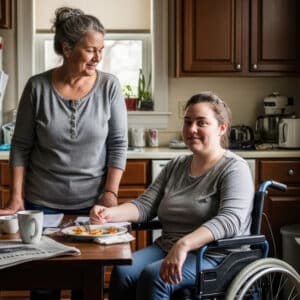
TO LOVE LIFE, ALWAYS
Marco and Elisa Pirini, parents of the Famiglia house in Russi, Comunità Papa Giovanni XXIII; Andrea and Rachele Puligheddu, parents of Ettore; I Terconauti: Damiano and Margherita Tercon with Philipp Carboni. Introduced by Marco Maltoni, director of the Romagna Palliative Care Unit, president of Associazione Sul sentiero di Cicely – Per le Cure Palliative APS, Medicina e Persona. Moderated by Chiara Locatelli, Head of the Struttura Semplice - Unità Operativa "Comfort care perinatale e assistenza al neonato con malformazioni congenite" IRCCS Policlinico S. Orsola Bologna
Experiences in the care sector show that a life marked by fragility is worth living. Weakness and limitation are the places where something essential about the human emerges, but only those who experience love without measure can discover it. Testimonies of people who live for life.
Experiences in the care sector show that a life marked by fragility is worth living. Weakness and limitation are the places where something essential about the human emerges, but only those who experience love without measure can discover it. Testimonies of people who live for life.
THE FIRST STARS AND THE ORIGIN OF CHEMICAL ELEMENTS
Massimo Stiavelli , Space Telescope Science Institute and Johns Hopkins University , in conversation with Giovanni Rosotti , Professor of Astrophysics, University of Milan.
Immediately after its formation, the Universe consisted primarily of hydrogen and helium, with heavier elements almost entirely absent. This poses a double problem: the formation of stars and the origin of other elements. The stars we see forming in our galaxy require heavier elements to form dust and allow the gas to cool before they can form. The first stars must have formed in the absence of heavier elements and are thought to have had much greater masses than the stars we see in our galaxy today. These stars would then have begun to produce the first heavier elements. In this presentation, I will describe the formation of the first stars and how observations with the James Webb Space Telescope can help us test these ideas.
Immediately after its formation, the Universe consisted primarily of hydrogen and helium, with heavier elements almost entirely absent. This poses a double problem: the formation of stars and the origin of other elements. The stars we see forming in our galaxy require heavier elements to form dust and allow the gas to cool before they can form. The first stars must have formed in the absence of heavier elements and are thought to have had much greater masses than the stars we see in our galaxy today. These stars would then have begun to produce the first heavier elements. In this presentation, I will describe the formation of the first stars and how observations with the James Webb Space Telescope can help us test these ideas.
Shows
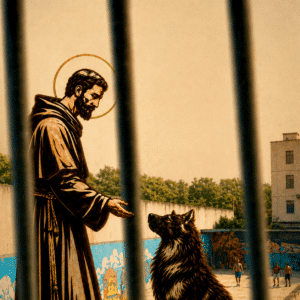
“THE LITTLE POOR MAN AMONG THE POOREST – Paths of Hope Beyond the Walls”
Written and performed by: Alessandro Cozzi and Guido Mezzera. Freely adapted from "La ferita, la letizia" (The Wound, The Joy) by Davide Rondoni.
The project was born from the Creative Reading and Writing Workshop "Saint Francis – Paths of Hope Beyond the Walls", organized on the occasion of the eighth centenary of the death of Saint Francis of Assisi. Created by Associazione Incontro and Presenza ODV within a correctional facility, the program involved a group of inmates in an expressive experience based on reading and writing, inspired by the life and values of the Saint. From this work comes a theatrical piece that combines texts, live music, and stage action, built around "tableaux" that depict the imaginary encounter between an inmate and Saint Francis, transforming the prison cell into a place of reflection, dialogue, and hope.
Direction and musical performance: Walter Muto
Musicians:Angela Lazzaroni, Silvia De Fre.
Images: Giuseppe Bottelli
Work created by inmates of the II Casa di Reclusione di Milano – Bollate.
With the patronage of the National Committee for the celebration of the eighth centenary of the death of Saint Francis of Assisi.
The project was born from the Creative Reading and Writing Workshop "Saint Francis – Paths of Hope Beyond the Walls", organized on the occasion of the eighth centenary of the death of Saint Francis of Assisi. Created by Associazione Incontro and Presenza ODV within a correctional facility, the program involved a group of inmates in an expressive experience based on reading and writing, inspired by the life and values of the Saint. From this work comes a theatrical piece that combines texts, live music, and stage action, built around "tableaux" that depict the imaginary encounter between an inmate and Saint Francis, transforming the prison cell into a place of reflection, dialogue, and hope.
Direction and musical performance: Walter Muto
Musicians:Angela Lazzaroni, Silvia De Fre.
Images: Giuseppe Bottelli
Work created by inmates of the II Casa di Reclusione di Milano – Bollate.
With the patronage of the National Committee for the celebration of the eighth centenary of the death of Saint Francis of Assisi.

MEETING MUSIC CONTEST – Sixth Edition Final
Following the great success of the previous editions, which saw hundreds of emerging artists participate from all over Italy and the presence of juries composed of authoritative industry professionals, the Meeting presents the sixth edition of the Meeting Music Contest, born from the synergy with MEI di Faenza and Made Officina Creativa. An event that over the years has established itself as a privileged space for new singer-songwriter music, capable of combining artistic quality, research and human value, becoming a significant moment from a cultural and social point of view. The final will see the five selected artists Benedetta Perozzi, Dirlinger, Francesco Rainero, Lisandro e Lo Stretto Superfluo, Margine, perform before an exceptional jury chaired by Giovanni Caccamo, flanked by industry experts and coordinators Giordano Sangiorgi (MEI) and Otello Cenci (Meeting).
In collaboration with MEI di Faenza and Made Officina Creativa
Supported by Regione Emilia-Romagna
In collaboration with MEI di Faenza and Made Officina Creativa
Supported by Regione Emilia-Romagna
Sunday 23 August
Meetings
HOLY MASS
Presided over by H.E. Cardinal Matteo Maria Zuppi, President of the CEI and Archbishop of Bologna. Concelebrated by H.E. Msgr. Nicolò Anselmi, Bishop of Rimini
DON GIUSSANI, A GIFT FOR THE PRESENT
Curated by Tracce
Mons. Ennio Apeciti, diocesan official of the Archdiocese of Milan for the causes of saints and archiepiscopal delegate for the cause of beatification of Don Luigi Giussani; Davide Prosperi, president of the Fraternity of Communion and Liberation. Moderated by Alberto Savorana, journalist and author of the biography The Life of Luigi Giussani (McGill-Queen's University Press)
The communal experience of faith born from the charism given to Giussani continues to fascinate men and women today, in every corner of the world. The closing of the diocesan phase of the cause of beatification is an opportunity to become aware of the value of his proposal of Christian life for the whole Church.
Mons. Ennio Apeciti, diocesan official of the Archdiocese of Milan for the causes of saints and archiepiscopal delegate for the cause of beatification of Don Luigi Giussani; Davide Prosperi, president of the Fraternity of Communion and Liberation. Moderated by Alberto Savorana, journalist and author of the biography The Life of Luigi Giussani (McGill-Queen's University Press)
The communal experience of faith born from the charism given to Giussani continues to fascinate men and women today, in every corner of the world. The closing of the diocesan phase of the cause of beatification is an opportunity to become aware of the value of his proposal of Christian life for the whole Church.
MORINGA, ROOTS OF CHANGE. NUTRITION, RESILIENCE AND NEW OPPORTUNITIES IN ETHIOPIA
In collaboration with CESVI
Chiara Antonucci, CEO of Abit Agritech; Giacomo Ciambotti, Head of the Research Division, E4Impact; Talew Dheressa Hurisse, CESVI project manager; Stefano Piziali, Director-General of CESVI; Alessandro Vasta, specialist in sustainable agri-food supply chains at the FAO. Moderated by Marco Carrara, journalist at Rai
Drawing on CESVI’s experience in Ethiopia, the talk explores the role of sustainable agroforestry value chains in strengthening food security, climate resilience and economic opportunities for rural communities. The She-F.E.R.A. project, funded by Italian Development Cooperation and focused on moringa in southern Ethiopia, will be presented as an example of an initiative capable of transforming a local crop with high nutritional value into a driver of development, income generation and market access for small-scale producers, women, young people and micro-enterprises.
Chiara Antonucci, CEO of Abit Agritech; Giacomo Ciambotti, Head of the Research Division, E4Impact; Talew Dheressa Hurisse, CESVI project manager; Stefano Piziali, Director-General of CESVI; Alessandro Vasta, specialist in sustainable agri-food supply chains at the FAO. Moderated by Marco Carrara, journalist at Rai
Drawing on CESVI’s experience in Ethiopia, the talk explores the role of sustainable agroforestry value chains in strengthening food security, climate resilience and economic opportunities for rural communities. The She-F.E.R.A. project, funded by Italian Development Cooperation and focused on moringa in southern Ethiopia, will be presented as an example of an initiative capable of transforming a local crop with high nutritional value into a driver of development, income generation and market access for small-scale producers, women, young people and micro-enterprises.
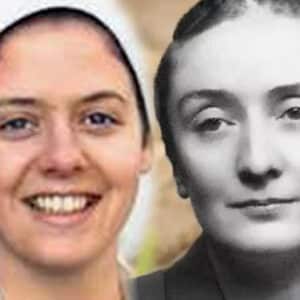
A BURNING LIFE. CHRISTIANITY AND THE ATTRACTION OF WITNESSES
Gerolamo Fazzini, journalist, expert on the figure of Madeleine Delbrêl; Kristen Gardner, nun, postulator of the cause of beatification of Sister Clare Crockett, Servants of the Home of the Mother; Luciano Luppi, priest, professor of Spiritual Theology at the Theological Faculty of Bologna and of Triveneto; H.E. Cardinal Matteo Zuppi, president of the CEI and Archbishop of Bologna;. Moderated by Matteo Lessi, cultural desk of the Meeting for Friendship Amongst Peoples ETS Foundation
Holiness cannot be proved: it appears, and when it appears it leaves something behind. Sister Clare Crockett and Madeleine Delbrêl belong to different eras and vocations, but whoever meets them finds themselves facing the same fact: how is such a life possible? The conference takes this question seriously within the Christian experience as a fact that continues to happen, and in certain men and women it becomes visible with a mysterious, moving force.
Holiness cannot be proved: it appears, and when it appears it leaves something behind. Sister Clare Crockett and Madeleine Delbrêl belong to different eras and vocations, but whoever meets them finds themselves facing the same fact: how is such a life possible? The conference takes this question seriously within the Christian experience as a fact that continues to happen, and in certain men and women it becomes visible with a mysterious, moving force.
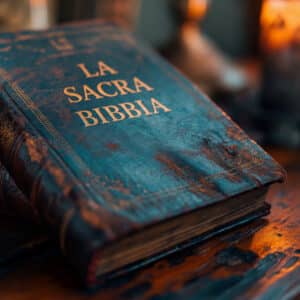
THE LOVES IN THE BIBLE
Stefano Alberto, professor of Theology, Università Cattolica del Sacro Cuore; Joseph Weiler, University Professor, NYU Law School and Senior Fellow at the Center for European studies, Harvard
Loves? Yes! As we know from our personal experience, there are many “types” of love, and that is also the case in the Bible. There is God's love for man and man's love for God, with a marked and significant difference between the Old and the New Testament. There is the love between man and woman. That between parents and children, the love of beauty, art, and nature. And so on. So, prepare for the long and intricate journey through biblical loves.
Loves? Yes! As we know from our personal experience, there are many “types” of love, and that is also the case in the Bible. There is God's love for man and man's love for God, with a marked and significant difference between the Old and the New Testament. There is the love between man and woman. That between parents and children, the love of beauty, art, and nature. And so on. So, prepare for the long and intricate journey through biblical loves.
CRITERIA AND PRIORITIES FOR A NEW HEALTHCARE SYSTEM
Mario Melazzini, Director of the general welfare department of the Regione Lombardia; Tiziano Onesti, President of the Ospedale Pediatrico Bambin Gesù; Francesco Rocca, President of the Lazio Region. Moderated by Riccardo Zagaria, President of Egualia
The public healthcare system stands on a fragile balance: limited resources, growing demand, disparities widening between territories and population groups. Regions and experiences with different histories and models compare criteria and priorities with which to revise the healthcare system.
The public healthcare system stands on a fragile balance: limited resources, growing demand, disparities widening between territories and population groups. Regions and experiences with different histories and models compare criteria and priorities with which to revise the healthcare system.

THE RESOURCES OF THE SELF BEYOND THE TWILIGHT OF THE INDIVIDUAL
In collaboration with Fondazione per la Sussidiarietà
Giuliano Amato, former President of the Council of Ministers; Luca Antonini, Vice President of the Constitutional Court; Lucio Caracciolo, editor of Limes; Massimo Luciani, judge of the Constitutional Court. Introduced and moderated by Giorgio Vittadini, President of the Fondazione per la Sussidiarietà
Multiple factors, economic, social, technological, and geopolitical, have determined the crisis of subjectivity. Individuals are increasingly uncertain of their identity; intermediary bodies face growing difficulties in carrying out their function of social integration; the state is being challenged by transnational private and public powers. It is on this plurality of problematic issues that we want to reflect here.
Giuliano Amato, former President of the Council of Ministers; Luca Antonini, Vice President of the Constitutional Court; Lucio Caracciolo, editor of Limes; Massimo Luciani, judge of the Constitutional Court. Introduced and moderated by Giorgio Vittadini, President of the Fondazione per la Sussidiarietà
Multiple factors, economic, social, technological, and geopolitical, have determined the crisis of subjectivity. Individuals are increasingly uncertain of their identity; intermediary bodies face growing difficulties in carrying out their function of social integration; the state is being challenged by transnational private and public powers. It is on this plurality of problematic issues that we want to reflect here.
BUILDING NETWORKS FOR DISABILITY
Organised by Cdo Opere sociali
Carlo Battistini, President of the Romagna Chamber of Commerce; Davide De Santis, President of the La Mongolfiera ODV; Veronica Amata Donatello, Head of the National Service for the Pastoral Care of People with Disabilities of the CEI; Alessandra Locatelli, Minister for Disabilities; Stefano Noziglia, Director of the Cooperativa Sociale Amici di Gigi; Paola Pozzo, President of the L'Officina Social Cooperative. Moderated by Stefano Gheno, president of Cdo Opere Sociali
Disability forces us to change our perspective. It is not a matter of managing a limit, but of recognizing a whole person, with a desire for relationship and fulfillment. What makes care humane is not the sum of services, but the quality of companionship. On stage are families, institutions, and social cooperatives to understand what holds a truly shared care system together, and what instead continues to keep it fragmented.
Carlo Battistini, President of the Romagna Chamber of Commerce; Davide De Santis, President of the La Mongolfiera ODV; Veronica Amata Donatello, Head of the National Service for the Pastoral Care of People with Disabilities of the CEI; Alessandra Locatelli, Minister for Disabilities; Stefano Noziglia, Director of the Cooperativa Sociale Amici di Gigi; Paola Pozzo, President of the L'Officina Social Cooperative. Moderated by Stefano Gheno, president of Cdo Opere Sociali
Disability forces us to change our perspective. It is not a matter of managing a limit, but of recognizing a whole person, with a desire for relationship and fulfillment. What makes care humane is not the sum of services, but the quality of companionship. On stage are families, institutions, and social cooperatives to understand what holds a truly shared care system together, and what instead continues to keep it fragmented.
BEYOND THE OBSTACLE. WOMEN WHO ARE CHANGING AFRICA
In collaboration with CBM Italia
Filippa Lägerback, television presenter; Massimo Maggio, Director of CBM Italia ETS; Olive Namutebi, activist for the inclusion of people with disabilities, Founder and Executive Director of Albinism Umbrella; Francesca Romana Trisciuzzi, Disability Focal Point, Italian Agency for Development Cooperation. Moderated by Exaucee Ngoma Mbenza, presenter, content creator and podcaster
There is an Africa that all too often remains invisible: that of millions of women with disabilities who face barriers, discrimination and inequality every day. But there is also an Africa that is changing, where people’s courage and determination are matched by concrete opportunities for inclusion, access to rights and participation. The event, organised by CBM Italia, tells stories of change through the voices of activists, advocates and key figures in international cooperation. A dialogue that focuses on the right to education, work and healthcare, demonstrating how inclusive pathways and targeted investments can transform the lives of women with disabilities and bring benefits to entire communities.
Filippa Lägerback, television presenter; Massimo Maggio, Director of CBM Italia ETS; Olive Namutebi, activist for the inclusion of people with disabilities, Founder and Executive Director of Albinism Umbrella; Francesca Romana Trisciuzzi, Disability Focal Point, Italian Agency for Development Cooperation. Moderated by Exaucee Ngoma Mbenza, presenter, content creator and podcaster
There is an Africa that all too often remains invisible: that of millions of women with disabilities who face barriers, discrimination and inequality every day. But there is also an Africa that is changing, where people’s courage and determination are matched by concrete opportunities for inclusion, access to rights and participation. The event, organised by CBM Italia, tells stories of change through the voices of activists, advocates and key figures in international cooperation. A dialogue that focuses on the right to education, work and healthcare, demonstrating how inclusive pathways and targeted investments can transform the lives of women with disabilities and bring benefits to entire communities.
HOW IS LEBANON TODAY?
H.E. Mons César Essayan, apostolic vicar of Beirut; H.E Mons. Mounir Khairallah, Bishop of the Eparchy of Batroun of the Maronites, Secretary-General of the Synod of Bishops of the Maronite Church; Francesca Lazzari, country representative of AVSI in Lebanon. Moderated by Maria Laura Conte, Director of Communications and Advocacy, AVSI.
Lebanon has been facing for years an economic, financial, and social crisis that seems endless. The bombings are worsening an already extremely fragile humanitarian situation, forcing thousands of people to leave their homes. Images, stories, and testimonies from AVSI workers who are working among the Lebanese population.
Lebanon has been facing for years an economic, financial, and social crisis that seems endless. The bombings are worsening an already extremely fragile humanitarian situation, forcing thousands of people to leave their homes. Images, stories, and testimonies from AVSI workers who are working among the Lebanese population.
THE WONDERS OF THE SKY: BETWEEN CINEMA AND ASTRONOMY
Beppe Musicco, journalist and film critic in dialogue with Anna Miotello, European Southern Observatory (ESO), Garching
The experience of wonder at the immensity of the starry sky - and the existential questions it raises - has been a subject of interest for many filmmakers who have sought to bring the wonders of the sky to the screen. In this session, journalist and film critic Beppe Musicco will guide us on a wonderful journey of wonder and discovery through film clips and cinematic reflections.
The experience of wonder at the immensity of the starry sky - and the existential questions it raises - has been a subject of interest for many filmmakers who have sought to bring the wonders of the sky to the screen. In this session, journalist and film critic Beppe Musicco will guide us on a wonderful journey of wonder and discovery through film clips and cinematic reflections.
THE MASTERS OF THE WORLD
Stefano Lucchini, Group Chief Institutional Affairs and External Communication Officer Intesa Sanpaolo; Monica Maggioni, journalist and host of In mezzora; Luciano Violante, president of Associazione Futuri Probabili. Moderated by Bernhard Scholz, President of the Meeting for Friendship Amongst Peoples ETS Foundation
The culture of force puts democratic institutions under pressure, while wars, now normalized, redraw borders and alliances. Western powers seem to have been left voiceless, marginalized by authoritarian impulses and at the mercy of colossal technological powers. But the democratic tradition still has a path to offer in a time of disorder.
The culture of force puts democratic institutions under pressure, while wars, now normalized, redraw borders and alliances. Western powers seem to have been left voiceless, marginalized by authoritarian impulses and at the mercy of colossal technological powers. But the democratic tradition still has a path to offer in a time of disorder.
FOR A YOUNG ITALY. IDEAS AND EXPERIENCES AGAINST YOUNG PEOPLE’S DISCONTENT
Elena Beccalli, rector of Università Cattolica del Sacro Cuore; Sara Ciafardoni, writer; Michele Costanzi, student, Università degli Studi di Milano Davide Rondoni, poet. Moderated by Francesco Magni, Lecturer in General and Social Pedagogy, Università di Bergamo
Italy is aging, and the youngest often experience it as a country that is at a standstill, with no real prospects for building. But this diagnosis is not enough. A discussion among young and already established writers, academics, and those who work with the new generations, reflecting on what it means to bet on Italy and on what could hold back those who might leave or instead attract those who live and work abroad.
Italy is aging, and the youngest often experience it as a country that is at a standstill, with no real prospects for building. But this diagnosis is not enough. A discussion among young and already established writers, academics, and those who work with the new generations, reflecting on what it means to bet on Italy and on what could hold back those who might leave or instead attract those who live and work abroad.

VOCATIONAL TRAINING AND THE GROWTH OF SKILLS
In collaboration with Compagnia delle Opere
Nicola Bertinelli, President of Parmigiano Reggiano; Guido Pietro Bertolone, CEO of GLS; Claudio Durigon, Under-Secretary of State at the Ministry of Labour and Social Policies; Dario Odifreddi, President of the Fondazione Piazza dei Mestieri ETS; Fabrizio Ruggiero, CEO of Edenred Italia. Moderated by Andrea Dellabianca, President of Compagnia delle Opere
For Harmel, “my real business is making men”: for this reason he creates technical schools, vocational courses, and support tools that allow each person to grow in work and as a person. Today this intuition is more relevant than ever: technological acceleration and the impact of AI make continuous reskilling and upskilling indispensable, while the mismatch between required and available skills puts businesses and young people in difficulty. The challenge of lifelong learning and technical training concerns not only employability, but the possibility of building career paths that enhance talents and respond to the search for meaning of the new generations.
Nicola Bertinelli, President of Parmigiano Reggiano; Guido Pietro Bertolone, CEO of GLS; Claudio Durigon, Under-Secretary of State at the Ministry of Labour and Social Policies; Dario Odifreddi, President of the Fondazione Piazza dei Mestieri ETS; Fabrizio Ruggiero, CEO of Edenred Italia. Moderated by Andrea Dellabianca, President of Compagnia delle Opere
For Harmel, “my real business is making men”: for this reason he creates technical schools, vocational courses, and support tools that allow each person to grow in work and as a person. Today this intuition is more relevant than ever: technological acceleration and the impact of AI make continuous reskilling and upskilling indispensable, while the mismatch between required and available skills puts businesses and young people in difficulty. The challenge of lifelong learning and technical training concerns not only employability, but the possibility of building career paths that enhance talents and respond to the search for meaning of the new generations.
RENEWING THE SCHOOL BY GUIDING ITS CHANGE
Organised by Associazione Culturale Il Rischio Educativo, Cdo Opere Educative, Diesse, Di.S.A.L. ASLAM
Andrea Benassi, technologist at INDIRE; Francesco Liuzzi,Co-founder & Partner di Tebat; Giuseppina Rita Mangione, senior researcher at INDIRE; Fabrizio Schiavo, researcher at INDIRE; Lydia Zampolini, PhD student at INDIRE. . Moderated by Paolo Maino, President of Di.S.A.L.
Schools are going through simultaneous transitions: digital, demographic, ecological. Those who lead them find themselves governing changes that have no clear precedents. Educational leadership is a concrete practice: how can a school community be held together when everything is in constant motion, how can a vision be maintained when day-to-day management, including emergencies, risks absorbing it. An event for school leaders, coordinators, and operators in the school world who want to discuss real tools and directions.
Andrea Benassi, technologist at INDIRE; Francesco Liuzzi,Co-founder & Partner di Tebat; Giuseppina Rita Mangione, senior researcher at INDIRE; Fabrizio Schiavo, researcher at INDIRE; Lydia Zampolini, PhD student at INDIRE. . Moderated by Paolo Maino, President of Di.S.A.L.
Schools are going through simultaneous transitions: digital, demographic, ecological. Those who lead them find themselves governing changes that have no clear precedents. Educational leadership is a concrete practice: how can a school community be held together when everything is in constant motion, how can a vision be maintained when day-to-day management, including emergencies, risks absorbing it. An event for school leaders, coordinators, and operators in the school world who want to discuss real tools and directions.
WHAT DOES THE ECONOMY HAVE TO DO WITH HAPPINESS?
In collaboration with Fondazione per la Sussidiarietà
Leonardo Becchetti, professor of Political Economy, Università degli studi di Roma Tor Vergata; Renato Brunetta, President of CNEL; Flavio Felice, professor of the History of Political Doctrines, Università del Molise; Enrico Giovannini, economist and statistician, co-founder and scientific director of ASVIS; Giorgio Vittadini, president of Fondazione per la Sussidiarietà; Stefano Zamagni, professor of political economy at Università di Bologna. Introduced by Giovanni Mulazzani, professor of Administrative and Public Law, Università di Bologna
Growth, GDP, well-being indicators: do the numbers we use to measure the economy really say anything about the quality of people’s lives? For decades scholars and economists have questioned the relationship between material development and happiness, between market efficiency and a sense of community. With six voices from economics, statistics, political philosophy, and social doctrine, the meeting offers a discussion on what it really means to "be well" and on which cultural and institutional tools can help us build it. The discussion also draws on the book "Corpi intermedi, società civile ed economia sociale. Per un governo delle transizioni" (Ed. Il Mulino), edited by Renato Brunetta with Leonardo Becchetti, Flavio Felice, Enrico Giovannini and Giorgio Vittadini, which examines the role of intermediary bodies and the social economy in the governance of the major transitions currently underway.
Leonardo Becchetti, professor of Political Economy, Università degli studi di Roma Tor Vergata; Renato Brunetta, President of CNEL; Flavio Felice, professor of the History of Political Doctrines, Università del Molise; Enrico Giovannini, economist and statistician, co-founder and scientific director of ASVIS; Giorgio Vittadini, president of Fondazione per la Sussidiarietà; Stefano Zamagni, professor of political economy at Università di Bologna. Introduced by Giovanni Mulazzani, professor of Administrative and Public Law, Università di Bologna
Growth, GDP, well-being indicators: do the numbers we use to measure the economy really say anything about the quality of people’s lives? For decades scholars and economists have questioned the relationship between material development and happiness, between market efficiency and a sense of community. With six voices from economics, statistics, political philosophy, and social doctrine, the meeting offers a discussion on what it really means to "be well" and on which cultural and institutional tools can help us build it. The discussion also draws on the book "Corpi intermedi, società civile ed economia sociale. Per un governo delle transizioni" (Ed. Il Mulino), edited by Renato Brunetta with Leonardo Becchetti, Flavio Felice, Enrico Giovannini and Giorgio Vittadini, which examines the role of intermediary bodies and the social economy in the governance of the major transitions currently underway.
CHRISTIANS IN THE WORLD
H.E. Massimo Camisasca, Emeritus Bishop of Reggio Emilia; Elio Guerriero, theologian and essayist; René Roux, rector of the Facoltà di Teologia di Lugano. Moderated by Paolo Prosperi, priest Fraternity of St. Charles
The mission of the church today is marked by an ancient paradox: bringing a universal truth into a world that excludes it. The new word that the Second Vatican Council said about the relationship between church and world must therefore be reformulated in the current cultural and ecclesial context, revitalizing the intuition of the Communio group, a journal and center of thought that is being reborn to speak to the present.
The mission of the church today is marked by an ancient paradox: bringing a universal truth into a world that excludes it. The new word that the Second Vatican Council said about the relationship between church and world must therefore be reformulated in the current cultural and ecclesial context, revitalizing the intuition of the Communio group, a journal and center of thought that is being reborn to speak to the present.
THE SPECTACULAR PROCESS OF STAR AND PLANET FORMATION CLOSE TO HIGH-MASS STARS
Stefano Facchini, Professor of Physics and Astronomy, Università degli Studi di Milano; Carlo Felice Manara, astronomer, European Southern Observatory (ESO), Garching. Modera: Massimo Robberto, astrophysicist, Space Telescope Science Institute
The Sun, as well as all stars and planets, are born in regions where dust and gas accumulates. Among these star-forming regions, the most interesting and spectacular are those where high-mass stars are present. These stars greatly impact the formation of stars and planets. By showing spectacular recent data from space- and ground-based telescopes, we will show how we are deciphering this process.
The Sun, as well as all stars and planets, are born in regions where dust and gas accumulates. Among these star-forming regions, the most interesting and spectacular are those where high-mass stars are present. These stars greatly impact the formation of stars and planets. By showing spectacular recent data from space- and ground-based telescopes, we will show how we are deciphering this process.
LOVE WHERE IT IS
Paolo Ruffini, presenter, director, host and actor in dialogue with Cristiano Guarneri, journalist and writer
Where does love happen? Paolo Ruffini’s artistic activity - intense and multifaceted - is held together by tireless searching, by continuously digging into life in even its harshest aspects. Ruffini thus comes to find the signs of a force that gives back flavor, that gets existence moving again. Before professional needs, Ruffini seeks and offers these signs out of his own need for meaning.
Where does love happen? Paolo Ruffini’s artistic activity - intense and multifaceted - is held together by tireless searching, by continuously digging into life in even its harshest aspects. Ruffini thus comes to find the signs of a force that gives back flavor, that gets existence moving again. Before professional needs, Ruffini seeks and offers these signs out of his own need for meaning.
WORDS, MACHINES, BRAINS: RECOGNIZING WHAT IS HUMAN TO DEFEND IT
Paolo Benanti, Franciscan, professor of Moral Philosophy and Ethics of Technology, Luiss Guido Carli, engaged in research in the fields of techno-ethics and Artificial Intelligence, neuroethics and the post-human; Andrea Moro, Professor of General Linguistics and Neurolinguistics at the Scuola Normale Superiore di Pisa and IUSS Pavia, Member of the Accademia Nazionale dei Lincei. Moderated by Marco Aluigi, Deputy Director of the Meeting for Friendship Amongst Peoples ETS Foundation
Confusing calculation with thought is the most insidious reductionism of our time. Whoever today has the power to decide on new technologies has the duty to understand and declare first of all their real nature. If the only criterion by which one decides how to use, regulate, and direct them is efficiency, computing power, and control of societies, what is human perishes. A dialogue to recognize what makes the human “human”: language, consciousness, and the biological limits of man.
Confusing calculation with thought is the most insidious reductionism of our time. Whoever today has the power to decide on new technologies has the duty to understand and declare first of all their real nature. If the only criterion by which one decides how to use, regulate, and direct them is efficiency, computing power, and control of societies, what is human perishes. A dialogue to recognize what makes the human “human”: language, consciousness, and the biological limits of man.

HOUSING EMERGENCY AND HOUSING PLAN
In collaboration with Compagnia delle Opere
Lucia Albano, Undersecretary of the Ministry of Economy and Finance; Marco Bucci, President of Regione Liguria; Michele Guerra, mayor of Parma; Stefania Proietti, President of the Regione Umbria; Mauro Rotelli, President of the 8th Commission (Environment, Regional Planning and Public Works) of the Chamber of Deputies;. Moderated by Lorenzo Margiotta, architect Fondazione B.Live - Lombardini22
Second appointment in a series of meetings on the theme of urban redevelopment, living, and good governance of cities in collaboration with Association of Works. Housing has once again become one of the major social issues of our time. Costs are rising, supply is insufficient, and the problem no longer concerns only the most vulnerable people, but also young people, families, and workers, in large cities as well as in smaller towns. The new Housing Plan represents an attempt to provide an institutional response to this emergency. What the Government and the Regions have done so far, what is still missing, what the limits of the market are, and how the housing issue affects social cohesion: these are the main topics of a discussion that today concerns millions of people.
Lucia Albano, Undersecretary of the Ministry of Economy and Finance; Marco Bucci, President of Regione Liguria; Michele Guerra, mayor of Parma; Stefania Proietti, President of the Regione Umbria; Mauro Rotelli, President of the 8th Commission (Environment, Regional Planning and Public Works) of the Chamber of Deputies;. Moderated by Lorenzo Margiotta, architect Fondazione B.Live - Lombardini22
Second appointment in a series of meetings on the theme of urban redevelopment, living, and good governance of cities in collaboration with Association of Works. Housing has once again become one of the major social issues of our time. Costs are rising, supply is insufficient, and the problem no longer concerns only the most vulnerable people, but also young people, families, and workers, in large cities as well as in smaller towns. The new Housing Plan represents an attempt to provide an institutional response to this emergency. What the Government and the Regions have done so far, what is still missing, what the limits of the market are, and how the housing issue affects social cohesion: these are the main topics of a discussion that today concerns millions of people.
NOT ALONE
Luca Luigi Ceriani, psychologist and psychotherapist, Faculty of Psychology, Università Cattolica del Sacro Cuore; Marco Crepaldi, social psychologist, president of Associazione Hikikomori Italia; Marcello Tempesta, professor of General and Social Pedagogy, University del Salento, research author on Portofranco. Moderated by Mario Ballantini, psychiatrist, former director of the Department of Mental Health and Addictions of Sondrio
An increasing number of young people at ever earlier ages are showing emotional or behavioral problems. The phenomenon appears to be linked to the current change of era, with its repercussions on family and educational relationships, on social models, on communication. To prevent these expressions of youth distress, medical and psychological intervention alone is not enough if society remains insensitive. We need to promote experiences of community coalition that involve schools, sports associations, parishes, etc., and in which the role of adults (parents, teachers, educators), often kept on the margins, is enhanced.
An increasing number of young people at ever earlier ages are showing emotional or behavioral problems. The phenomenon appears to be linked to the current change of era, with its repercussions on family and educational relationships, on social models, on communication. To prevent these expressions of youth distress, medical and psychological intervention alone is not enough if society remains insensitive. We need to promote experiences of community coalition that involve schools, sports associations, parishes, etc., and in which the role of adults (parents, teachers, educators), often kept on the margins, is enhanced.
LÉON HARMEL: “MY TRUE VOCATION IS TO FORM PEOPLE”. THE WORKING ENVIRONMENT
Pier Francesco Acquaviva, Group Chief Corporate Officer at Sanlorenzo Spa; Giacomo Perletti, founder of Contrada Bricconi; Valeria Peverelli, Head of Community Relations and Local Public Affairs SEC Newgate Italia. Moderated by Andrea Fenili, manager
This second appointment is designed to further the dialogue that began last year with the Exhibition on Work and has continued over recent months. The second focus concerns the workplace: a context that often renders the desire to experience work in a new way naive or unrealistic. The dominant imperatives — efficiency, profit, competition — seem to close off any scope for a different kind of human experience. How do we address this conflict without giving up on the desire for a more humane way of working?
This second appointment is designed to further the dialogue that began last year with the Exhibition on Work and has continued over recent months. The second focus concerns the workplace: a context that often renders the desire to experience work in a new way naive or unrealistic. The dominant imperatives — efficiency, profit, competition — seem to close off any scope for a different kind of human experience. How do we address this conflict without giving up on the desire for a more humane way of working?
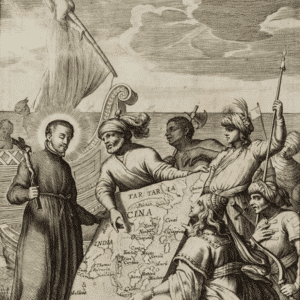
THE JESUITS AND THE ENCOUNTER BETWEEN CULTURES
Andrea Benso, missionary among the Sioux Indians in a reservation in South Dakota; Marina Massimi, professor in the Department of Psychology and Education of the Faculty of Philosophy, Sciences and Letters of the University of Sao Paulo; M. Antoni J. Ucerler, S.J., Director of the Ricci Institute for Chinese-Western Cultural History, Boston College. Introduced by Andrea D’Auria, director of the International Center for Communion and Liberation. Moderated by Emanuele Colombo, professor at the Lynch School of Education and researcher at the Institute for Advanced Jesuit Studies (Boston College)
Since the mid-sixteenth century, the Jesuits brought the Gospel to the ends of the earth, in distant lands and cultures. The encounter explores the missions in Japan, in the footsteps of Francis Xavier, the innovative experiment of coexistence with the Guaraní in the reductions of Paraguay, and the presence of the Jesuits in the plains of South Dakota, where they encountered the world of the Sioux. Stories of encounters between cultures and of evangelization.
Since the mid-sixteenth century, the Jesuits brought the Gospel to the ends of the earth, in distant lands and cultures. The encounter explores the missions in Japan, in the footsteps of Francis Xavier, the innovative experiment of coexistence with the Guaraní in the reductions of Paraguay, and the presence of the Jesuits in the plains of South Dakota, where they encountered the world of the Sioux. Stories of encounters between cultures and of evangelization.
SUSPENDED COFFEE
The young people of Gioventù Studentesca meet Roseline Hamel and Nassera Kermiche, the “sisters in sorrow” who were the protagonists of the opening event of the Meeting. Introduced by Simone Invernizzi, Humanities teacher, Liceo Primo Levi, San Donato MilaneseModerated by Maria Acqua Simi, journalist at Traces
THE LARGEST TELESCOPES IN THE UNIVERSE: UNVEILING THE DEEP COSMOS THROUGH GRAVITY
Giuseppe Puglisi, Professor of Astrophysics, Cosmology, and Space Science, Università degli Studi di Catania; Mariachiara Rossetti, senior researcher, Istituto Nazionale di Astrofisica, IASF-Milano. Moderated by Mattia Bulla, Professor of Astrophysics, Università di Ferrara
Some of the largest telescopes in space weren’t built by human hands, but shaped by gravity. The most massive objects in the Universe, such as galaxies and galaxy clusters, are able to bend and intensify the light of distant galaxies, acting as a colossal, natural magnifying glass. This talk rewinds the history of this revolutionary technique, told through the voices of the very pioneers who made it possible. Join us to discover how the Universe provides its own ultimate toolkit for uncovering its deepest and most hidden secrets.
Some of the largest telescopes in space weren’t built by human hands, but shaped by gravity. The most massive objects in the Universe, such as galaxies and galaxy clusters, are able to bend and intensify the light of distant galaxies, acting as a colossal, natural magnifying glass. This talk rewinds the history of this revolutionary technique, told through the voices of the very pioneers who made it possible. Join us to discover how the Universe provides its own ultimate toolkit for uncovering its deepest and most hidden secrets.
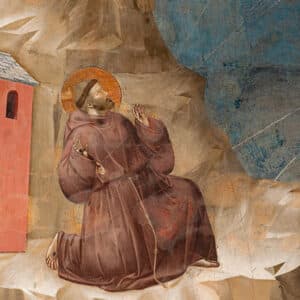
SAINT FRANCIS. THE POET OF HUMANITY AND OF GOD
Davide Rondoni, poet and President of the National Committee for the Eighth Centenary of the Death of Saint Francis of Assisi; Alessandro Sortino, writer, journalist, and television author. Introduced by Letizia Bardazzi, president of the Associazione Italiana Centri Culturali
Eight hundred years after his death, Francis of Assisi continues to elude easy simplifications: ecological icon, symbol of pacifism, Saint for a postcard. The “Canticle of the Creatures” is in fact one of the most radical texts of Western civilization. Praise not as an escape from reality, but as a more lucid gaze upon it. A dialogue between literature and life, on the occasion of the centenary, to try to restore the true measure of a man who loved God, the Church, and his people above all else.
Eight hundred years after his death, Francis of Assisi continues to elude easy simplifications: ecological icon, symbol of pacifism, Saint for a postcard. The “Canticle of the Creatures” is in fact one of the most radical texts of Western civilization. Praise not as an escape from reality, but as a more lucid gaze upon it. A dialogue between literature and life, on the occasion of the centenary, to try to restore the true measure of a man who loved God, the Church, and his people above all else.
THE HUMAN IN THE TIME OF THE DIGITAL REVOLUTION
Dialogue with Javier María Prades López, professor of Dogmatic Theology, San Damaso Ecclesiastical University, Madrid and member of the International Theological Commission
First dialogue of the series “The human condition in the time of technocracies and new nationalisms” curated by Carmine Di Martino, Guglielmo Mina, Lorenza Violini, to reflect together on the present moment. Each session is held “at the school of Magnifica Humanitas”: it includes a presentation by the speaker (45 minutes) and an in-depth dialogue open to all participants (75 minutes); ideal for those who want to listen, discuss, understand. This encounter is dedicated to the relationship between human identity and technological development.
First dialogue of the series “The human condition in the time of technocracies and new nationalisms” curated by Carmine Di Martino, Guglielmo Mina, Lorenza Violini, to reflect together on the present moment. Each session is held “at the school of Magnifica Humanitas”: it includes a presentation by the speaker (45 minutes) and an in-depth dialogue open to all participants (75 minutes); ideal for those who want to listen, discuss, understand. This encounter is dedicated to the relationship between human identity and technological development.
Shows

DON GIUSSANI AND THE BEAUTY OF MUSIC
Curated by Tracce
Pier Paolo Bellini, Professor of Sociology of Communication at the University of Molise. Introduced by Paolo Perego, journalist at Tracce
A journey of listening and exploration of some musical passages that marked the human sensibility of Fr. Giussani and the generations he educated, also through music. This brief guided journey paves the way for the Spirto Gentil collection, which arrives renewed on all platforms.
Pier Paolo Bellini, Professor of Sociology of Communication at the University of Molise. Introduced by Paolo Perego, journalist at Tracce
A journey of listening and exploration of some musical passages that marked the human sensibility of Fr. Giussani and the generations he educated, also through music. This brief guided journey paves the way for the Spirto Gentil collection, which arrives renewed on all platforms.
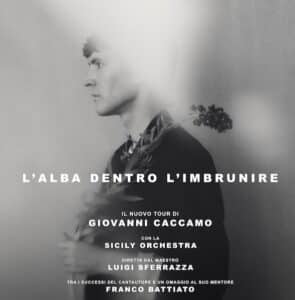
THE DAWN WITHIN THE DUSK – GIOVANNI CACCAMO & SICILY SYMPHONY
Giovanni Caccamo's new tour, "L'alba dentro l'imbrunire", celebrates ten years of career through a musical journey spanning the most significant songs from his first four albums, alongside songs written for prominent artists of the Italian music scene, including Elisa, Andrea Bocelli, Malika Ayane, and Patty Pravo. The second part of the concert is dedicated to Franco Battiato, the artist's master and mentor, through a tribute that evokes his poetic and musical depth. Following the success of the album "Parola", enriched by international collaborations, and of the project "Parola ai giovani" (A Word to the Young), promoted in collaboration with the United Nations, Caccamo returns to the stage accompanied by the Sicily Symphony Orchestra conducted by Maestro Luigi Sferrazza. The concert takes the form of a musical journey through harmony, reflection, and timeless songs.
In collaboration with the Franco Battiato Foundation and International Music & Arts.
With the support of MiC (Ministry of Culture) and SIAE, as part of the "Per Chi Crea" (For Those Who Create) program.
In collaboration with the Sagra Musicale Malatestiana.
Supported by Società Italiana Gas Liquidi - Vulcan.
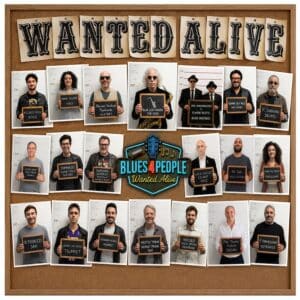
“LA MUSICA CHE MOVE IL SOUL E LE ALTRE STELLE”
BLUES4PEOPLE IN CONCERT
This evening is conceived as a provocation in the spirit of the Meeting's theme. If love is the force that moves the cosmos, can music open spaces of hope? The concert aims to touch the hearts of the audience by offering a musical reflection on the themes of war, peace, and suffering. Blues4People is a band made up of friends from different cities and generations, and a star of the caliber of Lou Marini. A musical journey through beauty and hope, to share what often remains inexpressible.
“LOS DOMINGOS” – Directed by Alauda Ruiz de Azúa
Tickets can be booked on Vivaticket from August and will be available at the Corte degli Agostiniani on the evening of the screening.
Starring Blanca Soroa, Patricia López Arnaiz and Miguel Garcés, the film tells the story of Ainara, a seventeen-year-old who decides not to continue her studies in order to follow a religious vocation. Her decision creates a fracture within her family and places her in tension between different forms of bond and belonging, at a delicate moment in which desire, faith and freedom question one another.
In collaboration with the Cineteca di RiminiWith the support of the Emilia-Romagna Region.
Starring Blanca Soroa, Patricia López Arnaiz and Miguel Garcés, the film tells the story of Ainara, a seventeen-year-old who decides not to continue her studies in order to follow a religious vocation. Her decision creates a fracture within her family and places her in tension between different forms of bond and belonging, at a delicate moment in which desire, faith and freedom question one another.
In collaboration with the Cineteca di RiminiWith the support of the Emilia-Romagna Region.
Monday 24 August
Meetings
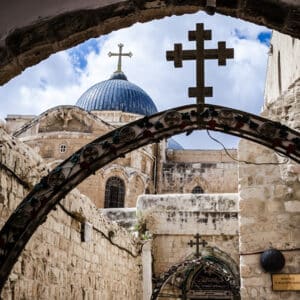
LOVING THE HOLY LAND
Francesco Ielpo, custodian of the Holy Land; Gabriel Romanelli, Latin parish priest of Gaza. Introduced by Alessandra Buzzetti, journalist, TV2000 correspondent from the Holy Land
To be Christians in a Holy Land torn apart by war, one must start every day from a deep sincerity with oneself and with God. In the face of innocent suffering and injustice, no question has a definitive answer. All the more so when one is called to lead communities that have been tried. To love, one must be sure of being loved first by a God who does not abandon us. This is the testimony daily offered by Father Francesco Ielpo, Custodian of the Holy Land, who leads the communities of the friars in Palestine, Israel, Syria and Lebanon, and Father Gabriel Romanelli, parish priest of Gaza City.
To be Christians in a Holy Land torn apart by war, one must start every day from a deep sincerity with oneself and with God. In the face of innocent suffering and injustice, no question has a definitive answer. All the more so when one is called to lead communities that have been tried. To love, one must be sure of being loved first by a God who does not abandon us. This is the testimony daily offered by Father Francesco Ielpo, Custodian of the Holy Land, who leads the communities of the friars in Palestine, Israel, Syria and Lebanon, and Father Gabriel Romanelli, parish priest of Gaza City.
CHILDREN AND THE MEDIA
In collaboration with Avvenire
Marco Erba, teacher and writer; Marco Girardo, Editor in chief of Avvenire; Domenico Simeone, dean of the Faculty of Education Sciences, Università Cattolica del Sacro Cuore, Director of the UNESCO Chair Education for Human Development and Solidarity among Peoples; Marina Terragni, guarantor for childhood and adolescence. Moderated by Caterina Giojelli, journalist of Tempi
As the book "Diritti e rovesci. Le condizioni dell’infanzia oggi" (Vita e Pensiero, Avvenire) explains,childhood is not a static space: children’s rights are realized only if they are alive, practiced, set in motion. Curiosity is also the force that drives children to ask, to explore, to express opinions and to grow with dignity. Thirty years of Popotus have ensured for the youngest an accurate and accessible form of information, a true engine of development, allowing them to know what is happening in the world and to orient themselves not only in society, but also among the challenges of our time, contributing to the formation of critical thinking.
Marco Erba, teacher and writer; Marco Girardo, Editor in chief of Avvenire; Domenico Simeone, dean of the Faculty of Education Sciences, Università Cattolica del Sacro Cuore, Director of the UNESCO Chair Education for Human Development and Solidarity among Peoples; Marina Terragni, guarantor for childhood and adolescence. Moderated by Caterina Giojelli, journalist of Tempi
As the book "Diritti e rovesci. Le condizioni dell’infanzia oggi" (Vita e Pensiero, Avvenire) explains,childhood is not a static space: children’s rights are realized only if they are alive, practiced, set in motion. Curiosity is also the force that drives children to ask, to explore, to express opinions and to grow with dignity. Thirty years of Popotus have ensured for the youngest an accurate and accessible form of information, a true engine of development, allowing them to know what is happening in the world and to orient themselves not only in society, but also among the challenges of our time, contributing to the formation of critical thinking.

A WORLD IN TURMOIL
Alessandro Aresu, consultant and expert in public policies and author La Cina ha vinto (Feltrinelli); Giovanni Orsina, Professor of Contemporary History and Director of the Department of Political Science, Luiss Guido Carli, author of Controrivoluzione. Una storia politica del nostro tempo (Ed. Marsilio). Moderated by Nicola Imberti, Deputy editor of Domani
The architecture of yesterday’s multipolar world has crumbled, but the structure of tomorrow’s is not yet defined. The concepts of sovereignty, market and international order are being challenged, while the language of force is competing with diplomacy and liberal democracies struggle to respond to new challenges. A dialogue to find one’s way through the mists of the present.
The architecture of yesterday’s multipolar world has crumbled, but the structure of tomorrow’s is not yet defined. The concepts of sovereignty, market and international order are being challenged, while the language of force is competing with diplomacy and liberal democracies struggle to respond to new challenges. A dialogue to find one’s way through the mists of the present.
ITALY OF INNER AREAS: DECLINE OR DEVELOPMENT?
In collaboration with Fondazione per la Sussidiarietà
Raffaele Fitto, Executive Vice President for Cohesion and Reforms, European Commission; Massimiliano Giansanti, President of Confagricoltura; Bernardo Mattarella, CEO of Invitalia; Giorgio Vittadini, President of Fondazione per la Sussidiarietà. Moderated by Fabio Vitale, director of SKYTG24
For years, Italy’s inner areas have told a story of marginalization. But are they really territories in decline, or do they hold agricultural, landscape and social resources that have yet to be enhanced? Between European cohesion policies, development investments and new strategies for agriculture, the meeting discusses whether and how the inner areas can become a laboratory of the future for the country, rather than a forgotten edge, energetic between the Mediterranean and Europe, with the aim of creating a safe, competitive and sustainable energy system.
Raffaele Fitto, Executive Vice President for Cohesion and Reforms, European Commission; Massimiliano Giansanti, President of Confagricoltura; Bernardo Mattarella, CEO of Invitalia; Giorgio Vittadini, President of Fondazione per la Sussidiarietà. Moderated by Fabio Vitale, director of SKYTG24
For years, Italy’s inner areas have told a story of marginalization. But are they really territories in decline, or do they hold agricultural, landscape and social resources that have yet to be enhanced? Between European cohesion policies, development investments and new strategies for agriculture, the meeting discusses whether and how the inner areas can become a laboratory of the future for the country, rather than a forgotten edge, energetic between the Mediterranean and Europe, with the aim of creating a safe, competitive and sustainable energy system.
THE AUDACITY OF ORIGIN: WHEN INNOVATION IS BORN FROM WHAT WE HAVE RECEIVED
Organised by Fabbrica per l’eccellenza
Alessandro Bracci, Chairman and Chief Executive Officer of Teddy S.p.A; Luca Ravagnan, Chief Executive Officer of WISE S.p.A.. Moderated by Tommaso Minola, Professor of Economic and Management Engineering, Università di Bergamo
At a time that identifies innovation with speed and discontinuity, it is worth asking where creativity truly comes from. Creativity is often described as the ability to break with the past, to imagine what does not yet exist and change the rules of the game. But is that really so? Every authentic innovation is also born from a story, from relationships, from skills, from a tradition that someone has handed down. Being creative does not mean forgetting what one has received, but reworking it in an original way to respond to the challenges of the present. Through a comparison between entrepreneurial, cultural, and technological experiences, the meeting asks about the origin of generativity: what makes a person capable of creating value? What is the relationship between memory and the future, between legacy and change, between innovation and responsibility.
Alessandro Bracci, Chairman and Chief Executive Officer of Teddy S.p.A; Luca Ravagnan, Chief Executive Officer of WISE S.p.A.. Moderated by Tommaso Minola, Professor of Economic and Management Engineering, Università di Bergamo
At a time that identifies innovation with speed and discontinuity, it is worth asking where creativity truly comes from. Creativity is often described as the ability to break with the past, to imagine what does not yet exist and change the rules of the game. But is that really so? Every authentic innovation is also born from a story, from relationships, from skills, from a tradition that someone has handed down. Being creative does not mean forgetting what one has received, but reworking it in an original way to respond to the challenges of the present. Through a comparison between entrepreneurial, cultural, and technological experiences, the meeting asks about the origin of generativity: what makes a person capable of creating value? What is the relationship between memory and the future, between legacy and change, between innovation and responsibility.
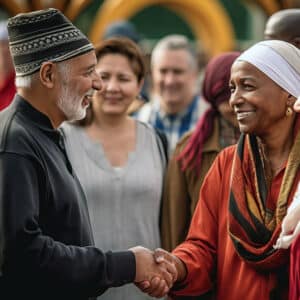
CONTINUING TO MEET. MEMORIES AND EXPERIENCES OF INTERRELIGIOUS DIALOGUE
Wael Farouq, Director of the Arab Cultural Institute (ACI), professor of Arabic Language and Literature, Università Cattolica del Sacro Cuore; Fausto Taiten Guareschi, emeritus abbot of the Monastero Shōbōzan Fudenji, Salsomaggiore Terme, Parma; Emilia Guarnieri, former President of the Meeting for Friendship Amongst Peoples ETS Foundation; Yahya Sergio Yahe Pallavicini, Vice President of COREIS Comunità Religiosa Islamica Italiana and imam of the al-Wahid central mosque in Milan; Wakako Saito, professor of Italian Culture and Religion at Aichigakuin University in Nagoya. Songs and music curated by Marina Valmaggi and Coro Internazionale San Nicola
Interreligious dialogue is born from the encounter between people who carry their own identity to its full extent, discovering a meaning for themselves and for the whole world. The friendship between Father Luigi Giussani and the Buddhist monk Shodo Habukawa, a leading figure in Shingon Buddhism, is an exemplary testimony of this. What does this testimony indicate for the encounter among different religions in an increasingly fragmented and conflictual world?
Interreligious dialogue is born from the encounter between people who carry their own identity to its full extent, discovering a meaning for themselves and for the whole world. The friendship between Father Luigi Giussani and the Buddhist monk Shodo Habukawa, a leading figure in Shingon Buddhism, is an exemplary testimony of this. What does this testimony indicate for the encounter among different religions in an increasingly fragmented and conflictual world?
“PUT NOTHING BEFORE THE LOVE OF CHRIST”
Rosetta Brambilla, missionary, founder of Obras educativa Father Luigi Giussani in Belo Horizonte; Anna Michelini, manager and former AVSI worker in Belo Horizonte. Video message by H.E. Walmor Oliveira de Azevedo, Archbishop of Belo Horizonte. Moderated by Alexandre Ferraro, Head of Communion and Liberation in Brazil
Five years after the death of Father Pigi Bernareggi, the meeting retraces the extraordinary story of a priest who, inspired by the experience lived with Student Youth, left for the mission in Brazil in the 1960s. His witness continues to point to a path of holiness and self-giving.
Five years after the death of Father Pigi Bernareggi, the meeting retraces the extraordinary story of a priest who, inspired by the experience lived with Student Youth, left for the mission in Brazil in the 1960s. His witness continues to point to a path of holiness and self-giving.
CEPHEIDS IN M106: HENRIETTA LEAVITT, THE CALIBRATION OF DISTANCES, AND HUBBLE’S DISCOVERY
Davide Maino, Professor of Experimental Physics, Università degli Studi di Milano in dialogue with Nicolas Estrada, astrophysicist, Thales Alenia Space, Gorgonzola
One of the observational pillars of the cosmological Hot Big Bang model is the discovery of the expansion of the Universe made by Edwin Hubble in 1929. This fundamental discovery would not have been possible without the painstaking work of the American astronomer Henrietta Leavitt. Her research revealed the relationship linking the absolute luminosity of a Cepheid variable with its pulsation period, thereby identifying “standard candles” that, like lighthouses allow us to determine distances of galaxies. But what makes the Cepheids in M106 particularly interesting? Let’s find out together.
One of the observational pillars of the cosmological Hot Big Bang model is the discovery of the expansion of the Universe made by Edwin Hubble in 1929. This fundamental discovery would not have been possible without the painstaking work of the American astronomer Henrietta Leavitt. Her research revealed the relationship linking the absolute luminosity of a Cepheid variable with its pulsation period, thereby identifying “standard candles” that, like lighthouses allow us to determine distances of galaxies. But what makes the Cepheids in M106 particularly interesting? Let’s find out together.
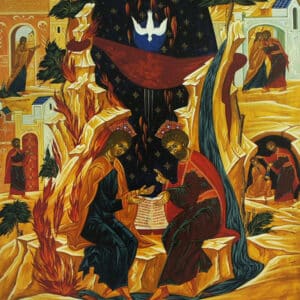
THE SONG OF SONGS
Davide Brullo, writer, poet and translator; H.E. Cardinal José Tolentino de Mendonça, poet, biblical scholar, prefect of the Dicastery for Culture and Education. Readings by actor Giampiero Bartolini. Introduced by Annalisa Teggi, writer and translator
The Song of Songs is a poem in which love is sought, awaited, sung through the body, the voice, desire, the joy of encounter and the wound of absence. Desire, attraction, ardor are the substance of a deep fidelity, of a relationship that does not consume the other but calls them, seeks them, guards them. Love passes through the flesh, but is not exhausted by it; it opens to a greater promise and lets us glimpse the mystery of God.
The Song of Songs is a poem in which love is sought, awaited, sung through the body, the voice, desire, the joy of encounter and the wound of absence. Desire, attraction, ardor are the substance of a deep fidelity, of a relationship that does not consume the other but calls them, seeks them, guards them. Love passes through the flesh, but is not exhausted by it; it opens to a greater promise and lets us glimpse the mystery of God.
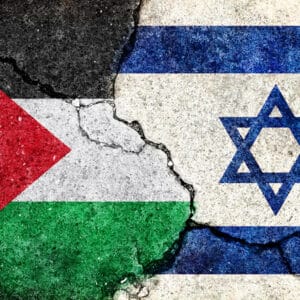
ISRAEL-PALESTINE: IS THERE AN ALTERNATIVE TO THE CONFLICT?
Olivier Roy,professor at the Istituto universitario europeo di Firenze, scientific advisor of Middle East Directions, Robert Schuman Centre for Advanced Studies; Joseph Weiler, University Professor, NYU Law School and Senior Fellow Center for European studies, Harvard. Introduced by Bernhard Scholz, President of the Meeting for Friendship Amongst Peoples ETS Foundation
The two-state solution to resolve the Israeli-Palestinian conflict now seems like an illusion out of step with history, and creative political arrangements for a framework that makes coexistence possible are multiplying. But the hypothesis that seems to have been overtaken by history still deserves to be taken seriously.
The two-state solution to resolve the Israeli-Palestinian conflict now seems like an illusion out of step with history, and creative political arrangements for a framework that makes coexistence possible are multiplying. But the hypothesis that seems to have been overtaken by history still deserves to be taken seriously.
THE ROLE OF THE MEDITERRANEAN IN THE GLOBAL ENERGY CONTEXT
In collaboration with Compagnia delle Opere
Raffaele De Marco, CEO of Areti; Massimo Derchi, Chief Infrastructure Operations, Engineering & Construction Officer at Snam; Fabrizio Iaccarino, Head of institutional affairs Italy Enel; Augustine Inguscio, coordinator - UNDP Rome Centre for Climate and Energy Transition; Gilberto Pichetto Fratin, Minister of Environment and Energy Security; Flavio Villa, country managing director Hitachi Energy; Francesca Zarri, Head of Eni's Italian Region. Moderated by Giuliano Frosini, professor Luiss Business School
The closure of the Strait of Hormuz has caused a severe crisis in global oil supply, bringing the Mediterranean back to the center of energy geopolitics. Thanks to its infrastructure, industrial expertise, and diplomatic relations with other countries, Italy aims to become an international hub. Italy has open construction sites and historical delays. This meeting brings together those who decide, those who carry out, and those who manage, to reflect on intermodality, priorities, and a long-term vision.
Raffaele De Marco, CEO of Areti; Massimo Derchi, Chief Infrastructure Operations, Engineering & Construction Officer at Snam; Fabrizio Iaccarino, Head of institutional affairs Italy Enel; Augustine Inguscio, coordinator - UNDP Rome Centre for Climate and Energy Transition; Gilberto Pichetto Fratin, Minister of Environment and Energy Security; Flavio Villa, country managing director Hitachi Energy; Francesca Zarri, Head of Eni's Italian Region. Moderated by Giuliano Frosini, professor Luiss Business School
The closure of the Strait of Hormuz has caused a severe crisis in global oil supply, bringing the Mediterranean back to the center of energy geopolitics. Thanks to its infrastructure, industrial expertise, and diplomatic relations with other countries, Italy aims to become an international hub. Italy has open construction sites and historical delays. This meeting brings together those who decide, those who carry out, and those who manage, to reflect on intermodality, priorities, and a long-term vision.

COMPETITIVENESS AND SUSTAINABILITY OF BUSINESSES IN EUROPE
In collaboration with Fondazione per la Sussidiarietà
Francesco Maria Chelli, President of Istat; Piero Cipollone, member of the executive board of the European Central Bank; Elena Manzanera Díaz, president of Instituto Nacional de Estadística, Spain; Giorgio Vittadini, President of Fondazione per la Sussidiarietà. Moderated by Emilio Colombo, professor of Economic Policy, Università Cattolica del Sacro Cuore
To address the challenges of the economic, energy, and digital transition, Europe is called to combine competitiveness and sustainability, strengthening companies’ capacity to innovate and grow in an increasingly complex global context. On these issues, authoritative representatives of statistical, financial, and economic institutions engage in discussion, offering data, analysis, and prospects for the future of the European production system.
Francesco Maria Chelli, President of Istat; Piero Cipollone, member of the executive board of the European Central Bank; Elena Manzanera Díaz, president of Instituto Nacional de Estadística, Spain; Giorgio Vittadini, President of Fondazione per la Sussidiarietà. Moderated by Emilio Colombo, professor of Economic Policy, Università Cattolica del Sacro Cuore
To address the challenges of the economic, energy, and digital transition, Europe is called to combine competitiveness and sustainability, strengthening companies’ capacity to innovate and grow in an increasingly complex global context. On these issues, authoritative representatives of statistical, financial, and economic institutions engage in discussion, offering data, analysis, and prospects for the future of the European production system.
HOUSING, A PRIVILEGE FOR ALL
Organised by Cdo Edilizia
Davide Albertini Petroni, President of Confindustria Assoimmobiliare; Gianluca Comazzi, councilor for territory and green systems of the Regione Lombardia; Costantina Regazzo, institutional relations, education and development department, Fondazione Progetto Arca; Felice Squitieri, housing plan commissioner; Irene Tinagli, President of HOUS special committee on the housing crisis in the European Union; Tobia Zevi, councilor for Heritage and Housing Policies, Comune di Roma. Moderated by Simona Frigerio, coordinator of Cdo Edilizia
Third appointment in a series of meetings on urban redevelopment, housing, and good city governance in collaboration with Association of Works. It is not only the house that is lacking. The possibility of living is lacking. Cities are becoming increasingly attractive and increasingly less accessible, and the risk is the one indicated by the Pope for artificial intelligence: places governed by a few, where the rest are kept at the margins. To live means being able to build a life, not just having a roof over one’s head. This meeting reflects on how to rethink cities so that they can truly be for everyone again.
Davide Albertini Petroni, President of Confindustria Assoimmobiliare; Gianluca Comazzi, councilor for territory and green systems of the Regione Lombardia; Costantina Regazzo, institutional relations, education and development department, Fondazione Progetto Arca; Felice Squitieri, housing plan commissioner; Irene Tinagli, President of HOUS special committee on the housing crisis in the European Union; Tobia Zevi, councilor for Heritage and Housing Policies, Comune di Roma. Moderated by Simona Frigerio, coordinator of Cdo Edilizia
Third appointment in a series of meetings on urban redevelopment, housing, and good city governance in collaboration with Association of Works. It is not only the house that is lacking. The possibility of living is lacking. Cities are becoming increasingly attractive and increasingly less accessible, and the risk is the one indicated by the Pope for artificial intelligence: places governed by a few, where the rest are kept at the margins. To live means being able to build a life, not just having a roof over one’s head. This meeting reflects on how to rethink cities so that they can truly be for everyone again.
HAITI. THE STRENGTH TO GET BACK UP
In collaboration with AVSI
Annalisa Costanzo, AVSI country representative in Haiti; Massimo Dell’Utri, Under-Secretary of State at the Ministry of Foreign Affairs and International Cooperation; Raina Forbin, Minister of Foreign Affairs of Haiti; Maurizio Martina, Deputy Director-General of the FAO; Gandy Thomas, Ambassador of Haiti to Italy. Moderated by Guido Calvi, AVSI area director.
For years now, Haiti has seemed to be plunging into an increasingly dramatic crisis, marked by political instability, widespread violence and difficulties in accessing essential services. Yet this country also possesses crucial resources for recovery: a dynamic civil society, strong community ties, young people to be trained, and project experience demonstrating how it is possible to address immediate needs whilst maintaining a long-term vision. This meeting will bring together representatives from the highest Haitian and Italian institutions and those working on the ground on a daily basis, to promote a better understanding of this complex reality.
Annalisa Costanzo, AVSI country representative in Haiti; Massimo Dell’Utri, Under-Secretary of State at the Ministry of Foreign Affairs and International Cooperation; Raina Forbin, Minister of Foreign Affairs of Haiti; Maurizio Martina, Deputy Director-General of the FAO; Gandy Thomas, Ambassador of Haiti to Italy. Moderated by Guido Calvi, AVSI area director.
For years now, Haiti has seemed to be plunging into an increasingly dramatic crisis, marked by political instability, widespread violence and difficulties in accessing essential services. Yet this country also possesses crucial resources for recovery: a dynamic civil society, strong community ties, young people to be trained, and project experience demonstrating how it is possible to address immediate needs whilst maintaining a long-term vision. This meeting will bring together representatives from the highest Haitian and Italian institutions and those working on the ground on a daily basis, to promote a better understanding of this complex reality.
EXTRASOLAR PLANETS: FORMATION, COMPOSITION AND HABITABILITY
Aldo Stefano Bonomo, Senior researcher, Istituto Nazionale di Astrofisica, Osservatorio Astrofisico di Torino; Giovanni Rosotti, Professor of Astrophysics, Università degli Studi di Milano. Moderated by Sara Gasparini, researcher, University of Bergen e NASA Goddard Space Flight Center
To date, we know of over 6,000 exoplanets, and we continue to discover new ones: nearly every star hosts at least one planet. The vast majority of these worlds, however, are very different from the planets in the Solar System. In this talk, we will discuss the extraordinary variety of exoplanets, the open questions regarding their formation, and the most pressing question: Do any of these planets harbor life?
To date, we know of over 6,000 exoplanets, and we continue to discover new ones: nearly every star hosts at least one planet. The vast majority of these worlds, however, are very different from the planets in the Solar System. In this talk, we will discuss the extraordinary variety of exoplanets, the open questions regarding their formation, and the most pressing question: Do any of these planets harbor life?
YOUNG PEOPLE QUESTION THE HOLY LAND
Francesco Ielpo, custodian of the Holy Land, in dialogue with Francesco Ambrosio, biomedical engineering student; Rachele Cucco, student of Modern Literature; Maddalena Maggiani, student of Modern Literature. Moderated by Philip Mauri, physics student
Questions from some university students to the one who guards the living reality of the land of Jesus: the daily life of Christian communities, the desire for peace, the wounds of conflict, and the reasons for hope.
Questions from some university students to the one who guards the living reality of the land of Jesus: the daily life of Christian communities, the desire for peace, the wounds of conflict, and the reasons for hope.
TRAVEL COMPANIONS IN THE AGE OF THE STORM
Curated by Traces
Anna Maria Ballerini, psychologist and psychotherapist; Alberto Pellai, physician and developmental psychotherapist. Moderated by Paola Bergamini, journalist of Traces
Relationships, social media, body, school: preadolescence is a difficult territory to cross. But in the tangle of emotions and changes, a path opens up to becoming adults, to be discovered and walked together.
Anna Maria Ballerini, psychologist and psychotherapist; Alberto Pellai, physician and developmental psychotherapist. Moderated by Paola Bergamini, journalist of Traces
Relationships, social media, body, school: preadolescence is a difficult territory to cross. But in the tangle of emotions and changes, a path opens up to becoming adults, to be discovered and walked together.
A HOPE IN THE TIME OF CONFLICTS
Opening greeting by Massimiliano Tubani, Director Aid to the Church in Need; Adriano Dell’Asta, Professor of Russian Literature and Culture, Università Cattolica del Sacro Cuore; H.E. Cardinal Claudio Gugerotti, prefect of the Dicastery for the Eastern Churches; H.E. Mons. Paolo Martinelli, apostolic vicar of southern Arabia. Moderated by Letizia Bardazzi, president of the Associazione Italiana Centri Culturali
The tenth anniversary of the death of Father Romano Scalfi reminds the world that ecumenism offers hope in this dramatic time of seemingly insoluble conflicts. The ecumenical method encourages us to encounter people and their stories, without allowing ourselves to be overwhelmed by politics.
The tenth anniversary of the death of Father Romano Scalfi reminds the world that ecumenism offers hope in this dramatic time of seemingly insoluble conflicts. The ecumenical method encourages us to encounter people and their stories, without allowing ourselves to be overwhelmed by politics.
BEAUTY AND THE SEARCH FOR MEANING AROUND THE WORLD
In collaboration with John Templeton Foundation
Stephanie Acker, Founder and Executive Director, Everyplace; Chiara Curti, architect expert on the Sagrada Familia, lecturer and researcher at the Antoni Gaudí Faculty in Barcelona; Wael Farouq, Director of the Arab Cultural Institute (ACI), professor of Arabic Language and Literature, Università Cattolica del Sacro Cuore;. Moderated by Brandon Vaidyanathan, Professor of Sociology and Director of the Institutional Flourishing Lab at The Catholic University of America
To ask whether beauty saves or redeems us is not to pose an abstract aesthetic question. It is to ask what happens when the religious sense meets reality. What takes place when we encounter something that exceeds our measure and awakens the question of meaning? Drawing on social scientific data on beauty in the US and UK populations, experiences of beauty in refugee contexts in Africa, and reflections on beauty in architecture, and perspectives on beauty in Arabic/Islamic culture, this conversation explores how beauty moves us, gathers us together, and makes love possible.
Stephanie Acker, Founder and Executive Director, Everyplace; Chiara Curti, architect expert on the Sagrada Familia, lecturer and researcher at the Antoni Gaudí Faculty in Barcelona; Wael Farouq, Director of the Arab Cultural Institute (ACI), professor of Arabic Language and Literature, Università Cattolica del Sacro Cuore;. Moderated by Brandon Vaidyanathan, Professor of Sociology and Director of the Institutional Flourishing Lab at The Catholic University of America
To ask whether beauty saves or redeems us is not to pose an abstract aesthetic question. It is to ask what happens when the religious sense meets reality. What takes place when we encounter something that exceeds our measure and awakens the question of meaning? Drawing on social scientific data on beauty in the US and UK populations, experiences of beauty in refugee contexts in Africa, and reflections on beauty in architecture, and perspectives on beauty in Arabic/Islamic culture, this conversation explores how beauty moves us, gathers us together, and makes love possible.
LÉON HARMEL: “MY TRUE VOCATION IS TO FORM PEOPLE”. FRIENDSHIP AT WORK
In collaboration with Compagnia delle Opere
Davide Damiano, President of Cooperativa Pandora; Francesco Frugiuele, co-founder of Kopernicana; Paolo Prosperi, priest Fraternity of St. Charles. Moderated by Francesco Cassese, Miror Consulting
This third appointment is designed to further the dialogue that began last year with the Exhibition on Work and has continued over recent months. The third theme concerns the conditions under which work does not remain an abstract ideal, but can become a real experience, a different kind of human environment, where one breathes the air that allows one not to be swallowed up by the logic of work and to keep fighting. Is it possible to live with this tension without succumbing to it, and what value is there in tackling it within a company rather than alone?
Davide Damiano, President of Cooperativa Pandora; Francesco Frugiuele, co-founder of Kopernicana; Paolo Prosperi, priest Fraternity of St. Charles. Moderated by Francesco Cassese, Miror Consulting
This third appointment is designed to further the dialogue that began last year with the Exhibition on Work and has continued over recent months. The third theme concerns the conditions under which work does not remain an abstract ideal, but can become a real experience, a different kind of human environment, where one breathes the air that allows one not to be swallowed up by the logic of work and to keep fighting. Is it possible to live with this tension without succumbing to it, and what value is there in tackling it within a company rather than alone?
GENERATIVE ENTERPRISES: SOCIAL SUSTAINABILITY AT THE BASIS OF COMPETITIVENESS
Alessio Acomanni, Executive President of the Università degli Studi Guglielmo Marconi; Paolo Bonassi, Chief Social Impact Officer Intesa Sanpaolo; Anna Fiscale, founder and chair of Progetto Quid; Guido Caselli, Deputy secretary general of Unioncamere Emilia-Romagna; Roberto Mastri, managing director Tetra Pack Packaging Solutions; Paolo Venturi, Director of Aiccon Research Center. Moderated by Augusto Bianchini, President of Cdo Bologna
At a time when work is often understood only in terms of cost, productivity, or margin, a more radical question emerges: what makes a company truly capable of a future? Starting from the data, it is shown that there is a way of doing business that does not separate economic results and social value, but keeps profits, wages, investments, employment, and ties to the territory together. This is the horizon of the generative enterprise: a company that does not consume human and community resources, but regenerates them. The theme here is precisely this link between the meaning of work, competitiveness, and responsibility. Alongside the reading of the data and cultural reflection, the testimony of a company will offer a concrete example of how care for people, employees, and the work environment can become a real lever for development. Because work finds its fullest meaning when it not only produces results, but also builds relationships, dignity, and future.
At a time when work is often understood only in terms of cost, productivity, or margin, a more radical question emerges: what makes a company truly capable of a future? Starting from the data, it is shown that there is a way of doing business that does not separate economic results and social value, but keeps profits, wages, investments, employment, and ties to the territory together. This is the horizon of the generative enterprise: a company that does not consume human and community resources, but regenerates them. The theme here is precisely this link between the meaning of work, competitiveness, and responsibility. Alongside the reading of the data and cultural reflection, the testimony of a company will offer a concrete example of how care for people, employees, and the work environment can become a real lever for development. Because work finds its fullest meaning when it not only produces results, but also builds relationships, dignity, and future.
GROWING TOGETHER. SOWING THE FUTURE WITH MIGRANT MINORS
In partnership with Save the Children
Meissa Ba, representative of the CivicoZero project, Save the Children; Alessandro Battilocchio, Member of Parliament and Chair of the Parliamentary Commission on Suburbs; Aly Berete, representative of the CivicoZero project, Save the Children; Alpaslan Deliloğlu, CEO IKEA Italia; Kristian Gianfreda, Councillor for Social Protection at Rimini City Council; Bernhard Scholz, President of the Meeting for Friendship Amongst Peoples ETS Foundation. Video message by Maria Teresa Bellucci, Deputy Minister for Labour and Social Policies. Introduced and moderated by Daniela Fatarella, Director-General, Save the Children Italy
The social inclusion of children arriving in Italy in search of a better future lies first and foremost in building a sense of belonging to a community – a journey that involves mutual recognition and getting to know one another through living together in welcoming and empowering spaces, education, participation, opportunities to develop their skills, work and many other areas. Save the Children invites reflection on the importance of synergy between the various stakeholders: institutions, which bear primary responsibility; businesses – which can promote inclusion in the workplace and support initiatives for young migrants; civil society; and the young people themselves, who bring their own experiences and life stories to the table.
Meissa Ba, representative of the CivicoZero project, Save the Children; Alessandro Battilocchio, Member of Parliament and Chair of the Parliamentary Commission on Suburbs; Aly Berete, representative of the CivicoZero project, Save the Children; Alpaslan Deliloğlu, CEO IKEA Italia; Kristian Gianfreda, Councillor for Social Protection at Rimini City Council; Bernhard Scholz, President of the Meeting for Friendship Amongst Peoples ETS Foundation. Video message by Maria Teresa Bellucci, Deputy Minister for Labour and Social Policies. Introduced and moderated by Daniela Fatarella, Director-General, Save the Children Italy
The social inclusion of children arriving in Italy in search of a better future lies first and foremost in building a sense of belonging to a community – a journey that involves mutual recognition and getting to know one another through living together in welcoming and empowering spaces, education, participation, opportunities to develop their skills, work and many other areas. Save the Children invites reflection on the importance of synergy between the various stakeholders: institutions, which bear primary responsibility; businesses – which can promote inclusion in the workplace and support initiatives for young migrants; civil society; and the young people themselves, who bring their own experiences and life stories to the table.
QUESTIONS -STILL- WITHOUT ANSWERS
Nicolas Estrada, astrophysicist, Thales Alenia Space, Gorgonzola in dialogue with Alida Marchetti, technologist, Istituto Nazionale di Astrofisica, Osservatorio Astronomico di Brera
These images are not only beautiful to look at and interesting to explain. For an astronomer, they are the door that opens onto the unknown, reminding us how fragile our understanding of the Universe still is. We will start from the images of the cosmology section to draw a map of the most pressing open questions in astrophysics today.
These images are not only beautiful to look at and interesting to explain. For an astronomer, they are the door that opens onto the unknown, reminding us how fragile our understanding of the Universe still is. We will start from the images of the cosmology section to draw a map of the most pressing open questions in astrophysics today.

FOR THE HUMAN AND FOR THE ETERNAL: THE LOVE THAT GENERATES
Anna Chiara and Gigi De Palo, De Palo family; Gabriella Gambino, Undersecretary of the Dicastery for the Laity, the Family and Life; Fabrice Hadjadj, philosopher and writer; Mónica Santamarina, president of UMOFC (World Union of Catholic Women's Organizations). Introduced by Luca Sommacal, president of Famiglie per l’Accoglienza
Can one live with enthusiasm the risk and bold challenge of sharing one’s life with someone, building a family, and bringing forth life? Pope Leo reminded us that marriage is not an ideal, but the standard of true love between man and woman: total, faithful, fruitful love. Love that generates, because we all live thanks to a relationship, that is, to a free and liberating bond of humanity and mutual care. Today's world needs the conjugal alliance in order to know and welcome the love of God and to overcome, with its unifying and reconciling power, the forces that break apart relationships and societies, so that our humanity may bloom again. Love lived in a wholly gratuitous embrace of the other and of their difference, in recognition of their high and infinite value, love that carries a spark of God's love. For the eternal. Ten years after the apostolic exhortation “Amoris Laetitia”, talks and testimonies on the joy and beauty that arise from living the matrimonial vocation decisively.
Can one live with enthusiasm the risk and bold challenge of sharing one’s life with someone, building a family, and bringing forth life? Pope Leo reminded us that marriage is not an ideal, but the standard of true love between man and woman: total, faithful, fruitful love. Love that generates, because we all live thanks to a relationship, that is, to a free and liberating bond of humanity and mutual care. Today's world needs the conjugal alliance in order to know and welcome the love of God and to overcome, with its unifying and reconciling power, the forces that break apart relationships and societies, so that our humanity may bloom again. Love lived in a wholly gratuitous embrace of the other and of their difference, in recognition of their high and infinite value, love that carries a spark of God's love. For the eternal. Ten years after the apostolic exhortation “Amoris Laetitia”, talks and testimonies on the joy and beauty that arise from living the matrimonial vocation decisively.

SAFEGUARDING THE HUMAN: THE ANTHROPOLOGICAL IMPACT OF ARTIFICIAL INTELLIGENCE
Benedetta Giovanola, Professor of moral philosophy, Università di Macerata, former holder of the Jean Monnet Chair Ethics for Inclusive Digital Europe, co-holder of the UNESCO Chair “Ethics of AI and Practical Wisdom”; Javier María Prades López, professor of Dogmatic Theology, San Damaso Ecclesiastical University, Madrid and member of the International Theological Commission. Moderated by Luca Botturi, Professor of Media in Education, Scuola universitaria professionale della Svizzera italiana
Artificial intelligence absorbs data, predicts, and sometimes persuades. But can it really think, or only simulate thought while lacking it? This is above all an anthropological question: what in the person remains irreducible to the machine? A discussion between ethics and theology so as not to lose, in the digital age, the measure of what we are.
Artificial intelligence absorbs data, predicts, and sometimes persuades. But can it really think, or only simulate thought while lacking it? This is above all an anthropological question: what in the person remains irreducible to the machine? A discussion between ethics and theology so as not to lose, in the digital age, the measure of what we are.
THE HISTORY OF PRESENT-DAY ITALY
Enrico Mentana, journalist and editor of TG La7; Bruno Vespa, journalist, writer, creator and host of Porta a porta. Moderated by Mattia Ferraresi, journalist at Domani
Changes, expedients, incurable flaws, and flashes of genius in a country that is experiencing a moment of surprising stability while everything else wavers. A dialogue between two historians of the present about the Italy they recount every day. And about the one that will come.
Changes, expedients, incurable flaws, and flashes of genius in a country that is experiencing a moment of surprising stability while everything else wavers. A dialogue between two historians of the present about the Italy they recount every day. And about the one that will come.
LET’S REFORM SCHOOL. SOME IDEAS FOR A DEBATE
In collaboration with Cdo Opere Educative
Valentina Aprea, Head of the education department, Forza Italia; Enrico Borghi, Senator and National Vice-President, Italia Viva; Grazia di Maggio, FDI member of the 7th Committee (Culture, Science and Education) of the Chamber of Deputies; Mariastella Gelmini, spokesperson on school issues, Noi Moderati; Simona Malpezzi,Vice-Chair of the Joint Committee on Children and Young People. Moderated by Massimiliano Tonarini, president of Cdo Opere Educative
The Italian school system faces a question that concerns its meaning even before its content. Pope Leo XIV calls for rethinking spaces, methods, and the role of the teacher, for an education that is truly integral. The school leaders of the main political parties discuss autonomy, recruitment, inclusion, and educational freedom, seeking possible common ground beyond party affiliations.
Valentina Aprea, Head of the education department, Forza Italia; Enrico Borghi, Senator and National Vice-President, Italia Viva; Grazia di Maggio, FDI member of the 7th Committee (Culture, Science and Education) of the Chamber of Deputies; Mariastella Gelmini, spokesperson on school issues, Noi Moderati; Simona Malpezzi,Vice-Chair of the Joint Committee on Children and Young People. Moderated by Massimiliano Tonarini, president of Cdo Opere Educative
The Italian school system faces a question that concerns its meaning even before its content. Pope Leo XIV calls for rethinking spaces, methods, and the role of the teacher, for an education that is truly integral. The school leaders of the main political parties discuss autonomy, recruitment, inclusion, and educational freedom, seeking possible common ground beyond party affiliations.
THE LINK BETWEEN ENERGY AND ARTIFICIAL INTELLIGENCE: COSTS AND BENEFITS
Organised by Cdo Energia
Vincenzo Colla, Vice President of the Regione Emilia-Romagna with responsibility for Economic Development and Green Economy, Energy, Vocational Training, University and Research; Franco Cotana, CEO of RSE; Andrea Cristini, Chair of ANIE Rinnovabili and member of Technical Advisory Committee (CTS) of KEY-The Energy Transition Expo; Maurizio Delfanti, Professor of Electrical Power Systems, Politecnico di Milano; Giulia Giacometti, Head of Operations at Acea Acqua; Italo Moroni, Executive Director of Energy & Utilities Engineering. Moderated by Felice Vai, Vice President of Compagnia delle Opere
AI can improve productivity, make industrial processes more efficient, optimize consumption, and reduce waste, but these benefits come with very concrete material costs, involving energy, data centers, infrastructure, and water use. The meeting offers a balanced analysis of the relationship between AI costs and benefits, avoiding both abstract enthusiasm and purely alarmist interpretations. The discussion will center on an essential question: what advantages does artificial intelligence really produce? What costs does it place on the energy and territorial system, and what public criteria are needed to assess its overall sustainability?
Vincenzo Colla, Vice President of the Regione Emilia-Romagna with responsibility for Economic Development and Green Economy, Energy, Vocational Training, University and Research; Franco Cotana, CEO of RSE; Andrea Cristini, Chair of ANIE Rinnovabili and member of Technical Advisory Committee (CTS) of KEY-The Energy Transition Expo; Maurizio Delfanti, Professor of Electrical Power Systems, Politecnico di Milano; Giulia Giacometti, Head of Operations at Acea Acqua; Italo Moroni, Executive Director of Energy & Utilities Engineering. Moderated by Felice Vai, Vice President of Compagnia delle Opere
AI can improve productivity, make industrial processes more efficient, optimize consumption, and reduce waste, but these benefits come with very concrete material costs, involving energy, data centers, infrastructure, and water use. The meeting offers a balanced analysis of the relationship between AI costs and benefits, avoiding both abstract enthusiasm and purely alarmist interpretations. The discussion will center on an essential question: what advantages does artificial intelligence really produce? What costs does it place on the energy and territorial system, and what public criteria are needed to assess its overall sustainability?
INTEGRAL DEVELOPMENT. THE POSSIBLE SYNERGY BETWEEN ITALY AND EUROPE
In collaboration with AVSI
Carlo Fidanza, Member of the European Parliament; Giorgio Gori, Member of the European Parliament; John Makoha, Regional Manager for Uganda, AVSI. Moderated by Stefano Manservisi, Professor at the Paris Institute of Political Studies - Sciences Po, President of the Global Fund for the Prevention of Radicalisation, and former Director-General of the European Commission
Whilst negotiations on the new Multiannual Financial Framework (MFF) are in full swing within the European Union, a question arises: how can Italy and the European Union work together to address both chronic and emerging crises, to revitalise the European approach to sustainable and equitable development, and to promote integral human development? This meeting, drawing on diverse perspectives, will help to understand how the interaction between the instruments adopted by Europe and Italy – including the contribution of civil society – can ensure that European external action has the capacity to make an impact and be effective in terms of human development.
Carlo Fidanza, Member of the European Parliament; Giorgio Gori, Member of the European Parliament; John Makoha, Regional Manager for Uganda, AVSI. Moderated by Stefano Manservisi, Professor at the Paris Institute of Political Studies - Sciences Po, President of the Global Fund for the Prevention of Radicalisation, and former Director-General of the European Commission
Whilst negotiations on the new Multiannual Financial Framework (MFF) are in full swing within the European Union, a question arises: how can Italy and the European Union work together to address both chronic and emerging crises, to revitalise the European approach to sustainable and equitable development, and to promote integral human development? This meeting, drawing on diverse perspectives, will help to understand how the interaction between the instruments adopted by Europe and Italy – including the contribution of civil society – can ensure that European external action has the capacity to make an impact and be effective in terms of human development.
SUSPENDED COFFEE
A moment with the writer Franco Nembrini and the students who collaborated in the creation and explanation of the 70 exhibitions “Dante, prophet of hope” around Italy. Moderated by Francesco Fadigati, teacher and writer

FROM SUBATOMIC PARTICLES TO MASSIVE BLACK HOLES. THE WONDER OF THE UNIVERSE
Heino Falcke, Professor of Astroparticle Physics and Radio Astronomy at Radboud University, Nijmegen, vice-chair of the board, Eventhorizon Telescope collaboration; Fabiola Gianotti, physicist and CERN Director-General (2016-2025) . Introduced by Marco Bersanelli, Professor of Physics and Astrophysics, Università degli Studi di Milano
Scientific research now allows us to engage with nature in its most extreme conditions, both in the infinitely small and the infinitely large. Yet even phenomena so far removed from everyday experience reveal a surprising order and a profound beauty. Two leading figures in contemporary research will take us on a journey through some of the most fascinating frontiers of particle physics and astrophysics. An opportunity to be amazed by a hidden beauty that the human mind continues tirelessly to seek and contemplate.
Scientific research now allows us to engage with nature in its most extreme conditions, both in the infinitely small and the infinitely large. Yet even phenomena so far removed from everyday experience reveal a surprising order and a profound beauty. Two leading figures in contemporary research will take us on a journey through some of the most fascinating frontiers of particle physics and astrophysics. An opportunity to be amazed by a hidden beauty that the human mind continues tirelessly to seek and contemplate.
NOTHING IS ENOUGH FOR LOVE
Curated by Traces
Paolo Prosperi, priest Fraternity of St. Charles. Introduced by Valentina Frigerio , Head of Digital Communications for Communion and Liberation.
In the poetic drama “The Satin Slipper,” Paul Claudel stages an impossible, restless, and boundless love, crossed by human desire and the search for God. Passion, freedom, grace, and destiny intertwine until it is revealed that the human heart is made for a fulfillment greater than any possession.
Paolo Prosperi, priest Fraternity of St. Charles. Introduced by Valentina Frigerio , Head of Digital Communications for Communion and Liberation.
In the poetic drama “The Satin Slipper,” Paul Claudel stages an impossible, restless, and boundless love, crossed by human desire and the search for God. Passion, freedom, grace, and destiny intertwine until it is revealed that the human heart is made for a fulfillment greater than any possession.
RETHINKING FREEDOM TO REGENERATE DEMOCRACY
Dialogue with Vittorio Pelligra, Professor of Economic Policy, Università di Cagliari
Second dialogue of the series “The human condition in the time of technocracies and new nationalisms” curated by Carmine Di Martino, Guglielmo Mina, Lorenza Violini, to reflect together on the present moment. Each appointment is set “at the school of Magnifica Humanitas”: it includes a presentation by the speaker (45 minutes) and an in-depth dialogue open to all participants (75 minutes); ideal for those who want to listen, discuss, and understand. This encounter is dedicated to the contradictions that run through liberal societies.
Second dialogue of the series “The human condition in the time of technocracies and new nationalisms” curated by Carmine Di Martino, Guglielmo Mina, Lorenza Violini, to reflect together on the present moment. Each appointment is set “at the school of Magnifica Humanitas”: it includes a presentation by the speaker (45 minutes) and an in-depth dialogue open to all participants (75 minutes); ideal for those who want to listen, discuss, and understand. This encounter is dedicated to the contradictions that run through liberal societies.
Shows
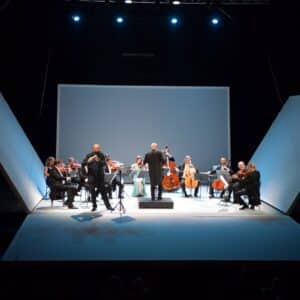
MOVING THROUGH THE SILENCES. I SOLISTI VENETI IN CONCERT
A program that brings into dialogue two fundamental voices of contemporary music, Arvo Pärt and Rachel Portman, united by an essential, introspective, and deeply evocative writing style. Pärt's music, marked by a spiritual and meditative dimension and having become iconic in art-house cinema — including the opening piece of "The Great Beauty" — will be represented by some of his most celebrated compositions, including "Fratres". The first woman to win the Academy Award for Best Original Score, Rachel Portman stands out for the formal transparency and emotional intensity of her compositions. The program features some of her most celebrated film scores, drawn from "Emma", "Chocolat", and "The Cider House Rules". Alongside them, "Notturno Passacaglia" by Ennio Morricone, a piece of intense rarefaction and expressive depth, completes the musical journey. The performance is entrusted to I Solisti Veneti, a historic ensemble of international renown, protagonists of thousands of concerts and recordings with the greatest soloists.
A project that restores to film music its full artistic autonomy, highlighting its expressive uniqueness.
I Solisti Veneti: conducted by Giuliano Carella, Daniela Pini mezzo-soprano, Massimo Mercelli flute. Lorenzo Guzzoni clarinet, Alessandro Cesaro piano, Lucio Degani lead violin.
In collaboration with the Sagra Musicale Malatestiana.
Supported by Regione Emilia-Romagna, Intesa Sanpaolo, Società Italiana Gas Liquidi - Vulcan
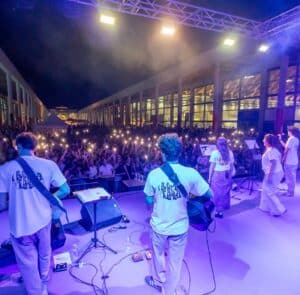
ROTATTADA AND PUNTI NERI IN CONCERT
Bound by a friendship born between the stage and everyday life, I Punti Neri and I Rotattada are two musical groups that come together to shape a single story. I Punti Neri were born backstage at a Milanese theater: through original music and theater-song they craft a language that unites word and sound, and since 2024 they have also been accompanying Giacomo Poretti's "Poretcast". I Rotattada came to life in a middle school classroom, debuting at an end-of-year party and turning that experience into a growing journey that has taken them to perform in various Italian cities — from Rome to Milan, from Rimini to Bologna. On the evening of the 24th, these two worlds unite in a single experience: a great celebration that meets theater.
Tuesday 25 August
Meetings
FORGIVENESS MAKES YOU FREE
Davide Simone Cavallo, student of the Università Bocconi; video intervention by Chiara Mocchi, French teacher at Trescore Balneario middle school. Introduced and moderated by Matteo Severgnini, head of Gioventù Studentesca, rector of Regina Mundi School, Milan
One October night, Davide Simone Cavallo is stabbed for a few dozen euros and loses the ability to use his legs at twenty-two years old. One March morning, Professor Chiara Mocchi is struck in the hallways of her school by a thirteen-year-old student. Both, through pain, have chosen not to hate. “It weighs on my heart every day that they will spend in prison. Kids angry with the world who did not know what they were doing and to whom I would gladly have extended a hand,” writes Davide. “You should know that I carry neither anger nor fear in my heart... this wound must not become a wall, but a bridge,” Chiara wrote. From two wounds and two dramas that seemed beyond redemption, an unforeseen fact bursts forth, a greater event: forgiveness, which passes through evil and makes free.
One October night, Davide Simone Cavallo is stabbed for a few dozen euros and loses the ability to use his legs at twenty-two years old. One March morning, Professor Chiara Mocchi is struck in the hallways of her school by a thirteen-year-old student. Both, through pain, have chosen not to hate. “It weighs on my heart every day that they will spend in prison. Kids angry with the world who did not know what they were doing and to whom I would gladly have extended a hand,” writes Davide. “You should know that I carry neither anger nor fear in my heart... this wound must not become a wall, but a bridge,” Chiara wrote. From two wounds and two dramas that seemed beyond redemption, an unforeseen fact bursts forth, a greater event: forgiveness, which passes through evil and makes free.
COFFEE BEANS IN AFRICA. NURTURING THE TALENT OF THE NEWER GENERATIONS
In collaboration with MAECI/UNIDO
Mario Bruscino, Vice-President of the Italian Coffee Committee and Green Coffee Purchasing Manager at Caffè Borbone; Giacomo Ciambotti, Head of the Research Division, E4Impact; Edmondo Cirielli, Deputy Minister for Foreign Affairs and International Cooperation; Adugna Debela, Director-General of the Ethiopian Coffee and Tea Authority, Ethiopia; Primus Kimaryo, Director-General of the Tanzania Coffee Board; Henry Kinyua, Advisor on Crops & Value Chains at the Presidential Economic Transformation Secretariat, Kenya; Chiara Scaraggi, coffee value chain expert at UNIDO. Moderator: Gerardo Patacconi, Director of the Master’s Programme in Coffee Economics and Science
The initiative, which forms part of a wider Italian strategy in the coffee sector, stems from the need to strengthen the resilience of the coffee supply chain in the face of the challenges it is currently facing, starting with those linked to climate change, falling productivity and the economic insecurity of smallholder farmers. The Italian initiative therefore aims to support rural communities and transform the entire value chain, improving product quality and promoting circular economy practices. In particular, the panel intends to focus on the importance for the coffee sector of investing in the younger generation and in training, as a driver for growth across the African continent. The ACT Programme pursues this commitment through a series of activities, foremost among which is the creation of innovative Coffee Training Centres (CTCs). These centres offer professionals courses dedicated to advanced techniques – such as quality control, roasting and brewing – and help producers integrate the circular economy and resource efficiency to compete in international markets. The event will therefore be an opportunity to reflect on how investing in the future of the supply chain represents the first step towards making it truly sustainable, whilst contributing to the economic development of partner countries.
Mario Bruscino, Vice-President of the Italian Coffee Committee and Green Coffee Purchasing Manager at Caffè Borbone; Giacomo Ciambotti, Head of the Research Division, E4Impact; Edmondo Cirielli, Deputy Minister for Foreign Affairs and International Cooperation; Adugna Debela, Director-General of the Ethiopian Coffee and Tea Authority, Ethiopia; Primus Kimaryo, Director-General of the Tanzania Coffee Board; Henry Kinyua, Advisor on Crops & Value Chains at the Presidential Economic Transformation Secretariat, Kenya; Chiara Scaraggi, coffee value chain expert at UNIDO. Moderator: Gerardo Patacconi, Director of the Master’s Programme in Coffee Economics and Science
The initiative, which forms part of a wider Italian strategy in the coffee sector, stems from the need to strengthen the resilience of the coffee supply chain in the face of the challenges it is currently facing, starting with those linked to climate change, falling productivity and the economic insecurity of smallholder farmers. The Italian initiative therefore aims to support rural communities and transform the entire value chain, improving product quality and promoting circular economy practices. In particular, the panel intends to focus on the importance for the coffee sector of investing in the younger generation and in training, as a driver for growth across the African continent. The ACT Programme pursues this commitment through a series of activities, foremost among which is the creation of innovative Coffee Training Centres (CTCs). These centres offer professionals courses dedicated to advanced techniques – such as quality control, roasting and brewing – and help producers integrate the circular economy and resource efficiency to compete in international markets. The event will therefore be an opportunity to reflect on how investing in the future of the supply chain represents the first step towards making it truly sustainable, whilst contributing to the economic development of partner countries.
THE AWAKENING OF FAITH
Curated by Traces
Christophe Rosier, priest, pastor of Saint-Joseph, Grenoble; Ines Saada, student, Grenoble. Moderated by Mattia Ferraresi, journalist of Domani
In France’s strongly secular society, the number of adolescents and adults asking for baptism grows every year. The “creative minority” of new Christians questions the West, which believed it was destined to push religion out of its horizon.
Christophe Rosier, priest, pastor of Saint-Joseph, Grenoble; Ines Saada, student, Grenoble. Moderated by Mattia Ferraresi, journalist of Domani
In France’s strongly secular society, the number of adolescents and adults asking for baptism grows every year. The “creative minority” of new Christians questions the West, which believed it was destined to push religion out of its horizon.

THE FUTURE OF WELFARE TWENTY YEARS AFTER THE 5X1000
In collaboration with Intergruppo parlamentare per la Sussidiarietà
Giovanni Azzone, President Fondazione Cariplo and ACRI; Alessandro Cattaneo, member of Parliament, Forza Italia; Alessandro Colucci, member of Parliament, Noi Moderati; Maria Chiara Gadda, member of Parliament, Italia Viva; Massimo Garavaglia, Chair of the Senate Finance and Treasury Committee; Lorenzo Malagola, member of Parliament, Fratelli d'Italia; Simona Malpezzi, senator, Partito Democratico; Ettore Rosato, Deputy Secretary, Azione. Introduced by Giovanni Mulazzani, professor of Administrative and Public Law, Università di Bologna. Moderated by Emilia Patta, journalist at Sole 24Ore
The establishment of the 5x1000 marked a significant turning point in recognizing the free contribution of all citizens to the building of the country's welfare system. Twenty years later, the 5x1000 today stands as an indelible sign of grassroots participation in the well-being and development of local areas and as a popular application of the principle of subsidiarity. What future prospects can reflect the same ideal drive, to overcome the false opposition between economic development and social cohesion?
Giovanni Azzone, President Fondazione Cariplo and ACRI; Alessandro Cattaneo, member of Parliament, Forza Italia; Alessandro Colucci, member of Parliament, Noi Moderati; Maria Chiara Gadda, member of Parliament, Italia Viva; Massimo Garavaglia, Chair of the Senate Finance and Treasury Committee; Lorenzo Malagola, member of Parliament, Fratelli d'Italia; Simona Malpezzi, senator, Partito Democratico; Ettore Rosato, Deputy Secretary, Azione. Introduced by Giovanni Mulazzani, professor of Administrative and Public Law, Università di Bologna. Moderated by Emilia Patta, journalist at Sole 24Ore
The establishment of the 5x1000 marked a significant turning point in recognizing the free contribution of all citizens to the building of the country's welfare system. Twenty years later, the 5x1000 today stands as an indelible sign of grassroots participation in the well-being and development of local areas and as a popular application of the principle of subsidiarity. What future prospects can reflect the same ideal drive, to overcome the false opposition between economic development and social cohesion?
ITALY OF BUSINESSES: ROOTS AND INTERNATIONAL VISION
In collaboration with Compagnia delle Opere
Michele De Pascale, President of the Regione Emilia-Romagna; Giorgia Favaro, CEO of Mc Donald’s Italia; Attilio Fontana, President of the Regione Lombardia; Pasquale Frega, Chairman and CEO of Philip Morris Italia; Roberto Sancinelli, President of Montello S.p.A.; Adolfo Urso, Minister of Business and Made in Italy. Moderated by Emmanuele Forlani, General director of Compagnia delle Opere
There are businesses whose roots lie in a specific territory and from there look out at the whole world. Compagnia delle Opere brings institutions and entrepreneurs face to face on the Italian production system, capable of remaining faithful to its history while crossing global markets. Made in Italy grows without being uprooted, within a country that is betting on its companies.
Michele De Pascale, President of the Regione Emilia-Romagna; Giorgia Favaro, CEO of Mc Donald’s Italia; Attilio Fontana, President of the Regione Lombardia; Pasquale Frega, Chairman and CEO of Philip Morris Italia; Roberto Sancinelli, President of Montello S.p.A.; Adolfo Urso, Minister of Business and Made in Italy. Moderated by Emmanuele Forlani, General director of Compagnia delle Opere
There are businesses whose roots lie in a specific territory and from there look out at the whole world. Compagnia delle Opere brings institutions and entrepreneurs face to face on the Italian production system, capable of remaining faithful to its history while crossing global markets. Made in Italy grows without being uprooted, within a country that is betting on its companies.
SPORT AS A HARMONIOUS PATH
Organideb by Cdo Sport
Vittorio Bosio, President of CSI; Rocco Giorgianni, senior manager of public affairs & sustainability at AC Milan and secretary general of Fondazione Milan; Fabrizio Lobasso, Deputy Director-General for Growth and Export Promotion, Ministry of Foreign Affairs; Lara Tagliabue, former basketball player and project manager at Fondazione Laureus; Mario Zaninelli, Professor of ethics of sport, Università degli Studi di Milano. Moderated by Mario Del Verme, Cdo Sport
Sport is not just results: it is a harmonious path that brings together body, mind, relationships, and responsibility. After the educational experience of 2026 dedicated to clubs, coaches, and families, the new proposal for the 2026/2027 season is now underway. A path created to offer concrete tools to those who coach, lead, and educate, placing inclusion and the growth of young people at the center. An opportunity for discussion to understand how sport can, today more than ever, shape people, generate community, and leave a lasting educational legacy.
Vittorio Bosio, President of CSI; Rocco Giorgianni, senior manager of public affairs & sustainability at AC Milan and secretary general of Fondazione Milan; Fabrizio Lobasso, Deputy Director-General for Growth and Export Promotion, Ministry of Foreign Affairs; Lara Tagliabue, former basketball player and project manager at Fondazione Laureus; Mario Zaninelli, Professor of ethics of sport, Università degli Studi di Milano. Moderated by Mario Del Verme, Cdo Sport
Sport is not just results: it is a harmonious path that brings together body, mind, relationships, and responsibility. After the educational experience of 2026 dedicated to clubs, coaches, and families, the new proposal for the 2026/2027 season is now underway. A path created to offer concrete tools to those who coach, lead, and educate, placing inclusion and the growth of young people at the center. An opportunity for discussion to understand how sport can, today more than ever, shape people, generate community, and leave a lasting educational legacy.
TO CONTINUE AN ENCOUNTER. FROM SUBATOMIC PARTICLES TO MASSIVE BLACK HOLES. THE WONDER OF THE UNIVERSE
Heino Falcke, Professor of Astroparticle Physics and Radio Astronomy at Radboud University, Nijmegen, vice-chair of the board, Eventhorizon Telescope collaboration in dialogue with Carlo Felice Manara, astronomer, European Southern Observatory (ESO), Garching.
A Q&A with the participants of the “From subatomic particles to massive black holes. The wonder of the universe” panel.
A Q&A with the participants of the “From subatomic particles to massive black holes. The wonder of the universe” panel.
CACAO CONNECT. THE ITALIAN WAY TO COCOA
In collaboration with MAECI
Edmondo Cirielli, Deputy Minister for Foreign Affairs and International Cooperation; Adelio Crippa, Chief Executive of ICAM; Daniela Fatarella, Director-General of Save the Children Italy; H.E. Mrs Mona-Helen Kabuki Quartey, Ambassador of Ghana to Italy; Juan Lucas Restrepo, Director-General of the Alliance of Bioversity International and CIAT; Carlo Rossotto, Director of International Development Cooperation, Cassa Depositi e Prestiti; Francesco Tramontin, Executive Vice-President of Ferrero. Moderated by Angelo Riccaboni, economist and former Vice-Chancellor of the Università di Siena
The panel aims to present the Italian initiative as a platform for collaboration to promote the sustainable transformation of the cocoa supply chain, fostering dialogue between governments, international organisations, the private sector, research institutions and development partners. The meeting will provide an opportunity to examine the main challenges facing the sector and to explore new opportunities for building strategic partnerships, promoting investment and developing joint initiatives in support of a more resilient, inclusive and sustainable cocoa supply chain.
Edmondo Cirielli, Deputy Minister for Foreign Affairs and International Cooperation; Adelio Crippa, Chief Executive of ICAM; Daniela Fatarella, Director-General of Save the Children Italy; H.E. Mrs Mona-Helen Kabuki Quartey, Ambassador of Ghana to Italy; Juan Lucas Restrepo, Director-General of the Alliance of Bioversity International and CIAT; Carlo Rossotto, Director of International Development Cooperation, Cassa Depositi e Prestiti; Francesco Tramontin, Executive Vice-President of Ferrero. Moderated by Angelo Riccaboni, economist and former Vice-Chancellor of the Università di Siena
The panel aims to present the Italian initiative as a platform for collaboration to promote the sustainable transformation of the cocoa supply chain, fostering dialogue between governments, international organisations, the private sector, research institutions and development partners. The meeting will provide an opportunity to examine the main challenges facing the sector and to explore new opportunities for building strategic partnerships, promoting investment and developing joint initiatives in support of a more resilient, inclusive and sustainable cocoa supply chain.
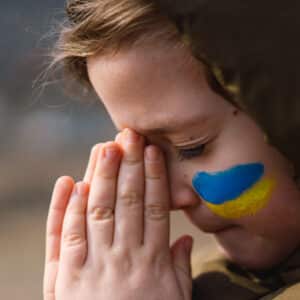
THE HOPE FOR UKRAINE
Yaryna Grusha, professor of Ukrainian Language and Literature, Università degli Studi di Milano, author of L’Album blu (Ed. Bompiani); H.E. Pavlo Honcharuk, Bishop of Kharkiv-Zaporizhzhia of the Latins. Introduced by Bernhard Scholz, President of the Meeting for Friendship Amongst Peoples ETS Foundation
War does not destroy only houses: it erodes language, breaks memory, empties the future. Yet from Ukraine voices keep coming that resist this erosion — voices of those who write, of those who pray, of those who remain. Two witnesses in dialogue: a writer who has made the Ukrainian language an instrument of identity and survival, and a bishop who did not leave his diocese on the front line. Together, one question: where does hope come from when everything seems to be collapsing?
War does not destroy only houses: it erodes language, breaks memory, empties the future. Yet from Ukraine voices keep coming that resist this erosion — voices of those who write, of those who pray, of those who remain. Two witnesses in dialogue: a writer who has made the Ukrainian language an instrument of identity and survival, and a bishop who did not leave his diocese on the front line. Together, one question: where does hope come from when everything seems to be collapsing?
BEHOLD, YOU WILL SUDDENLY SEE ETERNAL BEAUTY WITH THE GUIDANCE OF LOVE
Reading from Plato’s Symposium curated by Zetesis
Text prepared by Mariapina Dragonetti; Lucia Prestipino; Giulia Regoliosi. Readers: Roberto Longo; Letizia Antonini; Samuele Giuliani; Emanuele Sclarandi. With a contribution from Silvia De Fre, flautist. Directed by Cristina Milesi
The Platonic Symposium, with its different hypotheses about God Eros - Love - in its relationship with time, with the reality of nature, with justice, with the heart of man. The theories will be presented in a dialogue form, in a direct exchange among the protagonists.
Text prepared by Mariapina Dragonetti; Lucia Prestipino; Giulia Regoliosi. Readers: Roberto Longo; Letizia Antonini; Samuele Giuliani; Emanuele Sclarandi. With a contribution from Silvia De Fre, flautist. Directed by Cristina Milesi
The Platonic Symposium, with its different hypotheses about God Eros - Love - in its relationship with time, with the reality of nature, with justice, with the heart of man. The theories will be presented in a dialogue form, in a direct exchange among the protagonists.
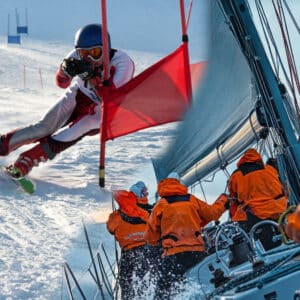
FROM THE MOUNTAIN TO THE SEA, THE ITALY THAT BUILDS SPORT
Opening greetings by Federica Picchi, undersecretary responsible for sport and youth for the Regione Lombardia and Carlo Puca, councillor for Active Participation and the City Image of the Comune di Napoli. Speakers: Arianna Fontana, Olympic short-track champion; Valentina Greggio, speed skier and holder of the women's world record; Paolo Scutellaro, sailor; Carlo Zazzera, journalist. Concluding remarks by Andrea Abodi, minister for Sport and Youth. Moderated by Mario Del Verme, Cdo Sport
Milano Cortina 2026 showed an Italy capable of organizing major events and winning. The America's Cup now opens a new chapter, on the sea. Two different stages, one single question: how does sporting talent become a lasting legacy for a country? Between politics, business and athletes who have carried the tricolour to the top of the world, a discussion on what it means today to build a sports culture in Italy.
Milano Cortina 2026 showed an Italy capable of organizing major events and winning. The America's Cup now opens a new chapter, on the sea. Two different stages, one single question: how does sporting talent become a lasting legacy for a country? Between politics, business and athletes who have carried the tricolour to the top of the world, a discussion on what it means today to build a sports culture in Italy.

THE COURAGE TO EDUCATE. REBUILDING THE ALLIANCE BETWEEN SCHOOL AND FAMILY
In collaboration with Associazione Culturale Il Rischio Educativo, Cdo Opere Educative, Diesse, Di.S.A.L.
Silvio Cattarina, Founder and President of Cooperativa sociale L’Imprevisto; Chiara Frigeni, Head of IeFP In-presa; Elena Fruganti, teacher of Law at upper secondary school and representative of the Education Commission of the “Ditelo sui tetti” network; Roberto Sanseverino, President of Fondaazione Città Nuova. Concluding remarks by Giuseppe Valditara, Minister of Education and Merit. Moderated by Massimiliano Tonarini, President of Cdo Opere Educative
Youth distress, the lowering of the age at which deviant behavior emerges, the fragility of families, and the strain in relationships between adults and young people are issues that keep returning with great insistence. School dropout, although improving in recent years, and the distance that often remains between the worlds of school and work add disorientation to younger generations. To understand situations of hardship and return to a full appreciation of the talents of every young person, reliable presences are needed, places where young people can return and from which they can start again, meeting authoritative adults who accompany them in their path of growth and personal maturity. Communities that know how to support one another in this fundamental task, renewing a solid and shared pact, for the good of the new generations.
Silvio Cattarina, Founder and President of Cooperativa sociale L’Imprevisto; Chiara Frigeni, Head of IeFP In-presa; Elena Fruganti, teacher of Law at upper secondary school and representative of the Education Commission of the “Ditelo sui tetti” network; Roberto Sanseverino, President of Fondaazione Città Nuova. Concluding remarks by Giuseppe Valditara, Minister of Education and Merit. Moderated by Massimiliano Tonarini, President of Cdo Opere Educative
Youth distress, the lowering of the age at which deviant behavior emerges, the fragility of families, and the strain in relationships between adults and young people are issues that keep returning with great insistence. School dropout, although improving in recent years, and the distance that often remains between the worlds of school and work add disorientation to younger generations. To understand situations of hardship and return to a full appreciation of the talents of every young person, reliable presences are needed, places where young people can return and from which they can start again, meeting authoritative adults who accompany them in their path of growth and personal maturity. Communities that know how to support one another in this fundamental task, renewing a solid and shared pact, for the good of the new generations.
CAN THE INTERSECTION BETWEEN THE CAPITAL MARKETS, PRIVATE EQUITY AND BUSINESS LEAD TO POSITIVE OUTCOMES?
Luciano Balbo, Co-founder and Managing Partner at Oltre; Marco Carotenuto, Managing Partner of Clessidra Private equity; Marco Morfino, managing partner Clearwater Italia; Gian Matteo Pedrelli, CEO of FOS Group; Riccardo Zagaria, CEO of DOC Pharma. Video message from Giulio Centemero, group leader of the 6th Finance Commission of the Chamber of Deputies; Moderated by Benedetto Lonato, President of CDO Liguria
In recent years, finance has entered the life of Italian companies with ever greater intensity, especially SMEs: private equity funds, venture capital and capital markets for growth (Euronext Growth) now represent concrete opportunities for development. But the crucial issue is not technical. Can the world of finance and investment, and therefore those who inhabit it, be an instrument for a purpose higher than the cold calculation of return? Can business be that instrument? Can they truly be factors that have an impact on the common good? Or does the logic of return inevitably expose them to the risk of becoming extractive, oriented solely toward financial yield, perhaps in the short to medium term? When business and finance meet, capital and financial need do not meet alone: visions of the human person, risk, profit and responsibility meet. Is it possible that this encounter, if guided by appropriate intentions and criteria, generates value that is not only financial? Can a “new quality” be built in this relationship? The meeting aims to explore these questions through dialogue between entrepreneurs and leading figures from the financial world, comparing concrete experiences and cultural criteria. At the center there will be neither an ideological defense of finance nor a condemnation of it, but an open question: what conditions make finance truly an ally of the real economy and the common good? At a time when family savings, business competitiveness and social cohesion are closely intertwined, asking about the relationship between capital and business means asking about the future of our society.
In recent years, finance has entered the life of Italian companies with ever greater intensity, especially SMEs: private equity funds, venture capital and capital markets for growth (Euronext Growth) now represent concrete opportunities for development. But the crucial issue is not technical. Can the world of finance and investment, and therefore those who inhabit it, be an instrument for a purpose higher than the cold calculation of return? Can business be that instrument? Can they truly be factors that have an impact on the common good? Or does the logic of return inevitably expose them to the risk of becoming extractive, oriented solely toward financial yield, perhaps in the short to medium term? When business and finance meet, capital and financial need do not meet alone: visions of the human person, risk, profit and responsibility meet. Is it possible that this encounter, if guided by appropriate intentions and criteria, generates value that is not only financial? Can a “new quality” be built in this relationship? The meeting aims to explore these questions through dialogue between entrepreneurs and leading figures from the financial world, comparing concrete experiences and cultural criteria. At the center there will be neither an ideological defense of finance nor a condemnation of it, but an open question: what conditions make finance truly an ally of the real economy and the common good? At a time when family savings, business competitiveness and social cohesion are closely intertwined, asking about the relationship between capital and business means asking about the future of our society.
THE HEART OF LATIN AMERICA
Giampiero Aquila, memor domini, CISAV researcher, Cuba; Lorenzo Locatelli, priest Fraternity of St. Charles, Chile; Alejandro Marius, President of Trabajo y Persona, Venezuela. Moderated by Maria Acqua Simi, journalist of Traces
Lives revolutionized by faith in Chile, Cuba, Mexico and Venezuela document the fruitfulness of the Christian proposal in realities often marked by crisis and instability
Lives revolutionized by faith in Chile, Cuba, Mexico and Venezuela document the fruitfulness of the Christian proposal in realities often marked by crisis and instability

THE COUNTRY THAT IS ON THE MOVE
Following a brief introduction by Luca Ferlaino, Chairman of SocialCom, a debate will take place between Matteo Salvini, Deputy Prime Minister and Minister for Infrastructure and Transport, and Gianpiero Strisciuglio, CEO and Director general of Ferrovie dello Stato Italiane.
This will be followed by two round-table discussions featuring: Armando Brunini, CEO of SEA Milan Airports; Maurizio Bufalini, Director General of TELT; Andrea Corsini, Chairman of Start Romagna; Daniela Faraoni, Chairwoman of Infratel; Geronimo La Russa, Chairman of ACI; Giovanni Liverani, Chairman of ANIA; Carlo Mearelli, Special Commissioner of ENAC; Veronica Pamio, Senior Vice-President of External Affairs, Sustainability & Destination Management at ADR; Sandro Pappalardo, Chairman of ITA Airways.
Closing remarks by Matteo Salvini. Moderated by Emmanuele Forlani, Vice President of the Meeting for Friendship Amongst Peoples ETS Foundation
Infrastructure is not merely a matter of physical works: it defines a country’s ability to move, connect regions, support growth and face competition. An event structured around several sessions, bringing together institutions and key players in the sector to discuss the transformations currently underway and the prospects for mobility and infrastructure in Italy.
This will be followed by two round-table discussions featuring: Armando Brunini, CEO of SEA Milan Airports; Maurizio Bufalini, Director General of TELT; Andrea Corsini, Chairman of Start Romagna; Daniela Faraoni, Chairwoman of Infratel; Geronimo La Russa, Chairman of ACI; Giovanni Liverani, Chairman of ANIA; Carlo Mearelli, Special Commissioner of ENAC; Veronica Pamio, Senior Vice-President of External Affairs, Sustainability & Destination Management at ADR; Sandro Pappalardo, Chairman of ITA Airways.
Closing remarks by Matteo Salvini. Moderated by Emmanuele Forlani, Vice President of the Meeting for Friendship Amongst Peoples ETS Foundation
Infrastructure is not merely a matter of physical works: it defines a country’s ability to move, connect regions, support growth and face competition. An event structured around several sessions, bringing together institutions and key players in the sector to discuss the transformations currently underway and the prospects for mobility and infrastructure in Italy.
ENERGY TRANSITION AND COMPETITIVENESS IN THE EUROPEAN UNION
In collaboration with Compagnia delle Opere
Paolo Acunzo, Head of the Innovation Network Italia Service of ENEA; Carlo Battistini, President of the Romagna Chamber of Commerce; Alfredo Maria Becchetti, President of GSE; Matteo Carassiti, President of E-WIDE; Nicola Procaccini, Member of the European Parliament and energy chief of FDI; Marco Temeroli, Head of the procurement area of the Gruppo SGR. Moderated by Felice Vai, vice president of Compagnia delle Opere
The cost of energy has become the central issue of European competitiveness. Geopolitical shocks have highlighted the fragility of the current model and widened the gap with the United States and China. In this scenario, the energy transition is not only an environmental challenge, but also an industrial and strategic one. However, without a common policy that can balance decarbonization, autonomy and competitiveness, and reduce dependence on critical raw materials, Europe risks replacing old vulnerabilities with new ones and compromising the future of its industry.
Paolo Acunzo, Head of the Innovation Network Italia Service of ENEA; Carlo Battistini, President of the Romagna Chamber of Commerce; Alfredo Maria Becchetti, President of GSE; Matteo Carassiti, President of E-WIDE; Nicola Procaccini, Member of the European Parliament and energy chief of FDI; Marco Temeroli, Head of the procurement area of the Gruppo SGR. Moderated by Felice Vai, vice president of Compagnia delle Opere
The cost of energy has become the central issue of European competitiveness. Geopolitical shocks have highlighted the fragility of the current model and widened the gap with the United States and China. In this scenario, the energy transition is not only an environmental challenge, but also an industrial and strategic one. However, without a common policy that can balance decarbonization, autonomy and competitiveness, and reduce dependence on critical raw materials, Europe risks replacing old vulnerabilities with new ones and compromising the future of its industry.

THE PUBLIC ADMINISTRATION OF TALENT: VALUING MERIT IN GENERATIONAL CHANGE
Carmen Alonso Sanchez, senior director Commercialisation & Go-To-Market Visa Government Solutions; Massimiliano Facchini, Head of the Healthcare and Public Administration division at Accenture Italy and Greece; Paolo Maggioli, President and chief executive officer of Gruppo Maggioli; Giuseppe Sala, Mayor of Milan; Paolo Zangrillo, Minister for Public Administration. Moderated by Salvatore Taormina, coordinator of the Institutions and Public Administration department of Fondazione per la Sussidiarietà
In Italian public offices, a silent match is being played: some arrive, some leave their place behind for those who come after. Artificial intelligence and geopolitical tensions are accelerating a change that bureaucracy can no longer afford to postpone. Young people are the new protagonists of this turnover, bearers of a merit that is finally asking to be recognized.
In Italian public offices, a silent match is being played: some arrive, some leave their place behind for those who come after. Artificial intelligence and geopolitical tensions are accelerating a change that bureaucracy can no longer afford to postpone. Young people are the new protagonists of this turnover, bearers of a merit that is finally asking to be recognized.
TEACHING AS A PROFESSION: THE TEACHER AS THE PROTAGONIST BETWEEN BUREAUCRACY AND FREEDOM OF TEACHING
Organised by Associazione Culturale Il Rischio Educativo, Cdo Opere Educative, Diesse, Di.S.A.L., ASLAM
Ivana Barbacci, national secretary of CISL Scuola; Elena Fazi, National President of the UCIIM association; Esther Flocco, National President of the Associazione Italiana Maestri Cattolici (AIMC); Carmela Palumbo, Head of the department for the educational system of instruction and training, Ministry of Education and Merit. Introduced and moderated by Carlo Di Michele, President of Diesse
The school system today oscillates between excessive bureaucratization and the push toward procedural standards that risk suffocating the teacher’s autonomy. The meeting aims to reflect on how the "school of compliance" is transforming the teaching role, seeking paths to bring pedagogical planning back to the center. The contribution of experiences from the associational and trade-union worlds aims to define proposals to understand how to safeguard the quality of teaching and educational protagonism in the face of an increasingly pervasive administrative burden. Two themes are to be explored: the pedagogical perspective and the ethical value of the profession, and the teacher’s new contractual profile, against the "clerical drift".
Ivana Barbacci, national secretary of CISL Scuola; Elena Fazi, National President of the UCIIM association; Esther Flocco, National President of the Associazione Italiana Maestri Cattolici (AIMC); Carmela Palumbo, Head of the department for the educational system of instruction and training, Ministry of Education and Merit. Introduced and moderated by Carlo Di Michele, President of Diesse
The school system today oscillates between excessive bureaucratization and the push toward procedural standards that risk suffocating the teacher’s autonomy. The meeting aims to reflect on how the "school of compliance" is transforming the teaching role, seeking paths to bring pedagogical planning back to the center. The contribution of experiences from the associational and trade-union worlds aims to define proposals to understand how to safeguard the quality of teaching and educational protagonism in the face of an increasingly pervasive administrative burden. Two themes are to be explored: the pedagogical perspective and the ethical value of the profession, and the teacher’s new contractual profile, against the "clerical drift".
TRAINING WITHOUT BORDERS. EUROPE AND AFRICA, SKILLS IN MOTION
In collaboration with VIS
Daniele Albanese, CEO and Co-founder of PeopleGateway; Elio Cesari, President of the National Centre for Salesian Works; Cecilia Coccia, Grants Manager at ICMPD; Riccardo Di Stefano, Vice-president for Education and Open Innovation at Confindustria; Mariavittoria Garlappi, Senior Expert at the European Training Foundation; Alejandro José León Mendoza, Salesian missionary in the Middle East; Mario Nava, Director General of DG EMPL, European Commission; Ivan Toscano, Senior Programme Manager at VIS. Video message by Maria Teresa Bellucci, Deputy Minister for Labour and Social Policies. Moderated by Gianni Todini, editor-in-chief of Askanews
The conference presents the model developed by the Salesians of Don Bosco and the VIS Foundation for the social and professional integration of third-country nationals, built through international networks and partnerships with institutions, businesses and civil society. At the heart of this approach is the individual, who is supported on a journey between their country of origin and their destination. This journey includes guidance, training, upskilling, international mobility and integration into the labour market, whilst respecting the individual’s freedom to choose whether to leave or stay, always beginning with the strengthening of skills in their home country. This is a win-win approach between Italy and Africa that combines regional development with a response to the needs of the labour market.
Daniele Albanese, CEO and Co-founder of PeopleGateway; Elio Cesari, President of the National Centre for Salesian Works; Cecilia Coccia, Grants Manager at ICMPD; Riccardo Di Stefano, Vice-president for Education and Open Innovation at Confindustria; Mariavittoria Garlappi, Senior Expert at the European Training Foundation; Alejandro José León Mendoza, Salesian missionary in the Middle East; Mario Nava, Director General of DG EMPL, European Commission; Ivan Toscano, Senior Programme Manager at VIS. Video message by Maria Teresa Bellucci, Deputy Minister for Labour and Social Policies. Moderated by Gianni Todini, editor-in-chief of Askanews
The conference presents the model developed by the Salesians of Don Bosco and the VIS Foundation for the social and professional integration of third-country nationals, built through international networks and partnerships with institutions, businesses and civil society. At the heart of this approach is the individual, who is supported on a journey between their country of origin and their destination. This journey includes guidance, training, upskilling, international mobility and integration into the labour market, whilst respecting the individual’s freedom to choose whether to leave or stay, always beginning with the strengthening of skills in their home country. This is a win-win approach between Italy and Africa that combines regional development with a response to the needs of the labour market.
SAINT FRANCIS THE RADICAL
Antonio Musarra, Professor of Medieval History, Università Sapienza di Roma; Federica Tarsi, Franciscan missionary nun of Assisi. Moderated by Anna Leonardi, journalist of Traces
A journey through history and testimony in the footsteps of what was truly essential for the Alter Christus, often reduced in the contemporary imagination to a gentle preacher of goodness.
A journey through history and testimony in the footsteps of what was truly essential for the Alter Christus, often reduced in the contemporary imagination to a gentle preacher of goodness.
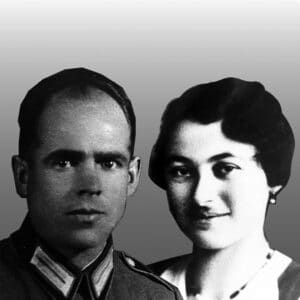
THROUGH THE EYES OF FRANZ AND FRANZISKA
Joe Gleason, Film Editor of A Hidden Life, in dialogue with Emmanuele Silanos, priest Fraternity of St. Charles
The film editor of "A Hidden Life" takes us to the places and hearts of Blessed Franz Jägerstätter and his wife Franziska, as portrayed in Terrence Malick’s masterpiece. A journey in images between beauty and martyrdom.
The film editor of "A Hidden Life" takes us to the places and hearts of Blessed Franz Jägerstätter and his wife Franziska, as portrayed in Terrence Malick’s masterpiece. A journey in images between beauty and martyrdom.
THE CHALLENGE OF INTEGRATING
In collaboration with Compagnia delle Opere
Sara Kelany, parliamentarian, FDI; Giampaolo Silvestri, Secretary general of AVSI; Alberto Sinigallia, President of Fondazione Progetto Arca. Moderated by Andrea Dellabianca, President of Compagnia delle Opere
A law that works, a funded language course, a company willing to hire, accommodation that is not a dormitory: integration does not come out of nowhere; it is built by precise public choices and organizations working in the territory every day.
Sara Kelany, parliamentarian, FDI; Giampaolo Silvestri, Secretary general of AVSI; Alberto Sinigallia, President of Fondazione Progetto Arca. Moderated by Andrea Dellabianca, President of Compagnia delle Opere
A law that works, a funded language course, a company willing to hire, accommodation that is not a dormitory: integration does not come out of nowhere; it is built by precise public choices and organizations working in the territory every day.

EUROPE’S COMPETITIVENESS IN THE AGE OF ARTIFICIAL INTELLIGENCE
Luca Beccari, Secretary of State for Foreign Affairs, Political Affairs, International Economic Cooperation and Digital Transition of the Republic of San Marino; Francesco Billari, rector of Università Bocconi; Enzo Moavero Milanesi, President of UNIDROIT and Professor of European Union Law at Luiss Guido Carli; Pina Picierno, Vice President of the European Parliament; Massimiliano Salini, Vice President of the EPP Group; Uljan Sharka, CEO Domyn. Moderated by Emmanuele Forlani, Vice President of the Meeting for Friendship Amongst Peoples ETS Foundation
Machines evolve faster than the laws meant to govern them. Europe is chasing a transformation already underway, with regulations often arriving when the facts have changed. The discussion looks at how far the continent can still steer its industrial course, between legal constraints and a market that does not wait. The debate is about rules capable of keeping pace with technology.
Machines evolve faster than the laws meant to govern them. Europe is chasing a transformation already underway, with regulations often arriving when the facts have changed. The discussion looks at how far the continent can still steer its industrial course, between legal constraints and a market that does not wait. The debate is about rules capable of keeping pace with technology.

A “REAL” SUBSIDIARITY. SHARED ADMINISTRATION STARTS FROM THE GROUND UP
In collaboration with Cdo Opere Sociali
Mauro Battuello, Head of Special Projects at the Fondazione Piazza dei Mestieri ETS; Piero Fusco, Head of the Religious Entities and Third Sector business unit at Generali Italia; Luca Gori, professor of Constitutional Law, Sant’Anna School of Advanced Studies of Pisa; Samantha Lentini, President of Fondazione La Rotonda; Alessandro Lombardi, Head of the Department for Social Policy, the Third Sector and Migration at the Ministry of Labour and Social Policy Giancarlo Moretti, Spokesperson for the Forum Terzo Settore. Moderated by Elisabetta Soglio, journalist at Corriere della Sera, editor of the Buone Notizie supplement
A volunteer association that runs a summer camp, a benevolence that accompanies an elderly person to do the shopping. Small gestures, almost never counted in public accounts, where subsidiarity is born before the laws that regulate it. The passage from rule to practice remains difficult, with intermediate bodies often weakened. The discussion begins with experiences of shared administration born on the ground.
Mauro Battuello, Head of Special Projects at the Fondazione Piazza dei Mestieri ETS; Piero Fusco, Head of the Religious Entities and Third Sector business unit at Generali Italia; Luca Gori, professor of Constitutional Law, Sant’Anna School of Advanced Studies of Pisa; Samantha Lentini, President of Fondazione La Rotonda; Alessandro Lombardi, Head of the Department for Social Policy, the Third Sector and Migration at the Ministry of Labour and Social Policy Giancarlo Moretti, Spokesperson for the Forum Terzo Settore. Moderated by Elisabetta Soglio, journalist at Corriere della Sera, editor of the Buone Notizie supplement
A volunteer association that runs a summer camp, a benevolence that accompanies an elderly person to do the shopping. Small gestures, almost never counted in public accounts, where subsidiarity is born before the laws that regulate it. The passage from rule to practice remains difficult, with intermediate bodies often weakened. The discussion begins with experiences of shared administration born on the ground.
UNDER THE SKY OF MOZAMBIQUE. A DOCUMENTARY ON ITALIAN COOPERATION IN MOZAMBIQUE
In collaboration with MAECI
This documentary on Mozambique, produced by MAECI in collaboration with La Presse, recounts the experience of Italian development cooperation in the country. A long history links Italy to Mozambique and, through the testimonies of the Italian Ambassador and the head of the AICS office, the documentary traces the key stages of this collaboration. The documentary also explores some of the main projects undertaken by Italian Cooperation in Mozambique: from the Mamanas school in the Chamanculo district to the Regenera project, which is regenerating certain districts of the capital, right through to the long-standing projects carried out on the island of Inhaca. Among the initiatives featured is the Rino project, carried out in collaboration with La Sapienza University in Rome, the significance of which is highlighted by the Director of the Natural History Museum in Maputo
This documentary on Mozambique, produced by MAECI in collaboration with La Presse, recounts the experience of Italian development cooperation in the country. A long history links Italy to Mozambique and, through the testimonies of the Italian Ambassador and the head of the AICS office, the documentary traces the key stages of this collaboration. The documentary also explores some of the main projects undertaken by Italian Cooperation in Mozambique: from the Mamanas school in the Chamanculo district to the Regenera project, which is regenerating certain districts of the capital, right through to the long-standing projects carried out on the island of Inhaca. Among the initiatives featured is the Rino project, carried out in collaboration with La Sapienza University in Rome, the significance of which is highlighted by the Director of the Natural History Museum in Maputo
SUSPENDED COFFEE
The young people of Gioventù Studentesca meet Emanuele Colombo, professor at Boston College, and the university student curators of the exhibition “The world is our home. Jesuit missions and intercultural encounters". Moderated by Tommaso Sperotto, lecturer in philosophy and history, Istituto Sacro Cuore, Milan
WHEN THEOLOGY MEETS ALIENS
Stefano Visintin, priest, Pontificio Ateneo Sant’Anselmo, Roma in dialogue with Lorenzo Spina, researcher, Istituto Nazionale di Astrofisica, Osservatorio Astronomico di Padova
What if tomorrow we discovered that we are not alone in the universe? A global survey reveals that the vast majority of believers across various religions do not fear that the discovery of intelligent extraterrestrial life could compromise their faith. For almost all religious traditions, the existence of aliens would merely represent an extension of the greatness of creation, without altering their core principles. Nevertheless, for the Judeo-Christian tradition, complex theological questions remain open concerning the concepts of creation, revelation, and redemption on other planets.
What if tomorrow we discovered that we are not alone in the universe? A global survey reveals that the vast majority of believers across various religions do not fear that the discovery of intelligent extraterrestrial life could compromise their faith. For almost all religious traditions, the existence of aliens would merely represent an extension of the greatness of creation, without altering their core principles. Nevertheless, for the Judeo-Christian tradition, complex theological questions remain open concerning the concepts of creation, revelation, and redemption on other planets.
WHO MOVES WHOM? ARE WE REALLY MADE TO LOVE AND BE LOVED?
Franco Nembrini, teacher, writer, expert on Dante; Fabio Rosini, lecturer in Communication and Transmission of the Faith, Pontifical University of the Holy Cross, parish priest of the Basilica di Santa Maria degli Angeli e dei Martiri, Rome. Introduced by Marco Aluigi, Deputy Director of the Meeting for Friendship Amongst Peoples ETS Foundation
What drives us to love, and what does being loved reveal to us about who we truly are? Nembrini and Rosini question the original dynamic of love: is it man who chooses to love, or is it something greater that moves him? A dialogue between experience and theology, literature and lived life, to discover whether in the heart of man there exists a destiny of love that precedes every one of our decisions.
What drives us to love, and what does being loved reveal to us about who we truly are? Nembrini and Rosini question the original dynamic of love: is it man who chooses to love, or is it something greater that moves him? A dialogue between experience and theology, literature and lived life, to discover whether in the heart of man there exists a destiny of love that precedes every one of our decisions.
CRISIS OF THE STATE AND CRISIS BETWEEN STATES: THE HYPOTHESIS OF CHRISTIAN REALISM
Dialogue with Luca Castellin, Professor of History of Political Thought, Università Cattolica del Sacro Cuore
Third dialogue of the series “The human condition in the time of technocracies and new nationalisms” curated by Carmine Di Martino, Guglielmo Mina, Lorenza Violini, to reflect together on the present moment. Each meeting is set “in the school of Magnifica Humanitas”: it includes a presentation by the speaker (45 minutes) and an in-depth dialogue open to all participants (75 minutes); ideal for anyone who wants to listen, discuss, and understand. This meeting is dedicated to the crisis of statehood and of the international order.
Third dialogue of the series “The human condition in the time of technocracies and new nationalisms” curated by Carmine Di Martino, Guglielmo Mina, Lorenza Violini, to reflect together on the present moment. Each meeting is set “in the school of Magnifica Humanitas”: it includes a presentation by the speaker (45 minutes) and an in-depth dialogue open to all participants (75 minutes); ideal for anyone who wants to listen, discuss, and understand. This meeting is dedicated to the crisis of statehood and of the international order.
Shows
SPIRTO GENTIL. Listening Guide. Rachmaninov: Vespers.
Dialogue with Pier Paolo Bellini
The event "SPIRTO GENTIL. Listening Guide" is dedicated to the Vespers by Sergei Rachmaninov, a masterpiece of twentieth-century sacred music, in which the Orthodox liturgical tradition merges with choral writing of extraordinary intensity. Part of the collection founded by Luigi Giussani, the event offers a guided listening experience, bringing the audience closer to the musical and spiritual depth of the work. The listening guide will be led by Pier Paolo Bellini, composer and musicologist, in dialogue with the audience.
In collaboration with Spirto Gentil.
In collaboration with Spirto Gentil.
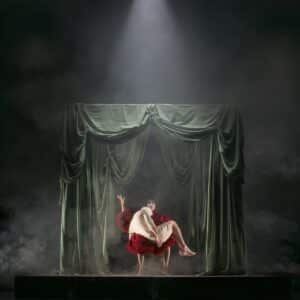
“LA FAME” (HUNGER). The Parable of the Man Who Did Everything for Love
By Alberto Fumagalli. With Chiara Liotta and Alberto Fumagalli. Directed by Ludovica D'Auria and Alberto Fumagalli
Intense, allegorical and surprisingly relevant, Sagrestano and Virtuosa are the protagonists of a theatrical fable that, with irony and lightness, speaks of the human condition. They live following the most immediate needs – eating, drinking, sleeping and, sometimes, loving – in an only apparent balance, destined to crack when hunger breaks into their daily life. From that lack an unexpected journey begins: the discovery of fragility opens in fact to the possibility of a new gaze on reality. The beauty of creation, evoked by the presence of the moon, becomes an occasion for wonder and awakening, capable of bringing out the most authentic feelings and the deepest questions that dwell in the human heart. A show that, through the language of fable and allegory, invites reflection on desire, vulnerability and the transformative power of love.
Production by Les Moustaches and Accademia Perduta/Romagna Teatri.
Assistant director: Tommaso Ferrero. Technical manager: Davide Moriggi. Costumes by Giulio Morini. Lighting by Giulia Bandera. Production manager: Pietro Morbelli. Photos by Serena Pea. With the support of: Toscana Terra Accogliente, Rat, Fondazione Toscana Spettacolo, Teatro Metastasio, Catalyst, Murmuris, Archètipo, Teatro Popolare d'Arte.
Supported by Regione Emilia-Romagna, Società Italiana Gas Liquidi - Vulcan
“RENTAL FAMILY” – Directed by Hikari
Tickets can be booked on Vivaticket from August and will be available at the Corte degli Agostiniani on the evening of the screening.
Set in Tokyo, the film follows an actor employed by a "rental family" agency, called upon to play affective roles in other people's lives. Over time, what begins as professional fiction starts to crack: the bonds, particularly the one with a young girl, begin to exceed the boundaries of work, opening an unexpected space of human involvement and calling into question identity and emotional distance.
In collaboration with the Cineteca di Rimini
With the support of Gruppo Maggioli.
Set in Tokyo, the film follows an actor employed by a "rental family" agency, called upon to play affective roles in other people's lives. Over time, what begins as professional fiction starts to crack: the bonds, particularly the one with a young girl, begin to exceed the boundaries of work, opening an unexpected space of human involvement and calling into question identity and emotional distance.
In collaboration with the Cineteca di Rimini
With the support of Gruppo Maggioli.
“A CASE OF YOU” CICCHE SULL’ASFALTO IN CONCERT
Cicche sull'Asfalto brings to the stage an evening of great live music, crossing some of the most beautiful pages of Italian and international music. A repertoire that ranges from the great classics of popular music to singer-songwriter tracks that have marked entire generations, alternating energy, intensity and emotion. With a line-up of highly experienced musicians, the concert takes the audience on a musical journey rich in rhythm, atmospheres and songs to listen to, remember and share.
Ilaria Pompili, Lorenzo Bassani, Stefano Valli, Giovanni Ravaioli, Michele Paolizzi, Riccardo Ricci, Paolo Forlani and Benedetta Ciotti.
Ilaria Pompili, Lorenzo Bassani, Stefano Valli, Giovanni Ravaioli, Michele Paolizzi, Riccardo Ricci, Paolo Forlani and Benedetta Ciotti.
Wednesday 26 August
Meetings
EUROPE. PRESERVING ROOTS, ACCELERATING THE FUTURE
Roberta Metsola, President of the European Parliament. Introduced by Bernhard Scholz, President of the Meeting for Friendship Amongst Peoples ETS Foundation
Europe Does Not Have the Luxury of Time: faster decisions, a fully integrated single market, a budget up to the challenges. But the true strength of the Union comes from older roots, the encounter between Greco-Roman, Judeo-Christian, and liberal and social thought, from which the dignity of the person, the rule of law, and the universality of rights derive. Expanding while remaining faithful to oneself, accelerating without losing memory, within complex historical circumstances. A Europe at once larger and truer.
Europe Does Not Have the Luxury of Time: faster decisions, a fully integrated single market, a budget up to the challenges. But the true strength of the Union comes from older roots, the encounter between Greco-Roman, Judeo-Christian, and liberal and social thought, from which the dignity of the person, the rule of law, and the universality of rights derive. Expanding while remaining faithful to oneself, accelerating without losing memory, within complex historical circumstances. A Europe at once larger and truer.
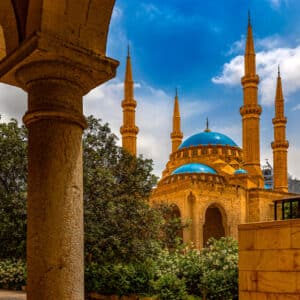
THE HOPE TO REBUILD IN THE LAND OF THE CEDARS
Antonio Tajani, Deputy Prime Minister, Minister of Foreign Affairs and International Cooperation; Youssef Raggi, Minister for Foreign Affairs and Expatriates of the Lebanese Republic; H.E. Mons. César Essayan, Apostolic Vicar of Beirut. Introduced by Bernhard Scholz, President of the Meeting for Friendship Amongst Peoples ETS Foundation
Amid the rubble of a recent war and an agreement still fragile, Lebanon is seeking the path to rebuild itself: in homes, in institutions, in the confidence of a people, that of the land of the cedars, who have never stopped hoping. In this transition the local Church remains present alongside the people, in welcome, care, and daily witness. The meeting brings into dialogue those who today lead the Lebanese government, those who for Italy have chosen to accompany this transition, and those who live Christian hope on the ground, to ask what it truly means to rebuild a country without betraying its soul.
Amid the rubble of a recent war and an agreement still fragile, Lebanon is seeking the path to rebuild itself: in homes, in institutions, in the confidence of a people, that of the land of the cedars, who have never stopped hoping. In this transition the local Church remains present alongside the people, in welcome, care, and daily witness. The meeting brings into dialogue those who today lead the Lebanese government, those who for Italy have chosen to accompany this transition, and those who live Christian hope on the ground, to ask what it truly means to rebuild a country without betraying its soul.
GUIDING TALENT IN TECHNICAL EDUCATION. DIFFERENT APPROACHES TO KNOWLEDGE
In collaboration with Associazione Culturale Il Rischio Educativo, Cdo Opere Educative, Diesse, Di.S.A.L., ASLAM
Luigi Ballerini, psychotherapist and writer; Patrick Cox, CEO of Consorzio TRE-E; Claudio Ongis, President of CMO Group; Alessia Toia, Head of Institutional Partnerships, e-Work S.p.A. Moderated by Carlo Carabelli, Managing Director and CEO of ASLAM
Young people's guidance as a challenge to the adult world. Helping people find direction means knowing how to value the whole person, appreciate multiple intelligences, and esteem the different approaches to knowledge. Through dialogue between education experts and the business world, the aim is to focus on the possible new look toward young people, accompanying them in discovering their talent as an original contribution to society and the world, and toward work in a constantly changing market.
Luigi Ballerini, psychotherapist and writer; Patrick Cox, CEO of Consorzio TRE-E; Claudio Ongis, President of CMO Group; Alessia Toia, Head of Institutional Partnerships, e-Work S.p.A. Moderated by Carlo Carabelli, Managing Director and CEO of ASLAM
Young people's guidance as a challenge to the adult world. Helping people find direction means knowing how to value the whole person, appreciate multiple intelligences, and esteem the different approaches to knowledge. Through dialogue between education experts and the business world, the aim is to focus on the possible new look toward young people, accompanying them in discovering their talent as an original contribution to society and the world, and toward work in a constantly changing market.
BEYOND THE EMERGENCY. RECONSTRUCTION THAT CREATES COMMUNITY
Antonella Baldino, Chief Executive of the Institute for Sport and Culture Credit; Guido Castelli, extraordinary commissioner of the Government for the repair and reconstruction of the 2016 earthquake; Nello Musumeci, Minister for Civil Protection and Maritime Policies. Moderated by Gianluca Giansante, partner at Comin & Partners and lecturer at Luiss Guido Carli
Earthquakes and natural disasters test people, institutions, and territories, but they also bring out a community’s extraordinary ability to unite, support one another, and start again. From emergency management, often marked by great acts of solidarity, to the long path of physical, social, and economic reconstruction, the meeting reflects on the value of collaboration between citizens, volunteer groups, Civil Protection, and institutions. On the anniversary of Civil Protection, an opportunity to tell the story of a model that, in hardship, has been able to turn the response to the emergency into a path of collective rebirth.
Earthquakes and natural disasters test people, institutions, and territories, but they also bring out a community’s extraordinary ability to unite, support one another, and start again. From emergency management, often marked by great acts of solidarity, to the long path of physical, social, and economic reconstruction, the meeting reflects on the value of collaboration between citizens, volunteer groups, Civil Protection, and institutions. On the anniversary of Civil Protection, an opportunity to tell the story of a model that, in hardship, has been able to turn the response to the emergency into a path of collective rebirth.
AGATHA CHRISTIE AND THE MYSTERY OF TRUTH
Andrea Fazioli, writer in dialogue with Paola Bergamini, journalist of Traces
The mystery and noir genres are not only entertainment, but offer an access key to the deepest dimension of reality, dynamically portraying the contemporary human being.
The mystery and noir genres are not only entertainment, but offer an access key to the deepest dimension of reality, dynamically portraying the contemporary human being.
OPENING A NEW WINDOW ON THE UNIVERSE: THE NANCY GRACE ROMAN SPACE TELESCOPE
Massimo Robberto, astrophysicist, Space Telescope Science Institute & Johns Hopkins University in dialogue with Paola Platania, senior researcher, Istituto per la scienza e tecnologia dei plasmi del CNR, Milano
Just four days before its historic launch, the Nancy Grace Roman Space Telescope is poised to begin a new era of astronomical discovery. Designed as NASA's next flagship observatory for wide-field astronomy, Roman will combine the sharp vision of the Hubble Space Telescope with a field of view 100 times larger, allowing astronomers to explore the Universe on an unprecedented scale. In this public lecture, we will journey through the science that Roman will make possible: searching for thousands of planets around distant stars through gravitational microlensing, mapping the mysterious dark matter that shapes galaxies and clusters, investigating the nature of dark energy, and revealing the history of galaxies across cosmic time. We will also look at the remarkable technology behind the telescope, its place alongside the James Webb Space Telescope, and what astronomers hope to learn during its mission.
Just four days before its historic launch, the Nancy Grace Roman Space Telescope is poised to begin a new era of astronomical discovery. Designed as NASA's next flagship observatory for wide-field astronomy, Roman will combine the sharp vision of the Hubble Space Telescope with a field of view 100 times larger, allowing astronomers to explore the Universe on an unprecedented scale. In this public lecture, we will journey through the science that Roman will make possible: searching for thousands of planets around distant stars through gravitational microlensing, mapping the mysterious dark matter that shapes galaxies and clusters, investigating the nature of dark energy, and revealing the history of galaxies across cosmic time. We will also look at the remarkable technology behind the telescope, its place alongside the James Webb Space Telescope, and what astronomers hope to learn during its mission.

LEARNING TO LOVE
Matteo Bussola, writer, illustrator and cartoonist; Mariolina Ceriotti Migliarese, child neuropsychiatrist and psychotherapist. Moderated by Marco Ferrari, principal of the Licei Malpighi in Bologna
Young generations seek love, but often struggle to understand it and live it, suspended between the need for connection and the fear of losing themselves in the other. How do you educate toward a feeling that asks at once for dedication and freedom? The relationship of younger people with feelings and the conditions that make possible a love capable of uniting while leaving free. A dialogue between the narrative perspective of Matteo Bussola and the psychotherapeutic experience of Mariolina Ceriotti Migliarese.
Young generations seek love, but often struggle to understand it and live it, suspended between the need for connection and the fear of losing themselves in the other. How do you educate toward a feeling that asks at once for dedication and freedom? The relationship of younger people with feelings and the conditions that make possible a love capable of uniting while leaving free. A dialogue between the narrative perspective of Matteo Bussola and the psychotherapeutic experience of Mariolina Ceriotti Migliarese.

ORIGINAL AND CREATIVE: RETURNING TO A REFLECTION ON HUMANITY
Massimo Borghesi, former Professor of Moral Philosophy, Department of Philosophy, Social Sciences, Humanities and Education, Università di Perugia; Massimo Serretti, Lecturer in Dogmatic Theology, Istituto "Italo Mancini", Università degli Studi di Urbino Carlo Bo. Moderated by Alessandro Banfi, journalist and communications director at the Fondazione Oasis
It is becoming increasingly clear that humankind cannot tackle major cultural, economic and technological changes with improvised responses or by merely reacting to them. We feel an ever more urgent need for a way of thinking about humankind that enables people to understand themselves and their relationship with the world in an original and creative way, capable of providing a constructive perspective on their endeavours.
It is becoming increasingly clear that humankind cannot tackle major cultural, economic and technological changes with improvised responses or by merely reacting to them. We feel an ever more urgent need for a way of thinking about humankind that enables people to understand themselves and their relationship with the world in an original and creative way, capable of providing a constructive perspective on their endeavours.
DEMOCRACY DOES NOT GO ON HOLIDAY. THE FIRST 80 YEARS OF THE REPUBLIC
In collaboration with Intergruppo Parlamentare per la Sussidiarietà
Stefano Bonaccini, President of the Partito Democratico; Maria Elena Boschi, Floor leader in the Chamber of Deputies, Italia Viva; Stefania Craxi, Floor leader in the Senate, Forza Italia; Giovanni Donzelli, organizational head, Brothers of Italy; Maurizio Lupi, President of Noi Moderati; Stefano Patuanelli, Floor leader in the Senate, Movimento 5 stelle; Matteo Richetti, Floor leader in the Chamber of Deputies, Azione; Massimiliano Romeo, Floor leader in the Senate, Lega. Introduced by Giorgio Vittadini, president of the Fondazione per la sussidiarietà. Moderated by Luciano Fontana, Director of Corriere della Sera
The anniversary of the eightieth year of the Italian Republic is an opportunity to discuss the value of democracy, at a time when it is being challenged globally. Once again this year, the Parliamentary Intergroup for Subsidiarity invites reflection on the role of Parliament as the main place for dialogue among parties and the building of the common good, the ideal criterion of shared development.
Stefano Bonaccini, President of the Partito Democratico; Maria Elena Boschi, Floor leader in the Chamber of Deputies, Italia Viva; Stefania Craxi, Floor leader in the Senate, Forza Italia; Giovanni Donzelli, organizational head, Brothers of Italy; Maurizio Lupi, President of Noi Moderati; Stefano Patuanelli, Floor leader in the Senate, Movimento 5 stelle; Matteo Richetti, Floor leader in the Chamber of Deputies, Azione; Massimiliano Romeo, Floor leader in the Senate, Lega. Introduced by Giorgio Vittadini, president of the Fondazione per la sussidiarietà. Moderated by Luciano Fontana, Director of Corriere della Sera
The anniversary of the eightieth year of the Italian Republic is an opportunity to discuss the value of democracy, at a time when it is being challenged globally. Once again this year, the Parliamentary Intergroup for Subsidiarity invites reflection on the role of Parliament as the main place for dialogue among parties and the building of the common good, the ideal criterion of shared development.
MOTHERS AND FATHERS BECAUSE CHILDREN
Pia Maria Maccario, Famiglie per l’Accoglienza; Daniele Rinaldi, psychotherapist, UCIPEM Rimini Family Counseling Center; Giuseppe Zola, President of the Associazione “Nonni 2.0.”. Moderated by Luca Sommacal, President of Famiglie per l’Accoglienza
The family teaches that to love is to give, not to possess. In the bond between spouses, in the educational care of children, in the presence of grandparents, an education is built that spans generations. It is a gaze upon the other that is renewed every day.
The family teaches that to love is to give, not to possess. In the bond between spouses, in the educational care of children, in the presence of grandparents, an education is built that spans generations. It is a gaze upon the other that is renewed every day.
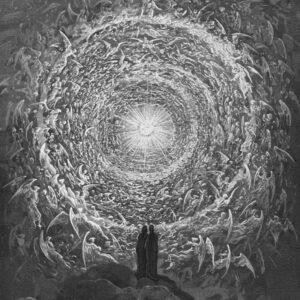
NOT JUST DANTE. A JOURNEY THROUGH TRAVELLING EXHIBITIONS AND «HELL IN THE HEART»
Curated by Fondazione Spazio Dante ETS, Segni del Vero APS
Franco Nembrini, teacher, essayist and educationist, and Gabriele Vrech, priest and educator, in dialogue with the students who are protagonists of the itinerant exhibitions “Dante Profeta di Speranza” and the young actors of the Company Profumo di Cielo of Desenzano del Garda. Live performance
In various Italian cities, hundreds of young people have recognized in Dante’s verses the expression of their own search for meaning. What moved them — the thirst for happiness, the need for guidance — now challenges the adult world. The journey continued as far as Manzoni’s Innominato, where the encounter with Lucia and Cardinal Borromeo’s embrace reveal the mystery of the Incarnation as the answer to «hell in the heart». A journey through testimonies, videos and a brief theatrical meditation to discover that the love that moves the sun and the other stars continues to move those who do not resign themselves.
Franco Nembrini, teacher, essayist and educationist, and Gabriele Vrech, priest and educator, in dialogue with the students who are protagonists of the itinerant exhibitions “Dante Profeta di Speranza” and the young actors of the Company Profumo di Cielo of Desenzano del Garda. Live performance
In various Italian cities, hundreds of young people have recognized in Dante’s verses the expression of their own search for meaning. What moved them — the thirst for happiness, the need for guidance — now challenges the adult world. The journey continued as far as Manzoni’s Innominato, where the encounter with Lucia and Cardinal Borromeo’s embrace reveal the mystery of the Incarnation as the answer to «hell in the heart». A journey through testimonies, videos and a brief theatrical meditation to discover that the love that moves the sun and the other stars continues to move those who do not resign themselves.
LOOKING AT THE SKY OF JERUSALEM
H.E. Card. Pierbattista Pizzaballa, Latin Patriarch of Jerusalem in dialogue with some young people. Introduced and moderated by Alessandra Buzzetti, journalist, TV2000 correspondent from the Holy Land. Closing greeting by Bernhard Scholz, President of the Meeting for Friendship Amongst Peoples ETS Foundation
To dwell as believers in Christ in earthly Jerusalem, it is necessary to scan the heavenly one in order to discover the nature of the Church’s vocation, there where it was born and there where today it is called to bear decisive witness, three years after October 7 and the war in Gaza, events that have marked a paradigm shift on a global level and concern everyone. In his detailed pastoral letter “They Returned to Jerusalem with Joy,” Cardinal Pizzaballa indicates a way to live as Christians in the state of world disorder and invites us to ask, and to ask him, questions. For this reason, young people from different backgrounds will dialogue with the Patriarch about the earth and sky of Jerusalem.
To dwell as believers in Christ in earthly Jerusalem, it is necessary to scan the heavenly one in order to discover the nature of the Church’s vocation, there where it was born and there where today it is called to bear decisive witness, three years after October 7 and the war in Gaza, events that have marked a paradigm shift on a global level and concern everyone. In his detailed pastoral letter “They Returned to Jerusalem with Joy,” Cardinal Pizzaballa indicates a way to live as Christians in the state of world disorder and invites us to ask, and to ask him, questions. For this reason, young people from different backgrounds will dialogue with the Patriarch about the earth and sky of Jerusalem.
Shows
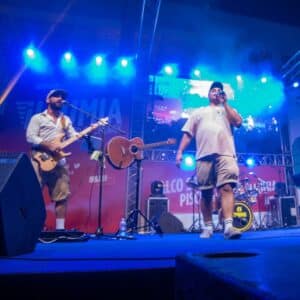
CLOSING CELEBRATION WITH SBADABAND CONCERT
A grand finale in the name of music, energy and celebration: an engaging experience in which the audience becomes the protagonist, singing together the most beloved songs of the Italian repertoire, between contemporary hits and great classic singer-songwriter pieces. An evening capable of alternating overwhelming rhythms with more intimate and evocative moments, where every note invites you to let go and experience music as the pleasure of singing together. A format that, in previous editions of the Meeting, has won over people of all ages, turning every gathering into an authentic celebration, made of enthusiasm, smiles and songs sung at the top of one's voice.
With Matteo Scelsa, Claudio Sama, Donato Maccapani, Lorenzo Gabellini, Daniele Scarpellini and Agnese Taioli.
With Matteo Scelsa, Claudio Sama, Donato Maccapani, Lorenzo Gabellini, Daniele Scarpellini and Agnese Taioli.