Who we are
MOTHERS FOR PEACE
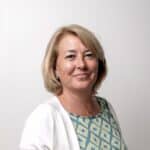
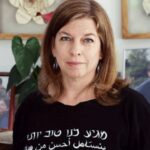
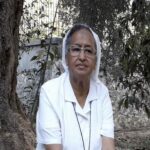
Layla al-Sheik, a Muslim mother from Bethlehem who lost her young son Qusay during the Second Intifada; Elana Kaminka, an Israeli mother of Yannai, a soldier killed on October 7, 2023; Azezet Habtezghi Kidane, an Eritrean Comboni nun, also known as Sister Aziza, who served for many years in Israel and the Palestinian Territories, as well as in Sudan and Eritrea. Moderated by Alessandra Buzzetti, journalist and correspondent for TV2000 from the Holy Land. Opening greeting by Bernhard Scholz, President of the Meeting for Friendship Among Peoples ETS Foundation
In a Holy Land torn apart by the longest and most devastating war of its recent history, there are mothers whose eyes are not blinded by vengeance and who are able to transform the pain of losing a child in the conflict into a journey of reconciliation—for the sake of the future of the young generations, both Israeli and Palestinian. Their virtuous witness highlights how crucial the role of mothers and women is in mediating the Israeli-Palestinian conflict. This is also exemplified by the story of Sister Aziza Kidane, who served in the Holy Land for 12 years, tirelessly building bridges between Israelis and Palestinians through her work among the poorest.
Watch the conference
Sfoglia la gallery dell’evento

MOTHERS FOR PEACE
Friday, August 22, 2025, 12
PM D3 AUDITORIUM Isybank
Participants: Layla al-Sheik, a Muslim mother from Bethlehem who lost her young son, Qusay, in the Second Intifada; Elana Kaminka, an Israeli, mother of Yannai, a soldier killed on October 7, 2023; Azezet Habtezghi Kidane, an Eritrean Comboni religious sister, also known as Sister Aziza, who has been active for years in Israel and the Palestinian Territories, and previously in Sudan and Eritrea. Moderated by Alessandra Buzzetti, journalist, TV2000 correspondent from the Holy Land.
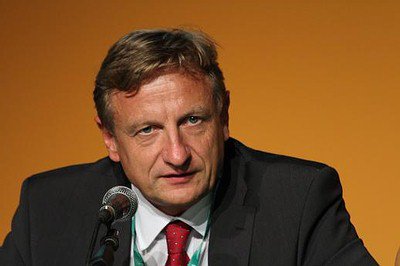
Introductory Greeting Bernhard Scholz, president of the Meeting for Friendship Among Peoples Foundation ETS
BERNARD SCHOLZ Thank you for coming in such large numbers to begin the forty-sixth edition of the Meeting for Friendship Among Peoples together. Welcome! We wanted to start this Meeting with a vision of hope that invites us to bring a new light and a testimony of new life for everyone. We could begin with many analyses of the evils afflicting this world, of the many unknowns weighing on our future, but none of these analyses, however necessary, would be capable of liberating our freedom to take the initiative for a new beginning, to begin where everything seems to have ended.
The title of this Meeting, “In desert places we will build with new bricks,” clearly states that deserts exist, but that these deserts are also places where it is possible to cultivate, places to build—indeed, to build together. This Meeting wants to bear witness, in the face of so much resignation, that it is possible to bring life to the desert of indifference, welcome to the deserts of abandonment, friendship to the deserts of existential loneliness, and above all, reconciliation to the deserts of war.
We want to bear witness, in the face of so much skepticism, that it is possible to be present in our families, schools, workplaces, and throughout our society with a passion for the destiny of every person, with a genuine educational interest, with work oriented toward the good of all, and with a forward-looking and competent political commitment. These are just some of the new bricks that are not new because they did not exist before. They are new every time they happen. The true, the good, and the beautiful are always surprising when they occur; they are always a novelty when they make themselves present. All the more reason, in this Meeting, we will also reflect on the origins that allow us to build with true originality, without pretense and without presumption.
We are profoundly grateful that this intention of ours, this desire to let ourselves be involved by witnesses capable of building places of renewed life, has been received by Pope Leo XIV with the message he wished to send us, which I will now read.
The message is addressed to the Bishop of Rimini, Monsignor Niccolò Anselmi, Your Most Reverend Excellency. The theme of the forty-sixth edition of the Meeting for Friendship Among Peoples is an invitation to hope: “In desert places we will build with new bricks.” The Holy Father Leo XIV wishes to extend his greetings to the organizers, volunteers, and all participants, with the hope that they may recognize with joy that the stone rejected by the builders has been set as the cornerstone, a precious choice, and whoever believes in it will not be disappointed. For hope, indeed, does not disappoint.
Deserts are generally places that are discarded and deemed unsuitable for life, yet where it seems that nothing can be born, the Sacred Scripture continuously returns to narrate God’s passages. In the desert, first of all, his people are born; indeed, it is only by journeying through its hardships that the choice of freedom matures. The biblical God who observes, listens, knows the sufferings of his children, and descends to free them, transforms the desert into a place of love and decisions. He makes it blossom like a garden of hope. The prophets remember it as the scene of a betrothal, to which to return whenever the heart grows lukewarm, to start again from God’s faithfulness. For millennia, monks and nuns have inhabited the desert on behalf of us all, representing the whole of humanity before the Lord of Silence and of Life.
The Holy Father appreciated that one of the characteristic exhibitions of this year’s Meeting is dedicated to the testimony of the martyrs of Algeria. In them shines the vocation of the Church to inhabit the desert in profound communion with all humanity, overcoming the walls of mistrust that set religions and cultures against each other, in complete imitation of the movement of the incarnation and self-giving of the Son of God. This path of presence and simplicity, of knowledge and dialogue of life, is the true path of mission. Not a self-exhibition in the opposition of identity, but the gift of self to the point of martyrdom by those who adore, day and night, in joy and amid tribulations, Jesus alone as Lord.
As is customary, there will be no shortage of dialogues between Catholics of different sensibilities and with believers of other confessions and non-believers. These are important exercises in listening that prepare the new bricks with which to build that future that God already has in store for everyone, but which unfolds only by welcoming one another. We can no longer afford to resist the kingdom of God, which is a kingdom of peace. And where the leaders of state and international institutions seem unable to make law, mediation, and dialogue prevail, religious communities and civil society must dare to prophesy. This means allowing oneself to be pushed into the desert and seeing, right now, what can be born from the rubble and from so much, too much, innocent pain.
Pope Leo XIV has recommended to the Italian bishops to promote paths of education in non-violence, mediation initiatives in local conflicts, and hospitality projects that transform the fear of the other into an opportunity for encounter. And he asks us again: “May every community become a house of peace where we learn to defuse hostility through dialogue, where justice is practiced, and forgiveness is built.” Peace is not a spiritual utopia; it is a humble path, made of daily gestures that weave together patience and courage, listening and action, which today more than ever demands our vigilant and generative presence.
The Holy Father, therefore, encourages us to give a name and form to the new, so that faith, hope, and charity may be translated into a great cultural conversion. Our beloved Pope Francis has taught us that the option for the poor is a theological category before it is a cultural, sociological, political, or philosophical one. For God chose the humble, the small, the powerless, and from the womb of the Virgin Mary, he made himself one of them to write his story in our history. Authentic realism, then, is one that includes those who have another point of view, who see aspects of reality that are not recognized from the centers of power where the most decisive decisions are made. Without the victims of history, without the hungry and thirsty for justice, without the peacemakers, without the widows and orphans, without the young and the old, without migrants and refugees, without the cry of all creation, we will not have new bricks. We will continue to chase the delusional dream of Babel, deluding ourselves that touching the sky and making a name for ourselves is the only human way to inhabit the earth. From the beginning, however, denying the voices of others and refusing to understand each other are failed and dehumanizing experiences. They must be opposed by the patience of encountering a mystery that is always other, of which the difference of each person is a sign.
Unarmed and disarming, the presence of Christians in contemporary society must translate, with competence and imagination, the Gospel of the Kingdom into forms of development that are alternatives to paths of growth without equity and sustainability. To serve the living God, the idolatry of profit, which has heavily compromised justice, freedom of encounter and exchange, the participation of all in the common good, and finally, peace, must be abandoned. A faith that distances itself from the desertification of the world or that indirectly contributes to tolerating it would no longer be a following of Jesus Christ.
The ongoing digital revolution risks accentuating discrimination and conflicts. It must therefore be inhabited with the creativity of one who, obeying the Holy Spirit, is no longer a slave but a child. Then the desert becomes a garden, and the city of God, foretold by the Saints, transfigures our desolate places. Pope Leo invokes the intercession of the Blessed Virgin Mary, the morning star, that she may sustain the commitment of each person in communion with the pastors and the ecclesial communities in which they are inserted. In synergy with all the other members of the body of Christ, we will then act in harmonious synchrony. The challenges facing humanity will be less frightening, the future will be less dark, discernment less difficult, if together we obey the Holy Spirit.
While I heartily join my personal best wishes to those of the Holy Father, I take this opportunity to confirm my sentiments of distinguished esteem for Your Most Reverend Excellency, Most devotedly, Pietro Cardinal Parolin, Secretary of State.
I thank the Holy Father on behalf of all of you for this encouraging message. With gratitude, we have accepted an invitation from the Holy Father to live this day in fasting and prayer, beseeching the Lord to grant us peace and justice and to dry the tears of those who suffer due to the ongoing armed conflicts. I would therefore ask everyone to pray together the prayer for peace composed by the Latin Patriarch of Jerusalem, Cardinal Pierbattista Pizzaballa, inviting those who live another faith or do not identify with any faith to participate in this gesture with their own personal prayer or with a moment of silence.
Let us stand.
Our Lord God, Father of the Lord Jesus Christ and Father of all humanity, who in the cross of your Son and through the gift of his very life, at a great price, willed to destroy the wall of enmity and hostility that separates peoples and makes us enemies. Send into our hearts the gift of the Holy Spirit, that he may purify us from every feeling of violence, hatred, and revenge, enlighten us to understand the inalienable dignity of every human person, and inflame us until we are consumed for a world pacified and reconciled in truth and justice, in love and freedom. Almighty and eternal God, in your hands are the hopes of this place and the rights of every people. Assist with your wisdom those who govern us, so that with your help they may become sensitive to the sufferings of the poor and of those who suffer the consequences of violence and war. Grant that they may promote the common good and a lasting peace in our region and throughout the earth. Virgin, Mother of Hope, obtain the gift of peace for the holy land that gave you birth and for the entire world. Amen.
Thank you.
This year too, the President of the Republic, Sergio Mattarella, has honored us with his message.
The Meeting continues its history by proposing new opportunities for encounter, reflection, friendship, and culture. An event that has taken root in Italian society and that still aspires to broaden the spaces for dialogue, to dig beneath the surface of our time to understand how the person and communities can remain protagonists in the midst of transformations. I wish first and foremost to express my warmest greetings to the organizers, the volunteers, the young people committed to the success of the Meeting, and to those who will be its guests. For this forty-sixth edition, the title chosen is “In desert places we will build with new bricks,” a quote that is also a challenge, as is the tradition for the days in Rimini.
We need builders of community, builders of coexistence, of peace, of participation, of solidarity, builders of a society capable of governing change while remaining human in its foundations and in its civilization. We cannot take for granted the achievements that previous generations have passed down to us. Freedom, democracy, peace, and the social model must be continuously regenerated in fidelity to their founding values, regenerated and shared. The extraordinary faculties and opportunities that science and technology give us are not enough to guarantee certain and authentic progress. The time we live in is also marked by the horrors of wars we thought we had erased from history, by a will to power that is once again showing itself menacingly, by personal and group selfishness, by homogenizing pressures, by discrimination and poverty, by loneliness.
We must not be overcome by complexities and fears. Communities wither where disengagement or indifference prevails. To build is to set out again on the path of history, even if this requires crossing difficult territories. The demographic decline has reduced the presence of young people in society, but no society that wants to have a future can renounce the strength of young people and their new bricks. The changing seasons require new forces, ideas, and energies. It is not true that values risk being lost in this way. In this way, the deepest values can be transmitted and bear new fruit.
To build means to have hope. Hope is the most precious nourishment in society. It spreads only in friendship and solidarity. And this is also the most intense wish I extend to the Meeting that is about to begin. Sergio Mattarella.
We begin this Meeting with an encounter with Layla Al-Sheik, a Muslim mother from Bethlehem who lost a young son in the Second Intifada, and with Elana Kaminka, an Israeli and mother of a son killed on October 7, 2023. They would have had every reason to remain closed in resentment and the logic of grievance, but they opened themselves up to find a path toward reconciliation that is far from obvious. We will also meet Mother Azezet Kidane, a Comboni religious sister who could have chosen a comfortable life, but who is instead dedicating herself to those who suffer in the Palestinian territories. Alessandra Buzzetti, TV2000 correspondent in the Holy Land, will moderate this meeting. I thank you for coming and I ask you to come up on stage.
BERNARD SCHOLZ This meeting is paradigmatic for the message we want to address with this Meeting to everyone, first and foremost to ourselves. Before giving them the floor, I would like to express that we firmly share the appeals made by Pope Leo XIV to the Israeli government, to allow, without restriction, humanitarian aid to the exhausted civilian population in Gaza, as well as to Hamas, to release all the hostages as soon as possible. I would also like to add that, in the face of all the military conflicts that have unfortunately arisen in many countries around the world, the Meeting for Friendship Among Peoples has always refused to identify a people with the decisions of its government, particularly when it degenerates into attacks on the civilian population. We hope that this Meeting can show that peace can be reborn from the peoples themselves when space is made for places of reconciliation and mutual welcome. Thank you. Thank you.
ALESSANDRA BUZZETTI Good morning, everyone. As Bernard Scholz also said, the deserts we have been crossing in the Holy Land for two years now seem truly immense and insurmountable. They have many terrible names: violence, oppression, ethnic cleansing, but also misunderstanding and division at all levels, not only between Israelis and Palestinians but also within their respective societies, Palestinian and Israeli. We see it even in these days, a conflict that is also escalating militarily, in which no viable political prospects are in sight at the moment. And we want to cross these deserts through the experience, the experience of three women whom I also thank. I am truly happy that they are here, who are also, in a way, now my friends, and who are very courageous women because deciding to take a path different from that of revenge and hatred in the current context we live in is truly a difficult choice. As Pope Leo also said, it takes a lot of humility, but it also takes a lot of courage. And their courage, their determination, is born precisely from their personal experience of loss.
As Bernard mentioned, Elana Kaminka, an Israeli, a mother of four, lost her son Yanai, a 21-year-old officer, on October 7, at a military base on the border with Gaza. He saved 80 recruits and 20 civilians before being killed by Hamas terrorists. And Layla al-Sheikh, she is a mother of 5, from Abed Abattir, a village near Bethlehem. Her second son, who was about Yanai’s age, died 22 years ago, at just 6 months old, because his village was the scene of clashes with the Israeli army during the Second Intifada. The baby was poisoned by gas, and in the rush to the hospital, she was stopped for four hours at an Israeli checkpoint, so she couldn’t reach the hospital, and her son died in her arms. And then Sister Azezet Kidane, known as Sister Aziza, who is a Comboni missionary who lived for 14 years in the Holy Land, right alongside the most vulnerable, as she will tell us, but who has in fact lived almost her entire existence in countries that are theaters of war. So, thank you very much for being here with us and also for the path that you continue to walk with great determination.
So I would like to begin, Elana, with you. And I would like to recall and quote a poem that struck me very much when I read it, that your husband Eiala, who is here with us listening, had written dedicated to your son Yanai a year before he was killed, in a moment that was, let’s say, surely one of some existential crisis. And your husband had written: “The cold will envelop us and we will hold each other tight, but we must remember that only at night can you see the stars.” Now, you surely could not have imagined what kind of night would overwhelm not only your family but also your country. As I was saying, Yanai was killed on October 7, and yet you, just two months after his death, when Israel was still in complete shock from the Hamas attack, wrote these words in a major Israeli newspaper: “We are all suffering, and when we suffer, we delude ourselves that force and violence will bring good to someone, will help us get out of this mess. It’s not true.” We know that the loss of a child is a wound that can never heal in the heart, in a mother’s heart, and yet you, just two months later, were a voice in the wilderness, saying those words to your country at that moment. So, after two years, are you still convinced? And in what way does the memory of Yanai, which for you was also an occasion to invite dialogue, remain a star for you in this very long night?
ELANA KAMINKA Yanai was my son, but for me, he was also a teacher. He was very young when we lost him. He hadn’t yet turned 21, but he had very clear ideas about leadership. He was a great thinker and he questioned what it means to create change in society, to be a leader. Some of the things he told us before he died, but also after he was gone, we found documents written by him during his military training. He had been asked to write about values as a leader. The first for him was to love the people you are responsible for and especially to make them feel this love, because then people will be more effective in creating change, and as a leader, you will have more impact. The second key value for him was responsibility, that’s what he wrote. For me, Yanai is an example. Everything I do… he could have given so much to the world but he couldn’t, so I try to work for him in his place. Yanai, I believe, understood many things that many people older than him did not understand, do not understand—that words, feelings are just empty. After he was killed, I immediately thought I had lost everything in life because as a parent, you have the mission, the priority, to protect your children, to keep them safe, and I failed. And then I saw horrible images from October 7, people kidnapped, brutalized, massacred, and I felt this lack of control, and I told myself the only thing I can have control over is how I will react. And so I took Yanai’s example and I told myself I must follow his words, his messages, his values, I must try to create change myself and I must also try to show how peace can be created, but not through violence. So I tried not only to talk but to take action, and that’s why I decided to join the Parents Circle and I met my friend Layla. So, I am trying to show through my actions the values I believe in and to carry on Yanai’s example regarding leadership, what it can do.
ALESSANDRA BUZZETTI Thank you, Elana, thank you very much. And Layla, your son, Qusay, as we said, was just six months old when he died in your arms, at a checkpoint near Hebron. He was your second son, and you told me that it took you sixteen years to be able to look at that deep wound of yours. What happened? How were you able to begin this healing journey, even though one can never heal from the loss of a child?
LAYLA AL-SHEIK After 16 years, I met a friend whom I hadn’t seen for a very long time, and she told me about the Parents Circle and began to explain to me what they do in this organization. So I asked myself how I could participate, and she asked me one thing: “Well, until now, have you not spoken to your other children about what happened to their brother?” I said, “Yes, because I didn’t want to carry on this cycle of violence, because maybe if I told them, they would want to take revenge, and I didn’t want to lose another son. I had already lost one, and for me, that was already something terrible.” And so I told myself, maybe participating in this organization can be positive, you can help other families, other people. And at first, I thought it was something really complex. I must say that until that moment, I had never believed in this type of organization. Then one day, this friend, who kept calling me, invited me to a conference. Well, it was a conference with only Palestinians, then a few minutes after being there, the Israeli guests arrived. I felt it wasn’t easy to stay there, I felt uncomfortable, but then I saw something incredible, because I saw Palestinians and Israelis talking together, dialoguing, laughing together. It was the first time in my life I had witnessed such a scene, and I told myself, you too must listen, you must understand how they managed to become so close. And so I also heard the Israelis talk about how they had lost their loved ones, their children. It was the first time I saw them as human beings, it was the first time I deeply felt the sense of sharing the same tears, the same suffering, because we are all human and there is nothing worse than losing a loved one, a child. Only those who have lived it can understand. From that moment on, I decided to be an active member of this forum, and so I was able to participate in many events around the world to bring a message of reconciliation.
ALESSANDRA BUZZETTI Thank you, Layla. You also looked at an Israeli as a human being for the first time, because one of the greatest wounds of this conflict is precisely dehumanization, where people talk about the enemy but no longer talk about the other as someone who is a human being like me. You have also explained why you joined the Parents Circle, this organization that continues, with courage and not without difficulty, to bring together the families of victims from both sides. It also does this with young people, it tries to do it with the younger generations. Young Palestinians, in particular, cannot meet Israelis within their territory because they can face various, difficult, and dangerous consequences. I wanted you to hear the testimony of a young man named Audit, 28 years old. We met him in Jenin. Jenin, as we know, is a city in the Palestinian territories, a historic stronghold of armed militias. In recent months, a very heavy operation by the Israeli army displaced 23,000 residents of the refugee camp, and one of Audit’s friends was killed by an Israeli bomb. He was a friend with whom he had participated in one of these summer camps where, for the first time, they had met peers from the other side, Israelis. So let’s listen to his testimony. You will see that he will explain why he did not want to be filmed directly on his face. So let’s listen to the testimony I recorded in recent weeks in Jenin.
[VIDEO TESTIMONY] I have lost seven members of my family in this conflict, some after October 7. Last February, my friend Tamam was also killed. He was a nurse in Nablus, but he also volunteered as a first responder here in Jenin. During the Israeli army’s siege of the refugee camp, Tamam received news that his cousin had been hit and needed help. He was a nurse and tried to reach him on his motorcycle, but an Israeli missile targeted and killed him. He had no connection to the armed resistance; he loved life and he loved peace. He was like a brother to me and a companion on the path to reconciliation. We had participated together last summer in a summer camp in Switzerland for young peace ambassadors. We had wonderful moments with the other young people. After Tamam was killed, my heart rebelled; I was far from that path of reconciliation we had walked together. But then I reflected a lot and I realized that the desire for peace was even stronger within me. I don’t want to lose more relatives, more friends, I don’t want to see any more deaths. The only solution is in dialogue, in being able to meet and get to know the other side. It takes a lot of sacrifice to do it, because everyone has to give up something of themselves. But it is very difficult for me, in Jenin, to even talk about it. 23,000 people have been displaced from the refugee camp; many families have suffered trauma and violence from the occupation army. Meeting with Israelis is not seen as something appropriate. I can do it abroad, but not here. Anyone who talks about peace and calls for dialogue is seen by Palestinians as a “normalizer,” as someone who sides with the Israelis against the Palestinians. If I do it, I also run the risk of being arrested by the Palestinian authorities.ALESSANDRA BUZZETTI Layla, we have heard directly from the experience of Audit, who is a young Palestinian man, how difficult it is for you, perhaps especially for you Palestinians, to undertake the path that you continue to walk with great courage. All the more so today, after two years of war, more than 60,000 deaths in Gaza, and also after the situations we know exist in the Palestinian territories where you live, where we know there is also this continuous violence from the most extremist settlers who attack villages. You also live in Battir, which is in fact surrounded by Israeli settlements that are illegal under international law. So can you explain to us why it is so difficult at every level to even talk, to attempt these paths within society? You told me that your eldest daughter, the only one who remembered her little brother, was very angry with you for what you started to do with the Parents Circle.
LAYLA AL-SHEIK Yes, she knew that I had become a member of the organization and she was very angry. She asked me why, and it was difficult for me to make her understand how important it was for me, because we are still under occupation. Our life after October 7 has become even more complicated, and all those who worked in Israel lost their jobs, so the economic situation is dramatic, and we don’t have shelters and we don’t even know what is happening. Often, we don’t know the situation in the West Bank either; it’s a difficult situation to decipher, regardless of whether one is Israeli or Palestinian. Furthermore, children can no longer go to school; if they are lucky, they can go one day a week. Another difficulty that arose after October 7 is that the Israeli government created, let’s say, new obstacles, new barriers. There are even more roadblocks, which are even more difficult than checkpoints, because at checkpoints there are soldiers with whom you can try to talk, try to convince them to let you pass, but these roadblocks are closed, you never know if they will be open, and so, if there is an emergency, you cannot cross them. All of this makes people feel much sadder but also angry. My daughter is the oldest and she knows the story of her brother and still loves him very much. She felt that I had betrayed her brother. It’s also a normal reaction, I can understand. Every year we hold a ceremony, a commemoration day. On that day, we gather together, Palestinians and Israelis, to remember our loved ones who died during the conflict, and we want to send a message to the whole world showing that we, who have experienced such a tragedy, who live under occupation, can stand side by side and try to make an effort together to bring about change. Everything is possible. Usually, we have four speakers, two Israelis and two Palestinians, and I was one of the speakers. I remember that my children later saw my speech and they were afraid, they were afraid because I was afraid because I didn’t know what their reaction would be. I knew they had seen me, and then my daughter said to me: “Now I understand why you joined the organization.” And she said: “I’m proud of you.” She hugged me, and I believe this is truly the most important thing in my journey, because if my children were able to understand what I am doing, I believe that everything from now on will be easier for me.
ALESSANDRA BUZZETTI You live in Israel, and we know that in Israeli history there is an objectively greater freedom of expression for people. For two years, and even in recent weeks, we have seen large demonstrations against the war, against the government; we have even seen Israelis during these demonstrations holding pictures of children from Gaza who have starved to death. We know that Israeli society is deeply torn, we know that these military operations have been called up again, another 60,000 reservists. Several reservists are beginning to speak out, to say they do not want to go back to fight. We know that there have also been several cases of suicide among young soldiers who fought inside Gaza, seven in the month of July alone, and within society, it is deeply torn. Those like you who choose another path remain, in fact, a minority in the country, but how have you also tried to overcome the barriers within your own society? And also within your family, if there have ever been any, because I think the first dialogue is precisely with your husband and your other three children.
ELANA KAMINKA I think it’s important to understand that very often the thing that influences people the most is fear, and this is true for my family as well. A few days after October 7, I remember my 16-year-old daughter taking refuge in the big bed with me and my husband and saying, “But if they break into the house, where will we hide?” Well, I think fear is rampant throughout society, and this sometimes leads people to react in irrational ways. I think it’s always important to understand that fear influences behavior, but it’s not easy because everything that is happening is frightening. There are missiles arriving continuously, and especially for Palestinians, horrible things are happening, which in recent months have become increasingly terrible. It’s important to recognize the fear, to understand where it comes from, and to try again to set an example for people not just through words but through actions. It is possible to live side by side with Palestinians, to work with them. Well, there are many threats to democracy, but fortunately, we can still express ourselves freely in Israel, and I try to do so as much as possible, and above all, I try to set an example with my own personal life. I show how it is possible to bring back the human dimension, because otherwise, dehumanization is one of the greatest dangers on both sides. It is possible to meet; on the other side, there is another human being in front of me, and just showing that this connection can generate a great change in both societies.
ALESSANDRA BUZZETTI Thank you, Elana. Now we come to you, Sister Aziza. Sister Aziza, as we said, lived for 14 years in the Holy Land, of Eritrean origin, today a British citizen. What has always struck me about you, seeing you in action, is the fact that you have always worked with everyone. I have seen you work with Israelis, Palestinians, Jews, Muslims, Christians, and also a lot with the Bedouins, who are perhaps the Bedouins living in Area C of the Palestinian territories, who are truly the poorest of the poor, the most vulnerable. And we also see in this photo, it’s a photo of a Bedouin village that was forcibly evacuated precisely because of the continuous violence of the most extremist settlers. In your experience, you have often told me that, precisely because you are a foreigner, a woman, and also a religious sister, this has helped you to build bridges, which are built by starting first with listening, with an embrace, not with judging the person directly. Can you tell us what this has meant for you and also why you think that women, mothers from all sides in the Holy Land, have such an important role from the ground up in starting these reconciliation processes that seem incidental in the grand scheme of history but which we are convinced are the ones that truly make history.
AZEZET HABTEZGHI KIDANE First of all, really, I would like to say thank you for being part of this today, of these two peoples who cannot meet because of the wall, who have the courage to come and bear witness together. So many people suffer like them, but they keep it to themselves. The courage of these women is Alessandra Buzzetti making this event happen. We truly need many, many of these events, which bring two walls down, to tear down these walls that separate us. So, we, as Comboni Sisters in the Middle East, almost all over the world, we like to work. Our goal is to be bridges. In building these bridges, wherever we go, we ask someone who is doing something for the most vulnerable, and who were the ones who understood the most vulnerable? I’ll tell you, it was the Rabbis for Human Rights, and these Rabbis for Human Rights told us: “The most vulnerable, those who are in need, who have no roads, no water, no electricity, the ones truly in need are the Bedouins in the Judean desert.” And we, with them, with the Rabbis for Human Rights, went to ask them what they needed, and they told us: “We need two things: our children have no future as Bedouins with animals because we have neither land nor water. We need our children to be educated, and secondly, healthcare.” And we have worked a great deal on this with our Bedouins. But this was not just about education; we realized that there is a need for this encounter with the other, this encounter that is separated by the wall. I was particularly struck when a Bedouin in Busleman told me: “This wall separates us from seeing the other’s face, from seeing the other’s beauty. And we are afraid of them, and they are afraid of us. Why?” And he told me this 14 years ago, and every year this separation becomes more difficult. And in my experience, in our experience as Comboni Sisters, we have seen hundreds of organizations fighting to bring these two peoples together. The first ones, who for me are truly an instrument of this encounter, were Doctors for Human Rights. Every Saturday, Muslims, Palestinians, and Israelis together, go to the West Bank to see, to listen, and to do something for these people who do not have the same rights, who suffer alone, who want to be seen. For them, it was an instrument to see the face of the other. That young man who was speaking, it’s true, they cannot meet, and not meeting creates so many prejudices and judgments. The women of Al-Bahar, they are called, four women who every year bring thousands of Palestinians to the sea, because they have so many volunteers like here, who help these Palestinians see the sea. It’s an hour’s journey, but there were 60-year-old women who had never seen the sea, because this opportunity to meet doesn’t exist. Truly, as Comboni Sisters, we have always worked. And those Combatants for Peace, there are many Palestinians who were in prison, many Israeli soldiers, who believe that with war, with violence, there is no hope. So we must do things differently, and they called themselves Combatants for Peace. We have truly been part of walking with all of this to be able to bring them together, to see the face of the other, and when you see the face of the other, you see God, you feel the other’s sensitivity and the other’s suffering. You don’t close yourself off in your own suffering, but you understand that the other also suffers like you.
ALESSANDRA BUZZETTI Thank you, Sister Aziza. And now I would like to show you, with the help of a map we have prepared, where Elana and Layla live. In terms of kilometers, it’s two and a half kilometers. Elana lives in this Israeli town, right on the separation barrier, and as I said, Layla in Battir. For Elana, with a certain amount of courage, it is possible to cross that wall. For Layla, it is much more difficult. You have also gone, during these two years of war, several times to meet Layla in Beit Jala, which is a town in Palestinian territory near Bethlehem. However, your acquaintance, because we must use this word, with the Palestinian side began earlier, perhaps also from this, as your journey began before October 7, before the death of your son. You told me that you saw peace, the star of peace, for the first time in the eyes of a Palestinian named Yaqub Araby, whom you met in his village after his wife was killed by an extremist Jewish settler. And he said he bore no grudge. So, for you, how is it possible, if it is possible, to forgive even those who killed your son, but at the same time continue to demand truth and justice regarding this conflict. We also know that you, like so many other mothers, like also…
ELANA KAMINKA We are sitting here, we are mothers. We mothers are different from politicians because we tend to be very practical and concrete. I am very practical. You see this map? Layla is my neighbor, for all intents and purposes. And if someone is your neighbor and you call them a neighbor but don’t treat them like a neighbor, then your life will not be the best. You need to have good neighbors to have a good life. Israel and Palestine is not a very large territory. There are 7 million Palestinians, 7 million Israelis, and the Palestinians cannot leave. The extremists in our societies think they can destroy the other side, the other community, but this will not happen. We will have to live together, coexist together forever. And it will have to happen, because there is no other possibility. The point is how many children, how many of our children, how many Yanais, how many Qusays, will have to die before we learn to live together and coexist. Even if we lose just one child, whether Israeli or Palestinian, it will still be too many. I said earlier that Yanai believed in leading by example. As Alessandra said, I received a great example in 2018 when I went to visit Yaqub in his village. I didn’t know what to expect, because Aisha, his wife, had been killed by an extremist from my society, from my community, two weeks earlier, and we went to visit him at his home with a group of Jewish Israelis, some had a kippah on their heads, and I didn’t know how he would feel, I didn’t know what he thought of our visit. He is a person with the kindest eyes in the world, and he opened his home to us, he opened his arms to us, he opened his heart to us and invited us in. He didn’t blame me for killing Aisha; he knew that it wasn’t me who had done it, and he didn’t make generalizations, and he set the example for me. The people who committed the crime on October 7 did things that I am totally against, but it wasn’t Layla who committed this crime. So why should I blame her for what happened on October 7? It’s these generalizations that are extremely dangerous. Some people are confused, they think they can make a generalization about others, but then they are ashamed when a generalization is made about them. But that’s not how it works. I don’t blame her for what happened on October 7, I know she was not involved, and I don’t blame the majority of Palestinians, because the majority of Palestinians were not involved. And I don’t accept that some people attack Israel or myself because something happened or because Netanyahu or Ben Gvir say something; they do not represent me and my values. I believe we all need to put aside and forget this generalization, look at each other as human beings, and find practical solutions to live together. Because it is urgent! Because every day we delay will be one more day to wait.
ALESSANDRA BUZZETTI So Layla, I ask you the same question. For you, is it possible to forgive and at the same time continue to fight for justice and the dignity of your people, who we know are objectively suffering so much at this moment?
LAYLA AL-SHEIK I will tell you a short story about forgiveness. Four years ago, I was in Jerusalem in a meeting with other people from other organizations. So, after I told my story, there was a man, an Israeli man, who was sitting there crying, and I knew there was something about him that intrigued me, but I didn’t understand why he was crying, and he was crying a lot. Then he stood up, started telling his personal story, and said he was an army officer and worked in the area where I lived. He said he had prevented a Palestinian car with some children on board from going to the hospital, and at that point, it became difficult for me to keep listening because he had basically done the same things that the Israeli soldiers had done to my son. All my life, I never thought I would meet one of those soldiers, so it was very difficult for me to accept his words. I didn’t know what to say, I didn’t know what to do, I started to cry, and then we left the room, we started talking together, and he told me: “I know, I know this is difficult for you, Layla, but it is so important for me to tell you this personal story of mine.” And then he added that after a while, his own son got sick, he tried to take him to the hospital but was stopped by some guards who wanted to ask him questions, but he was in a great hurry. And he said, right at that moment when I couldn’t leave with my son there, I realized what I had done to the Palestinians. And then he was sent to prison, and when he got out of prison, he created an organization, “Combatants for Peace,” to end the occupation and to start working with Palestinians. So I looked at him and said: “It is very difficult for me to hear this story, to hear your words, but I still want to thank you because you did not hide what you did. Thank you because you had the courage and the honesty to speak in front of me, and now I can forgive you.” At that moment, I realized that it is very easy to talk about reconciliation, love, peace, but sometimes we really have to try to understand if we truly mean it, if we can truly forgive. This then gave me the courage to continue, even in this very difficult period we are living through. Forgiveness itself.
ALESSANDRA BUZZETTI Sister Aziza, I also wanted to ask you, have you seen this miracle of forgiveness happen during your mission in a particularly interesting way, and also what has it meant for you, as a Christian, to deal for most of your service with Muslims and also with Jews, and also this Christian cross tattooed on your forehead since you were little. So what did you see happen in this miracle and also, I repeat, what has it meant for you as a Christian religious sister?
AZEZET HABTEZGHI KIDANE The first time we started working with the Bedouins, there was the Summer Camp, and the Rabbis for Human Rights promised us: “If you start the Summer Camp, we want to bring Israelis.” It was the first time Alicia and I were starting it, and we also had Spanish volunteers and these Israelis. The Bedouin children among themselves would insult each other by saying “Jew.” A Jew is that bad person, an uncontrollable person. When I heard one say that, I said, “Shame on you, these people here are Jews.” They didn’t accept that these were Jews, because they know them with a face, with a mask, with all the instruments of killing and destruction. For them, a Jew, an Israeli, was a ghost that came at night to destroy, to do things, and they couldn’t believe it, and we were telling them that these are Jews. For me, to forgive is not easy, to reconcile with our wounds is not easy, but it is possible, only with the Grace of God. I have also seen in Sudan, I have seen in many places this war that leaves a scar that benefits no one, only the destruction of humanity. So, forgiveness is a grace, and this grace, by accepting human wounds, by accepting my weaknesses, one can arrive at this reconciliation, this peace that truly each of us needs every day, even within ourselves, with our families, with everyone, because if we do not arrive at this desire for peace, to reconcile with ourselves and with others, we cannot have this peace. I have seen so much suffering, but if I keep this suffering only for myself, I am the one who suffers, I cannot forgive the one who made me suffer. And if I don’t understand, if I don’t see the face of God in that person, that person also suffers. Reconciliation, that acceptance, is the only way that gives us hope. The only way that leads us to move forward is to accept that the other is a man, a person, a creation of God who has hope. Only in this way can we truly forgive and walk in the hope of forgiveness. My friends, both Israeli and Palestinian, tell me: “Aziza, you as Christians have this sense of forgiveness, truly pray for me that I may have this sense within me, to be able to forgive especially enemies, those whom I do not see and do not know, but whom I hate.” So there really is a desire to forgive, there is a desire to recognize and to walk in this peace of forgiveness, which is a treasure.
ALESSANDRA BUZZETTI That cross you have on your forehead, has it ever been a problem for your work among all these Muslim villages and also with the Israeli Jews you’ve dealt with?
AZEZET HABTEZGHI KIDANE First of all, I forget I have it on my forehead, so the ones who remind me are the children. And truly, I have been to Arab countries, in Sudan I was right in the country where Sharia law was in force, I have been to Dubai, I have been to Palestine and Israel. On the contrary, it becomes a way to start talking about my faith, my journey, my weakness, and my richness. It becomes an instrument. In my country, it was normal, but when I left my country, it became an instrument of evangelization. I have entered synagogues, mosques, the Knesset many times, and no one, it was never an obstacle but an encouragement to be a witness. This woman, whom my mother didn’t want me to be like, had inspired that this was an instrument to witness to God.
ALESSANDRA BUZZETTI She makes it sound easy, but we know it’s not always so easy in many contexts. But certainly, also, this great capacity for empathy that you have towards the other, to look at them and not judge them as the very first approach. Now, especially at this moment, we say that among the deserts we are crossing in Israel and Palestine, there is also this one, living, let’s say, as a question mark, almost a desert of God. Where does it come from? From the fact that it seems that it is the most extremist parties that are somehow leading what is happening, not reaching any realistic solution that, as you said, at least leads to a peaceful coexistence. Because we see the two most extreme sides, both Muslim and Jewish—I am clearly talking about Hamas in particular and the groups that choose armed struggle, the killing of the enemy—who say that the Holy Land from the river to the sea is theirs. And we see on the other side these more extremist wings, especially of the messianic Zionists, who today have two ministers in the government, saying for an opposite meaning the same thing: that the Bible says that land from the river to the sea is theirs. So I wanted to ask you, Layla, you are, as we see, a Muslim, you condemned from the very beginning what Hamas did on October 7. You also told me that after the death of your son, you had a crisis of faith for several years. So I wanted to ask you, why did you condemn Hamas, why is that not the Islam you believe in, and also, what does your being a Muslim add to this journey of reconciliation you are on?
LAYLA AL-SHEIK I believe that God always speaks of peace. In Islam, the first thing you say when you meet someone is “Salam aleikum,” which means “peace be with you.” In Hebrew too, you say “shalom,” peace to you. So God is love, he is love and peace. There is no talk of murder, of killing. Even in Islam, if there is a war, it says you cannot kill a child, you cannot kill a woman, and you cannot kill an animal or cut down a tree. But unfortunately, some people explain the rules as they wish and interpret them in their own way and justify what they do. In Judaism and Christianity, they do the same thing. This is not Islam. Islam speaks of love, it speaks of peace, peace with one’s neighbors, it speaks of trying to feel love for one’s neighbors, for one’s friends, but unfortunately, many destroy this very idea and try to justify what they do with something else. I also went through a very difficult period after my son’s death, because a person told me that God had punished you because you did something wrong and he took your son from you. But I believe that if God had really done this to me, where is the mercy? So for many years, I lost faith in God, and then one day I started to think about it and I realized that the problem is not God, the problem is people, it is those people who try to explain things simply with their own ideas.
ALESSANDRA BUZZETTI Thank you, Layla, also for the courage you have in clarifying so many things, always starting from your personal experience. Elana, we have seen that within Israeli society, there are not only the messianic and extremist Zionists. We have seen that even in recent days, there were 80 rabbis who made a written appeal to the Israeli government to stop the famine in Gaza, to stop, in fact, this massacre. When we first met at your home in Israel, you also told me that what the government is doing at this moment, your government, is a betrayal of Judaism. Can you explain why?
ELANA KAMINKA I believe that any religion, regardless of which religion we are talking about, can be used for good reasons and bad reasons. Christianity was used in the past simply to justify the Inquisition, and it is also used for the wonderful work that is done by sisters like Sister Aziza. The same goes for Judaism. I believe that Judaism, what Judaism has given to the world, is a set of values, values also among Jews. We have different practices, we have different types of observance, but these values have always been fundamental values, and the most important fundamental value is life, life which is something that cannot be sacrificed according to Judaism. And this government, I believe, has very often shown a lack of respect for life. Respect for the lives of Palestinians who are being killed in Gaza, respect for the lives of the Israeli hostages by refusing to make a deal and making them continue to suffer, whether it is respect for the lives of the soldiers who are being killed. There are so many lives that are absolutely not considered, and life in Judaism has always been the most important value, and distorting this value shows that the people who are now in power do not truly understand what the fundamental values of our religion are.
ALESSANDRA BUZZETTI So, before asking a final question to both of you, starting with Layla, I also wanted to add if you are, precisely because of the climate we have been breathing for two years now, because of this endless war, if you are also worried that with respect to your children, to the younger generations, these more radical parts are somehow also increasingly influencing the younger generations. That is, do you have this concern because we know that it will be the youngest who will pay the highest price for this terrible conflict, this terrible latest conflict. So are you worried that this distortion, as you described it, of Islam, might somehow gain more consensus at this moment because of the situation that young Palestinians are living through?
LAYLA AL-SHEIK Yes, of course, I am worried, and I am also afraid because people have felt a lot of hatred and a lot of anger since October 7. This has increased. Many Palestinians in the West Bank or living in Israel or Gaza feel much more anger and hatred. My children, at the beginning of the war, especially my youngest daughter, who was 8 at the time, was very scared. She kept crying, she didn’t want to go to bed alone, she wanted me to always be with her, she was very, very scared. After October 7, two days later, one of my Israeli friends called me and asked me how my children were, and my youngest daughter asked me: “But was she worried about me, did she ask you about me?” “Yes, of course,” I told her. “But didn’t she want to kill me?” “No, of course not, because she loves you, she adores you, and she wants you to be well. Not all Israelis hate Palestinians,” I told her, “and not all Palestinians hate Israelis,” I said. We have learned how to love each other, and we should also learn to live together. Palestinians will never leave their country, Israelis will never leave their land, and so we must learn to coexist in peace. Then my youngest daughter started to think about it. Families must find the way, the key, to talk to their children. I know that many people are angry, they are sad, and they teach their children to take revenge. We, in our organization, try to educate children and the younger generations because violence will never lead to peace. Violence will only lead to more violence, and that is not what we want for our children. We want a better life, we want peace, we want something positive for the younger generations. We don’t want them to just sit there and wait, we don’t want to just wait, we have to do something. As mothers, we have the power and we have the courage to do it, we have to do something, we must not wait, we cannot wait for our leaders to do something, because we have been waiting for 77 years, but the situation is still the same, and they will never do anything.
ALESSANDRA BUZZETTI Elana, I ask you the same question, are you worried about the new generations of Israelis as well? We also know and remember that, let’s say, those who are experiencing this war in their military service are young people between 18 and 21 years old, so they will certainly have many consequences in their future lives.
ELANA KAMINKA Yes, of course. Six weeks after Yanai was killed, my second son also left to join the army, and he is still in the army now. So, of course, I am worried, and of course, I am terrified when I see the media and I see all the propaganda that is being made for the younger generations. But the important thing to remember is that extremists always make a lot of noise, a lot of noise both in the media and in the press. For us, it is very difficult because we don’t like to raise our voices, and very often we don’t like to make our ideas heard too violently. We don’t feel comfortable. But if we don’t speak up, then the only ones who will be heard will be the voices of the extremists, especially the young people. So we have to find the motivation, we have to find the way to make ourselves heard, to make our voices heard and give the younger generations a new perspective, a new possibility for the future. And this is one thing. Young people believe, they are much smarter than we think. I talk a lot with young people in Israel, from various contexts, from various schools, from various organizations, and what I try to teach them and what I ask them is: “What is the future you see for yourself? How can you create your future?” We know that the future will not be born from violence. We have seen it for 77 years. We have seen what the result is. Einstein said that if you always do the same thing and expect to get a different result, well, then you’re a bit foolish. And that’s exactly what we are doing. Israel has been great in many sectors, in high-tech, in medicine, in art. Young people are creative by nature, and so they must use their creativity and their thinking to find a new solution, a different solution to the conflict, because we know what will happen if we continue like this, we know it, so let’s try something different. Maybe it will work, maybe not, but it’s worth a try, and I believe that young people are open to this message, and they too want a different future for themselves. If I can just add, we were talking about generalization earlier. We know that many people see Israeli soldiers and think they are a threat and that they are truly dangerous. But we talked with my son about what it means to serve in the army, and I asked my son: “Think about what you want to do, it’s not like I can decide for you.” Obviously, he is over 18, and I wanted him to decide for himself whether to serve in the army or not. He thought about becoming a paramedic within the military service, and he told himself: “If I become a paramedic, then at least I can take care of people.” And now he works in the south of Israel, basically taking care of the Bedouins who live in very remote areas and have terrible health conditions. So yes, an Israeli soldier, Israeli soldiers can cause unspeakable suffering, but there are also many other Israeli soldiers who do other things, who serve the population and help them in every way.
ALESSANDRA BUZZETTI Sister Aziza, speaking again about your relationship with God, you have lived, as we said, almost your entire existence in theaters of war. Your story, which seems like a novel, if every page were not true, is also made of many tears and much blood, which is told in a book, presented here at the Meeting, “Beyond the Borders,” published by the Vatican Publishing House. You recount as a watershed moment when, at the age of thirty, as a missionary, you went to South Sudan, to Juba, the scene of a terrible, bloody civil war, where you saw death in the face many times, but above all, you saw so much innocent suffering. And you recount that you had a moment of profound rebellion against God, a real crisis of faith that needed a long healing process. So how is it possible to stand before this question of a meaning for innocent suffering, and how did you heal? So how can your experience offer a star in this darkness that not only the Holy Land is experiencing, but we see it in many other conflicts, but also in many interpersonal relationships that are torn at every level, perhaps even here in Italy.
AZEZET HABTEZGHI KIDANE Yes, truly, in Sudan when I went, I saw so many people die, and my first reaction was against God. “Why do you allow all these things? Why do you leave it in the hands of man to destroy humanity?” I went into a crisis, a very strong crisis, and this crisis repeated itself in Israel when I saw the homes, the shacks of the Bedouins being destroyed, and these people were left with nothing, and I couldn’t do anything. But I said: “God, why do you allow this?” And just after some time in Israel, while I was in Israel, I went to the Holy Sepulchre to pray because I was very, very disturbed. And there I saw an Orthodox nun named Miriam in a corner, with her poverty, with her simplicity, sitting and praying. She didn’t even see the people; she was all covered up, doing this every morning and evening. Looking at her, what helped me was that even when you don’t know what to pray for, even when you doubt God, you don’t know how God will answer you, the constancy of prayer. In doubt, in suffering, in anger with God, but constancy in prayer. This for me was also an instrument in Juba and in Israel. And then, to be human, to accept our wounds, to give them a name. If you don’t do it in your own way… my only brother was killed by the Ethiopians. I saw how much my mother suffered, what a journey she made to be able to say, “Fiat, Your will be done,” because he was the only male son, and he was murdered. I grew up with this, and I saw Israelis, Palestinians suffering, I saw my Sudanese people, people dying, and I presented them so that they might arrive at that sincere prayer of my mother: “Your will be done.” To be human in order to truly present suffering at the foot of the cross and to believe even when you don’t believe, to believe, to believe for hope, for trust, because the Lord, in the end, under his cross, there will always be peace. If we do not do this, peace will not come. As my sisters said, without peace, nothing can be built, one only dies. Thank you.
ALESSANDRA BUZZETTI Thank you very much, thank you also for showing from within your experience what it means to be human, what it means to live one’s identity, including one’s religious identity, as a possibility for knowing the other and not as a contradiction. So thank you very much for being here with us and for opening your hearts to us with great sincerity.