March 2026

“A Treasure in Jars of Clay” is the title of Rhein-Meeting 2026, which will take place from March 13 to 15 at the Maternushaus in Cologne. The quotation, taken from a letter of Saint Paul, provides the opportunity to explore the various aspects of human fragility, considering that the human being possesses the treasure of a heart that seeks fulfillment, yet chooses what is wrong and sacrifices it to disappointing substitutes. Therefore, the “treasure,” the core of the human being that the Judeo-Christian tradition calls the heart, is the guiding thread of the events of the three-day Rhenish meeting.
Faith, Politics and Responsibility
On Friday, March 13, the event will open with Nathanael Liminski, Minister for Federal and European Affairs, International Affairs and Media of the State of North Rhine-Westphalia and Head of the State Chancellery. The Catholic CDU representative, who in his youth was involved in the “Generation Benedikt” network, will address the tension between personal faith and political commitment, suggesting that if the human being is a treasure in a fragile vessel, politics must safeguard together dignity and fragility, drawing inspiration from Christian anthropology, where “treasure” and “fragility” coexist in every person and in society, without falling into ideology or self-overestimation.
Erik Varden, Bishop of Trondheim (Norway), who recently preached the Spiritual Exercises to Pope Leo XIV and the Roman Curia, as a profound observer of human existence, will speak on “Ways Out of Loneliness.” In his book The Shattering of Loneliness: On Christian Remembrance (“The Overcoming of Loneliness: On Christian Remembrance”), he writes: “The experience of loneliness is as omnipresent as hunger or thirst. Precisely because it touches us so closely, we speak of it less. Yet who does not know its corrosive pain?” If, according to Varden, the countries of Northern Europe have now entered a phase of “post-secularization,” it is necessary to answer the question of how humanity can overcome the “corrosive pain of loneliness.”
The Fragilities of Our Time
Psychiatrist and psychotherapist Ulrich Voderholzer, Medical Director of the Schön Klinik Roseneck in Prien am Chiemsee, will address psychological suffering, its causes, and the factors that make human beings resilient. The focus will be on the growing number of mental disorders in adolescence, from eating disorders to obsessive-compulsive disorders, and above all on the young generation’s search for a real life perspective and identity, a question directed to society as a whole, which is called to respond.
Swiss journalist Kathrin Benz, author of the book Antoni Gaudí – God’s Architect: The Biography, in which she describes him as a man “seized by beauty,” will invite participants to a multimedia lecture on the Sagrada Familia, a work that condenses the personal history, faith, and worldview of the world-renowned Catalan architect — eccentric, nationalist, and deeply believing Catholic — whose canonization process is currently underway.
Inclusion and Testimonies of Life
The Rhenish Meeting will conclude with the theme of inclusion, where two families, one Italian and one Austrian, will share their experience of welcoming children with disabilities.
Finally (not to be missed) the exhibition entitled “When the Limit Is No Longer an Obstacle: The Life Story of Hermann the Cripple and Testimonies for a New Outlook on Life” explores the theme through the figure of the medieval monk from the island of Reichenau who, despite severe paralysis, was among the most important astronomers and mathematicians of his time, as well as a distinguished composer and writer. The guided exhibition, in German and Italian, has free admission with mandatory registration by March 10, 2026. The exhibition is accompanied by video interviews with families who have welcomed children with disabilities, bearing witness to how the humanity of a society is manifested in its relationship with the weakest.
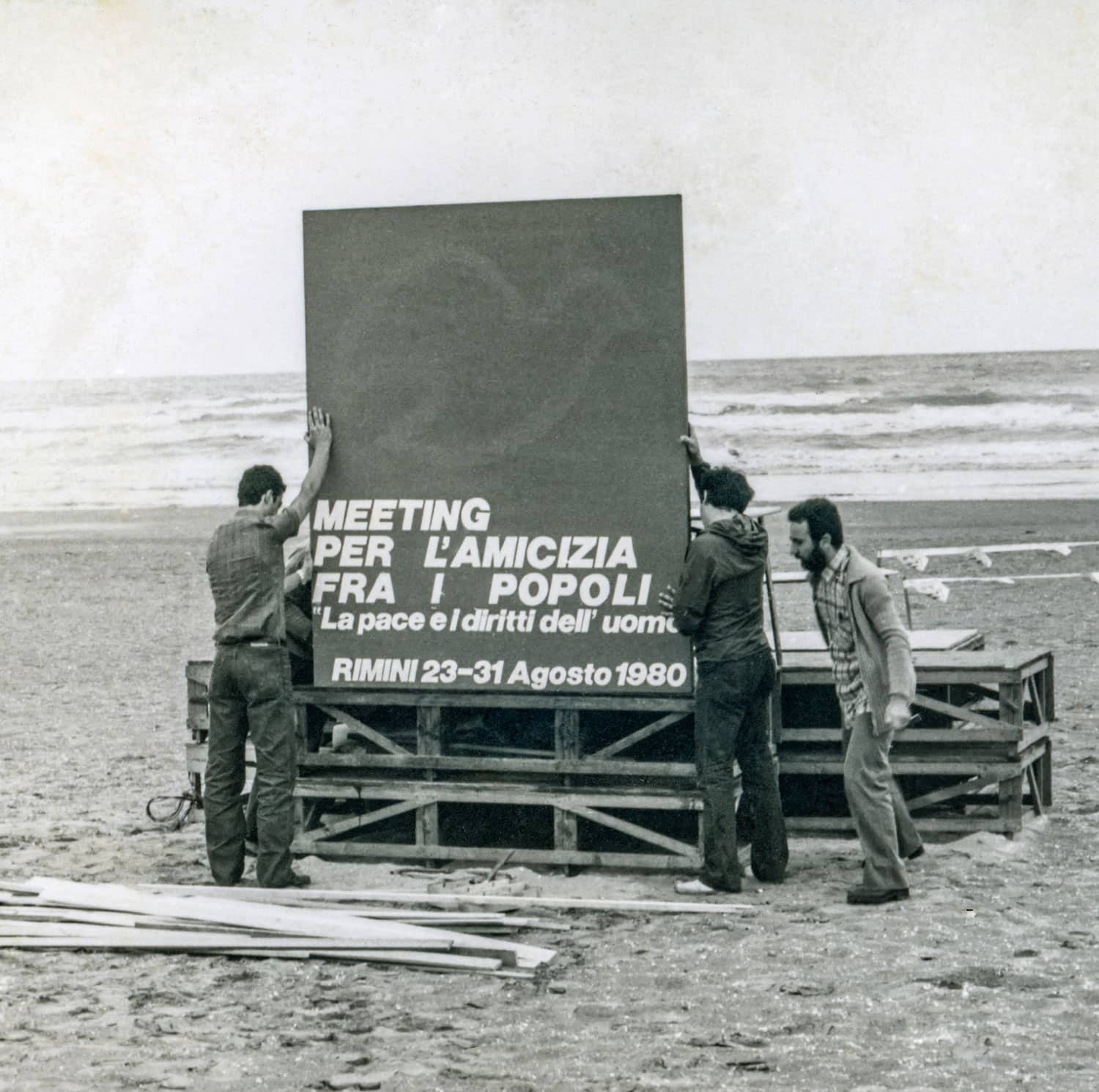
In harmony with the Meeting of Rimini, the Rhein Meeting offers everyone, but especially young people and families with children, an experience of knowledge, reflection, and sharing on themes intrinsic to human existence, with the aim of strengthening faith and humanity’s capacity to choose the good. Within the rich three-day program there are also several initiatives outside the Maternushaus. Among these is a guided visit to Cologne Cathedral for young people aged 10 to 18. The Cathedral is a living masterpiece still under construction, bearing witness to how from many small, apparently fragile elements something great and extraordinary can arise. There will also be spaces for children aged 3 to 9 with games and entertainment organized by young volunteers, as well as shared lunches and dinners to meet and make friends, such as the evening of Saturday, March 14, at “Dom im Stapelhaus,” a traditional Cologne brewery overlooking the Rhine. (Ileana Rossi)