Who we are
Joseph Ratzinger
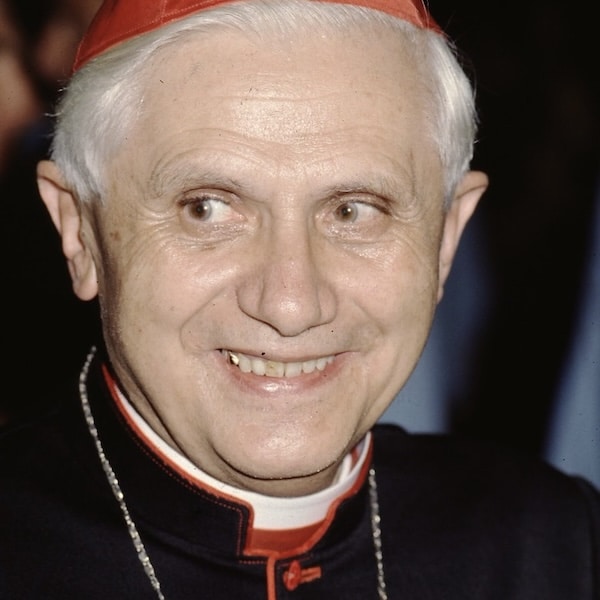
Joseph Ratzinger was born on 16 April 1927, Holy Saturday, in Marktl am Inn, Bavaria, into a family of modest means and deep Catholic faith. His youth was overshadowed by Nazism: automatically enrolled in the Hitler Youth and later conscripted into the Wehrmacht, he deserted in April 1945.
After the war he studied philosophy and theology in Freising and Munich, in the school of Romano Guardini. Ordained a priest in 1951 together with his brother Georg, he wrote his doctoral dissertation on Saint Augustine. After a contested habilitation on Saint Bonaventure, he taught at Germany’s leading universities. At the Second Vatican Council he served as peritus to Cardinal Frings and contributed to Dei Verbum. The upheaval of 1968 marked a turning point. It gave rise to Introduction to Christianity and, in 1972, to the journal Communio, which he founded with Hans Urs von Balthasar and Henri de Lubac.
Appointed Archbishop of Munich and Freising and created cardinal in 1977, he chose as his motto Cooperatores Veritatis. From 1981, for almost a quarter of a century, he led the Congregation for the Doctrine of the Faith and oversaw the preparation of the Catechism of the Catholic Church.
On 19 April 2005 he was elected Pope and took the name Benedict XVI. His magisterium found expression in three encyclicals and in the Jesus of Nazareth trilogy. He proposed a reading of the Council as reform in continuity, and placed at the heart of his teaching the alliance between faith and reason, which he affirmed in his 2006 Regensburg lecture.
On 11 February 2013 he announced, in Latin, his renunciation of the Petrine ministry, a gesture without precedent for centuries. As Pope Emeritus he lived in silence, prayer and study until his death on 31 December 2022.
Last updated:
29 October 2026
PARTICIPATIONS