Who we are
Shodo Habukawa
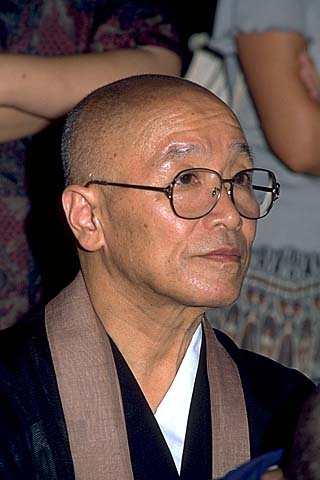
Shodo Habukawa (1935–2026) was a Japanese Buddhist monk and one of the leading authorities on Shingon Buddhism. In the academic sphere, he served as a professor and vice-chancellor at Koyasan University in Japan. His religious life was spent mainly at Muryoko-in temple on Mount Koya, the spiritual centre founded by Kobo-Daishi in the 9th century. Within this community, Habukawa served for many years as a novice master and as abbot.
His decision to embark on the monastic path stemmed from a centuries-old family tradition linked to the sacred territory of Mount Koya. Under his guidance, the temple remained open to visitors from all over the world. His spiritual vision involved an active acceptance of reality, expressed through prayer, the recitation of mantras and a commitment to the education of young people. He maintained that man could perceive the presence of the Mystery through art, which he regarded as a means of discerning the profound meaning of every single life.
A significant chapter in his life concerns his connection with Don Luigi Giussani. The event took place between 27 and 28 June 1987, when the founder of Communion and Liberation travelled to Japan. On that occasion, Habukawa welcomed him at Mount Koya, discovering a shared vision regarding the themes of education and the destiny of humanity. During the visit, Giussani was particularly struck by a statue of the thousand-armed Kannon, seeing in it an analogy with divine mercy.
Following this encounter, Habukawa attended the Rimini Meeting in 1988. From that moment on, he became a regular guest at the event, speaking at various editions until 2017. In November 2011, a delegation from the Meeting visited Mount Koya: this is documented in the book “The Paths of the Heart – A Journey between Italy and Japan”. In 2012, Shodo Habukawa personally curated an exhibition dedicated to Mount Koya, aimed at documenting Shingon religiosity and art. The exhibition also illustrated the closeness between Italian Catholics and Japanese Buddhists, which had been strengthened following the 2011 earthquake. In addition to his relationship with Giussani, he developed a bond with John Paul II and other Catholic figures. To honour these relationships, the names and photographs of St John Paul II and Don Giussani are kept at Muryoko-in Temple, for whom the monks recite prayers daily.
Last updated: 14 Agosto 2017
PARTICIPATIONS