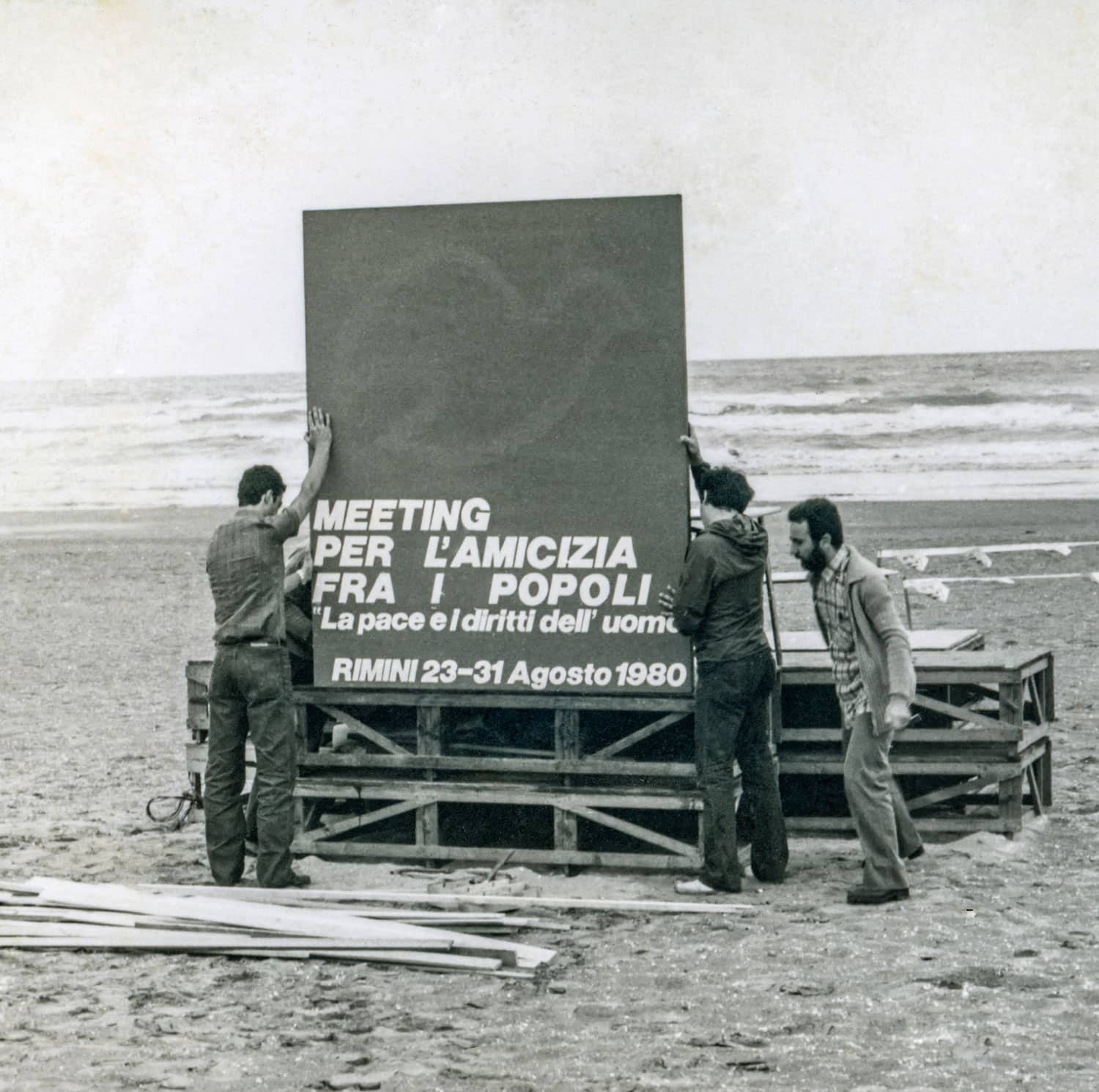
August 2026
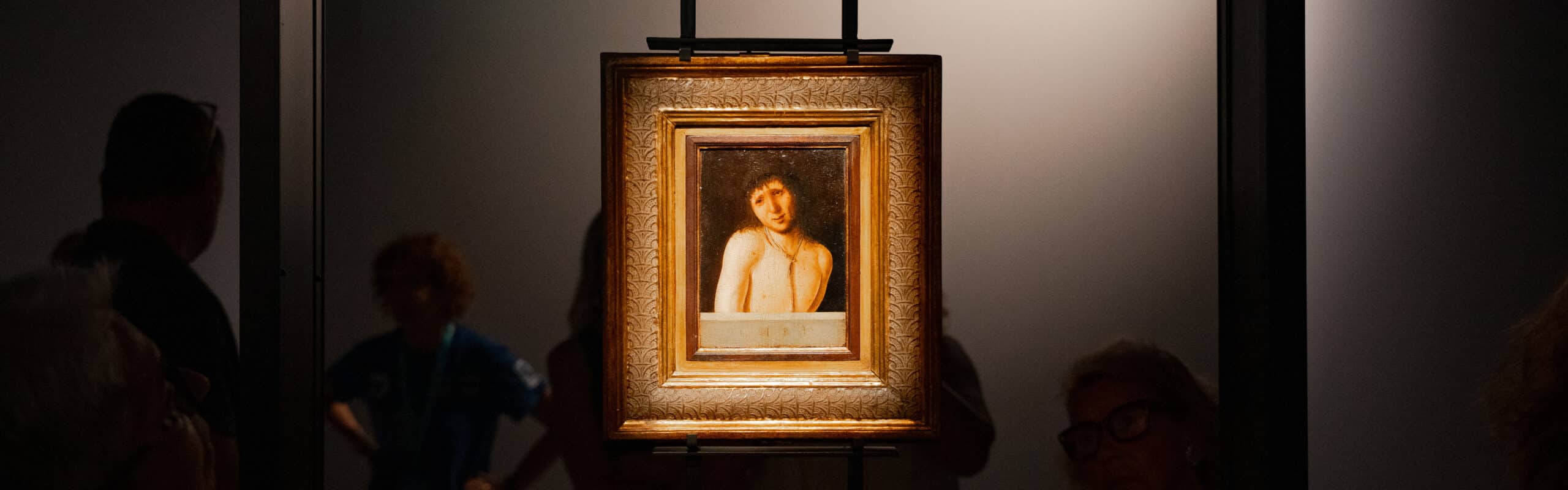
It is little more than the size of the palm of a hand, it has two faces, and it was made to be held in the hands and to accompany its owner in daily life. Five centuries before the arrival of portable screens, the Meeting is hosting what, provocatively, could be called the “first tablet” in history. Except that instead of pixels there are oil and wood, and its signature is that of Antonello da Messina.
It is the Ecce Homo, the exceptional presence of the 2026 edition of the Meeting and the centrepiece of an exhibition promoted by the Ministero della Cultura. A small Renaissance panel that holds enormous value, artistic but also economic: last February the Ministero della Cultura bought it at a Sotheby’s auction in New York for 14.9 million dollars.
An object of private devotion, not a painting for the wall
What makes the work unusual is, first of all, its size and its function. It was not created to be hung on the wall of a great palace or observed from a distance, but as an intimate object of private devotion, probably used by the patron himself to pray. A Renaissance “holy card” to be taken in the hands, looked at and even kissed.
And, just like a modern device, it has two “faces”. The panel is in fact opisthographic: on one side there is the Ecce Homo, on the other Saint Jerome doing penance in the desert.
On the front, Christ emerges half-length from the dark background. Antonello portrays him in the most human moment of the Passion and, above all, has him look straight at whoever stands before the painting. It is one of the elements that still today make the work surprisingly modern: there is not only something to be observed, but a gaze that seems to return that of the viewer.
From L’Aquila to Rimini: art outside the museum
After its purchase and restoration, the Ecce Homo found its new home at the Museo Nazionale d’Abruzzo in L’Aquila. Its presence in Rimini, however, also answers to a precise choice: to take art out of a “static musealisation” and bring it closer to people, in what has been described as a «democratisation of beauty».
And so, among the pavilions, talks and exhibitions of the Meeting, one of the most precious objects is also one of the smallest. A little wooden panel worth 14.9 million dollars, worn away by the hands and the kisses of those who owned it: a fifteenth-century “tablet” that, after more than five centuries, still asks to be looked at.