Who we are
Marco Arcieri
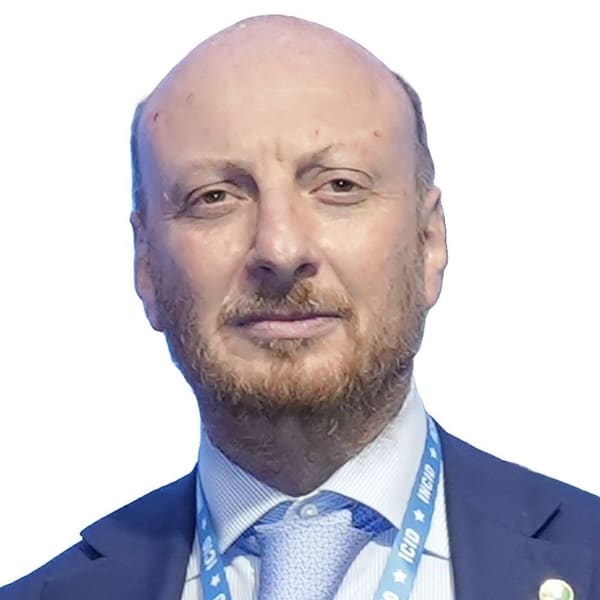
Marco Arcieri is President of ICID (International Commission on Irrigation and Drainage), an international organisation with branches in around 100 countries worldwide, of which around 70 are currently active, and is Secretary-General of the Italian National Committee (ITAL-ICID). His technical and scientific background focuses on issues such as water use efficiency in agriculture, the estimation of irrigation requirements, drought forecasting and the fight against desertification. From 2002 to 2006, he worked as a researcher at the Department of Agricultural, Forestry and Environmental Sciences at the University of Basilicata, where he obtained an international PhD in “Crop Systems, Forestry and Environmental Sciences”.
His research focused on issues relating to soil-water-plant interactions and, in particular, on the “Assessment of leaf surface resistance for calculating crop evapotranspiration”. Particular attention was paid to the role played by resistive parameters within the Penman-Monteith single-step formula, under the influence of environmental factors such as solar radiation and air temperature, in order to obtain accurate information on crop evapotranspiration demand. During his PhD studies, he was invited as a visiting researcher by the Department of Natural Resource Management and Agricultural Engineering at the Agricultural University of Athens, where he worked from June to October 2004. Furthermore, in order to broaden his experience and knowledge in his fields of interest, he attended several advanced specialisation courses at various research departments and international institutions, such as the UNESCO-IHE in Delft (Netherlands), ICARDA in Aleppo (Syria), the CIHEAM research institutes in Bari (Italy), Zaragoza (Spain) and Chania (Crete, Greece), INRAT in Tunis (Tunisia) and the University of Technology and Research in Nicosia (Cyprus).
He subsequently worked as a technical researcher for INEA – the National Institute of Agricultural Economics – under the auspices of the Italian Ministry of Agriculture. During this period, he conducted several field studies aimed at investigating the social dynamics and economic processes underpinning the potential expansion of irrigation in rural communities in southern Italy. His work focused primarily on both rain-fed and irrigated agricultural areas, with the aim of providing technical assistance and advice to farmers on optimising water use, implementing new irrigation methods, and adopting innovative techniques for irrigation scheduling. This work was carried out as part of a POM (Multiregional Operational Programme) research project co-funded by the EU, the Ministry of Agriculture and Forestry, and the Ministry of Public Works. He has also participated in several international research projects focusing on the study of anthropogenic factors and environmental causes capable of triggering soil degradation, and the resulting desertification processes that have occurred in various regions of the southern Mediterranean, such as Spain, Greece and southern Italy, as well as several countries in North Africa. This research was carried out as part of EU-funded projects such as the MEDACTION Project and the MEDALUS Project.
Throughout his professional career, spanning more than 30 years, he has also contributed to various studies and research programmes focusing on water use efficiency in agriculture, irrigation under conditions of salinity and water scarcity, and the use of alternative technologies for water resource management, such as desalination and the reuse of wastewater. His international experience has taken him to more than 70 countries around the world to participate in research projects and attend international conferences, workshops and meetings, both as a panellist and as a keynote speaker. Throughout his scientific career, he has authored and reviewed numerous articles for peer-reviewed journals on the development of irrigation, agriculture and sustainable land use, drought prediction and the fight against desertification.
He was elected President of the ICID in November 2023, during the elections for the ICID International Executive Council held in Visakhapatnam, India; and he is a Permanent Observer to the United Nations agencies FAO, WMO and IFAD.
On behalf of the ICID, he has been a member of the FAO WASAG Programme (Water Scarcity in Agriculture). WASAG is an international programme coordinated and promoted by the FAO and the United Nations to tackle water scarcity in the context of climate change. It is an initiative aimed at bringing together key stakeholders from around the world, representing various sectors, to improve water use in agriculture and ensure food security for rural communities. The partnership, comprising government agencies, international organisations, universities and research institutes, as well as professional associations, promotes collaboration between the various stakeholders in order to develop and implement new policies, and to formulate strategies and programmes aimed at optimising the adaptive capacity of rural communities, so that they are resilient in the face of water scarcity in agriculture, exacerbated by climate change. He is currently a member of the Technical Advisory Committee, chaired by ICID President Prof. Chandra Madramootoo, who was elected in 2025.
He also participated in the FAO-WWC initiative ‘Water Accounting in Agriculture’, contributing to the ‘White Book’ published jointly by FAO and WWC in 2018. In 2022, on behalf of the ICID, he was invited by the FAO to join the IRMA initiative. The ‘Irrigation Need and Potential Mapping (IRMA)’ programme introduces a multi-criteria framework to assess water requirements for irrigation purposes and reconcile irrigation potential, using the resulting framework to support long-term sustainable food security. The programme’s main structure is organised around four key aspects, within a multi-sectoral framework that encompasses: the area’s biophysical suitability and agro-pedoclimatic context; sustainable development requirements; expected benefits; and the socio-economic and/or legal-institutional context. Dr Marco Arcieri is also a member of UN Water; in this capacity, he participated as a speaker at the UN Water Conference held at the United Nations Headquarters in New York in March 2023, and is actively involved in the organisation and delivery of various panels and side events to be held at the upcoming UNCCD COP17 this coming August in Ulaanbaatar, Mongolia; and in the forthcoming UN Water Conference, to be held in Abu Dhabi, UAE, in December 2026.
Last updated:
3 August 2026